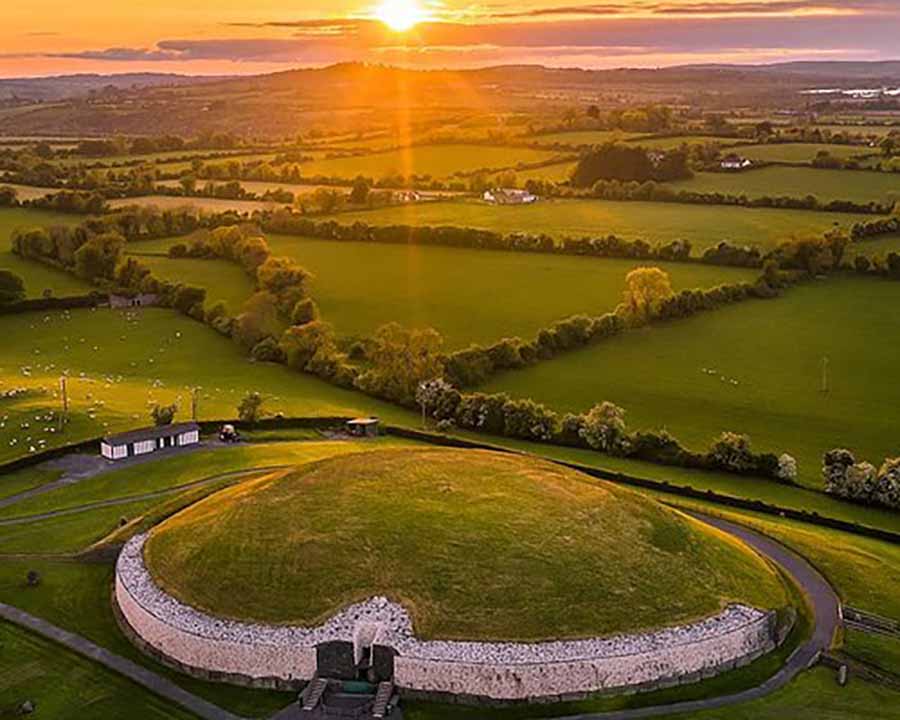
County Meath, in Ireland’s Ancient East, offers a delightful blend of historic landmarks, scenic landscapes, and cultural attractions for travellers seeking a rich experience. With its rolling green hills, ancient ruins, and welcoming towns, this county provides a diverse range of discoveries. From prehistoric tombs to medieval castles and tranquil river walks, Meath invites visitors to uncover its heritage at their own pace.
Newgrange, a UNESCO World Heritage Site, is a 5,200-year-old passage tomb near the River Boyne. Visitors can explore its stone chamber, adorned with spiral carvings, through guided tours that reveal its Neolithic engineering and solstice alignments. The Brú na Bóinne Visitor Centre offers engaging exhibits, while the surrounding fields provide peaceful walks, making it a must for history enthusiasts.
Tara Hill, the ancient seat of Ireland’s High Kings, offers sweeping views across the Meath countryside. Visitors can wander the grassy hilltop, exploring earthworks like the Mound of the Hostages and the Lia Fáil standing stone. Guided tours share tales of Celtic mythology, while the open landscape invites leisurely strolls, blending history with natural beauty.
Trim Castle, Ireland’s largest Anglo-Norman fortress, dominates the town of Trim with its 12th-century keep. Visitors can tour its towering stone walls and battlements, with guided access to the interior revealing medieval life. The castle grounds and nearby River Boyne walks create a scenic setting, appealing to those keen on history and photography.
The Battle of the Boyne Visitor Centre, at Oldbridge, brings to life a pivotal moment in Irish history. Housed in a restored estate, the centre offers exhibits with replica weapons and interactive maps, while the 55-hectare grounds feature walled gardens and riverside trails. Visitors can explore the battlefield site, enjoying a mix of history and serene landscapes.
Slane Castle, a 17th-century estate overlooking the River Boyne, opens its doors for guided tours. Visitors can explore its elegant rooms, learn about its Georgian history, and wander the scenic grounds. The nearby Slane Distillery offers whiskey tastings and tours, providing a taste of local craft in a historic setting.
Kells, a historic town, is home to a 9th-century monastic site with a round tower and high crosses. Visitors can admire the intricately carved crosses, explore the ruins of St Columba’s Church, and visit the Kells Heritage Centre for insights into the Book of Kells. The town’s quiet streets and cosy cafés create a welcoming base for exploration.
Bective Abbey, a 12th-century Cistercian ruin near Navan, features well-preserved cloisters and stone arches. Visitors can wander the riverside site, with interpretive signs detailing its monastic past. The surrounding meadows and River Boyne offer peaceful walks, making it a tranquil stop for those interested in medieval heritage.
Loughcrew Cairns, near Oldcastle, is a collection of 5,000-year-old passage tombs atop rolling hills. Visitors can hike to the main cairn, known as the Hag’s Chair, for panoramic views and explore chambers with ancient carvings. Guided tours provide insights into Neolithic rituals, blending archaeology with scenic beauty.
Navan, Meath’s county town, offers a blend of history and modern attractions. Visitors can explore the Navan Fort, a 19th-century military site, or stroll along the Ramparts Walk by the River Boyne, spotting wildlife. The town’s Solstice Arts Centre showcases local art, while its pubs and restaurants provide a relaxed atmosphere.
Donaghmore Round Tower, near Navan, is a 10th-century monastic relic with a carved doorway. Visitors can explore the tower and adjacent church ruins, set in a quiet graveyard, with signs sharing its early Christian history. The surrounding countryside and nearby trails offer a serene setting for a reflective visit.
County Meath’s mix of ancient landmarks, scenic beauty, and cultural hubs creates a rewarding destination. Whether exploring prehistoric tombs, wandering medieval ruins, or enjoying riverside trails, travellers will find plenty to enjoy in this inviting corner of Ireland.
County Meath:
Ireland’s county Meath is steeped in Ireland’s ancient past, with the Hill of Tara offering a glimpse into royal history and panoramic views. The UNESCO-listed Brú na Bóinne complex, including Newgrange and Knowth, showcases intricate Neolithic tombs, while Trim Castle provides medieval grandeur. Other attractions include the Boyne River’s scenic walks and historic Slane Castle. Meath is Ireland’s 14th largest county by size (2,336 square km) and eighth largest by population (220,826). Population previously peaked at 183,828 in 1841 and reached its lowest point, 62,969 in 1926. In terms of hospitality, Meath is Ireland’s 19th most visited tourist county with around 122,000 international visitors per year.
Introduction – Adventure – Anthem – Archaeology – Attractions – Awards – Birdwatching – Camping – Castles – Churches – Contact list – Cycling – Dining – Equestrian – Festivals – Fishing – Folklore – Gardens – Golf – Graveyards – Happening – Haunted – Highest – Hiking – History – Holy Wells – Hotels – Hotels8 – Instagrammable – Itineraries – Largest town – Luxury – MICE – Movies – Musicians – Name – New – Novelists – Off the beaten track – Poets – Pubs – Quotes – Random Facts – Restaurant Awards – Sacred Places – Saints – Spas – Sports – Sunsets– Sustainable – Things to do – Towns – Video – Villages – Walking – Wanderlist – Weddings – Wild swimming – Writers – 1837 – 1846 – 1852 – 1909 – 1955 – 1980 –
Things to do
Antrim – Armagh – Carlow – Cavan – Clare – Cork – Derry – Donegal – Down – Dublin – Fermanagh – Galway – Kerry – Kildare – Kilkenny – Laois – Leitrim – Limerick – Longford – Louth – Mayo – Meath – Monaghan – Offaly – Roscommon – Sligo – Tipperary – Tyrone – Waterford – Westmeath – Wexford – Wicklow