- Saint Ciaran’s Well (Kells): Pattern day: September 9 (Saint Ciaran’s feast day) or the third Sunday in September. Located near Castlekeeran and Carnaross, this well is one of the most famous in Meath, celebrated for its sacred trout named Faith, Hope, and Charity, which reportedly surface on the eve of the pattern day. The well is carved from bedrock, accessible via steps, and has a large ash rag tree nearby. It’s believed to have Celtic origins, later Christianized, with waters used for baptisms and cures, particularly for back pain, headaches, toothaches, and warts. Pilgrims leave votive offerings like pins or coins.
- Saint Patrick’s Well (Trim): Pattern day: March 17 (Saint Patrick’s feast day, though not actively observed today). Situated on Saint Loman’s Street in Trim, this is the oldest and best-documented well in the county. Associated with Saint Patrick’s nephew, Loman, who sailed up the Boyne River to establish a Christian settlement, the well’s water was historically used for baptisms. It’s linked to the legend of Patrick preaching at Tara. While no longer a major pilgrimage site, its waters are still considered sacred.
- Saint Lucy’s Well (Killua, Meath-Westmeath border): Pattern day: December 13 (Saint Lucy’s feast day, though specific pattern day records are scarce). Located near an ecclesiastical enclosure, this well is tied to Saint Lucy and is known for its peaceful setting. It was historically visited for its curative properties, particularly for eye ailments, a common association with Saint Lucy. Pilgrims would perform “rounds” and leave votive offerings like coins or threads from clothing.
- Well of Newnagh (Neamhrach, Tara): Pattern day: Not specifically recorded, likely tied to a local saint’s feast or major Celtic festival like Lughnasa (August 1). Situated at the historic Hill of Tara, this well is linked to the legend of Nuada-Neacht, a first-century poet-king of Leinster, who guarded it fiercely, with folklore claiming the water would blind unauthorized users. It’s a site of ancient significance, likely pre-Christian, later adapted for Christian use.
- Saint Kieran’s Well (Loughcrew): Pattern day: September 9 (Saint Kieran’s feast day, though not actively observed in modern times). Recorded in the 1830s near a Church of Ireland church, this well is dedicated to Saint Kieran (distinct from Saint Ciaran of Kells). It was historically significant for its proximity to the Loughcrew megalithic complex, suggesting pre-Christian origins. The well was visited for cures, though specific ailments are not well-documented.
- Saint Anne’s Well (Randalstown): Pattern day: July 26 (Saint Anne’s feast day, though not widely observed today). This well is noted for votive offerings from the Iron Age, indicating its ancient significance. It’s associated with cures for ailments like tuberculosis and sore eyes. The well’s sacred status persists, though its pattern day celebrations have largely faded.
- Saint Brigid’s Well (Ballinakill): Pattern day: August 15 (historically, though earlier tied to Saint Ultan’s feast, September 4). Also known as Tobar a’ Gora, this well is reputed to remain warm even in winter, a unique feature. Originally dedicated to Saint Ultan, it was later rededicated to Saint Brigid. The well is linked to the Kindelan family, former patrons of Saint Ultan’s monastery at Ardbraccan, and is visited for general healing properties.
- Saint Odran’s Well (Castlejordan): Pattern day: February 19 (Saint Odran’s feast day). Located near the borders of Kildare and Offaly, this well is tied to Saint Odran, a follower of Saint Patrick reportedly murdered at the behest of High King Laoghaire. Known as Tobar Ódhráin or “Well of the Prayers,” it was a site for healing pilgrimages, particularly for general ailments.
- Tullaghanogue Well: Pattern day: Not specifically recorded, possibly linked to a local saint or Lughnasa (August 1). One of two wells near Trim with an inscription from 1687 dedicated to Robert, Lord Baron of Trimblestowne, this well was a sacred site during a brief period of Catholic revival under James II. Its waters are still sought for cures, though specific ailments are not detailed.
- Iskaroon Well: Pattern day: Not specifically recorded, possibly linked to a local saint or Lughnasa (August 1). Like Tullaghanogue, this well near Trim bears a 1687 inscription for Robert, Lord Baron of Trimblestowne. It remained a sacred site despite the decline of Catholic practices post-Battle of the Boyne. Its waters are associated with general healing.
- Tobar Ultan (Balrath, Kells): Pattern day: September 4 (Saint Ultan’s feast day, though not actively observed). Named after Saint Ultan, this well is likely a holy site due to its name and location near Kells. It’s associated with the saint’s monastery at Ardbraccan and was used for baptisms and cures, though specific ailments are not well-documented.
- Tobar Anthony (Spiddal, Nobber): Pattern day: June 13 (Saint Anthony’s feast day, though not confirmed for active observance). Identified as a holy well in the Meath Field Names Project, it’s named after Saint Anthony and likely used for healing rituals. Specific cures or detailed folklore are scarce, but it fits the tradition of wells dedicated to saints for local devotion.
Visiting:
- Many holy wells in Meath have pre-Christian origins, often Christianized by early missionaries like Saint Patrick, who used them for baptisms.
- Pattern days, derived from “patron” saint days, typically involve “rounds” (circumambulating the well while praying), drinking or applying the water, and leaving votive offerings like coins, rags, or medals. These practices peaked during the Penal Laws but declined in the 19th century due to Catholic Emancipation and clergy disapproval of associated festivities.
- Some wells, like Saint Patrick’s Well in Carlanstown, are no longer active pilgrimage sites, and their pattern days have faded from parish calendars.
Holy Wells
Antrim – Armagh – Carlow – Cavan – Clare – Cork – Derry – Donegal – Down – Dublin – Fermanagh – Galway – Kerry – Kildare – Kilkenny – Laois – Leitrim – Limerick – Longford – Louth – Mayo – Meath – Monaghan – Offaly – Roscommon – Sligo – Tipperary – Tyrone – Waterford – Westmeath – Wexford – Wicklow
Sacred Places
Antrim – Armagh – Carlow – Cavan – Clare – Cork – Derry – Donegal – Down – Dublin – Fermanagh – Galway – Kerry – Kildare – Kilkenny – Laois – Leitrim – Limerick – Longford – Louth – Mayo – Meath – Monaghan – Offaly – Roscommon – Sligo – Tipperary – Tyrone – Waterford – Westmeath – Wexford – Wicklow
County Meath:
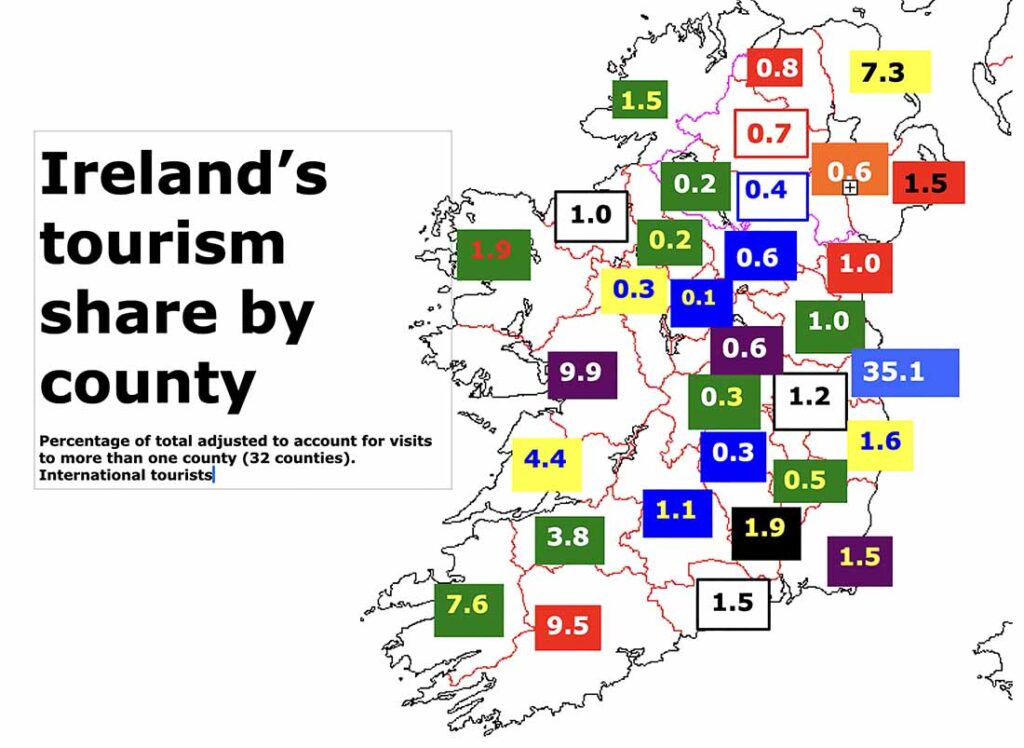
Ireland’s county Meath is steeped in Ireland’s ancient past, with the Hill of Tara offering a glimpse into royal history and panoramic views. The UNESCO-listed Brú na Bóinne complex, including Newgrange and Knowth, showcases intricate Neolithic tombs, while Trim Castle provides medieval grandeur. Other attractions include the Boyne River’s scenic walks and historic Slane Castle. Meath is Ireland’s 14th largest county by size (2,336 square km) and eighth largest by population (220,826). Population previously peaked at 183,828 in 1841 and reached its lowest point, 62,969 in 1926. In terms of hospitality, Meath is Ireland’s 19th most visited tourist county with around 122,000 international visitors per year.
Introduction – Adventure – Anthem – Archaeology – Attractions – Awards – Birdwatching – Camping – Castles – Churches – Contact list – Cycling – Dining – Equestrian – Festivals – Fishing – Folklore – Gardens – Golf – Graveyards – Happening – Haunted – Highest – Hiking – History – Holy Wells – Hotels – Hotels top 8 – Hunting & shooting – Instagrammable – Itineraries – Largest town – Luxury – MICE – Movies – Music – Name – New – Novelists – Off the beaten track – Poets – Pubs – Quotes – Random Facts – Restaurant Awards – Sacred Places – Saints – Songs – Spas – Sports – Sunsets – Sustainable – Things to do – Towns – Video – Villages – Walking – Wanderlist – Weddings – Wild swimming – Writers – 1837 – 1846 – 1852 – 1909 – 1955 – 1980 –