Pre-1000 The Gaelic Nation
County Meath, known as Mide (‘middle’), was the heart of ancient Ireland, home to the Hill of Tara, the ceremonial seat of the High Kings. Archaeological sites like Newgrange, Knowth, and Dowth (c. 3200 BCE) highlight Meath’s prehistoric significance within the Brú na Bóinne complex, but no trace remains of the people who built them. Either they died out or were displaced by a new wave of settlers from Spain. Around 85 AD, the High King Tuathal Techtmar formed Mide, encompassing modern Meath, Westmeath, and parts of Dublin and Longford, as noted in early Irish annals. The house of Niall dynasty, particularly the southern branch (Clann Cholmáin), dominated, establishing Tara as a political and spiritual centre. Christianity spread in the 5th century, with St. Patrick founding churches, including at Trim. Monastic settlements like Kells, home to the Book of Kells (c. 800), emerged as cultural hubs. Viking raids targeted Meath’s wealth, as recorded in The Annals of Ulster, but Gaelic kings maintained control.
1000–1100: House of Niall Dominance and Monastic Flourishing
Meath remained the political centre of Ireland under the house of Niall, with Máel Sechnaill II, High King (d. 1022), ruling from Tara. The Book of Kells, completed in Kells, underscored Meath’s monastic importance. The Battle of Clontarf (1014), documented in The Annals of the Four Masters, weakened Viking influence but highlighted Meath’s strategic role as a contested region. The Synod of Kells (1152) later formalised Meath’s diocesan structure, with centres at Kells and Trim. The county’s fertile plains supported agriculture, making it a wealthy region. Gaelic lords, including the O’Melaghlins (Ó Máelsechlainn), successors to Clann Cholmáin, maintained power despite growing O’Connor influence from Connacht. Meath’s centrality ensured its prominence in Gaelic politics.
1100–1200: Norman Invasion and Division
The Norman invasion (1169) transformed Meath. In 1172, Henry II granted the Kingdom of Meath to Hugh de Lacy, creating the Lordship of Meath, one of the largest Anglo-Norman territories. De Lacy built castles at Trim and Duleek, establishing Meath as a Norman stronghold. The county was subdivided into feudal estates, with Normans like the de Genevilles settling in. Gaelic lords, including the O’Melaghlins, resisted but were displaced from Tara and other key sites. Monastic centres like Bective Abbey (founded 1147) and Newtown Trim grew under Cistercian influence, as noted in The Annals of Tigernach. Drogheda, partly in Meath, became a major port. The lives of such as de Lacy highlight his role in reshaping Meath, though Gaelic dynasties retained influence in peripheral areas.
1200–1300: Norman Consolidation
Meath became a core part of the Anglo-Norman Pale, with Trim Castle as its administrative centre. The de Lacy family and their successors, like the de Verduns, fortified the county with castles at Navan and Athboy. The Black Death (1348–1350) impacted Meath’s population. Monastic houses, including Bective and St. Mary’s in Trim, drove economic activity through agriculture and trade. Drogheda’s walls and gates, built in this period, underscored its importance. Gaelic lords, pushed to Meath’s fringes, occasionally raided Norman lands. The county’s fertile lands made it a breadbasket for the Pale, strengthening Norman control.
1300–1400: The Pale and Gaelic Resurgence
Meath remained a stronghold of the Pale, with Anglo-Norman lords like the de Genevilles and Mortimers dominating. The Statute of Kilkenny (1366) aimed to reinforce English control, but Gaelic clans, including the O’Neills from Ulster, began encroaching. The O’Melaghlins retained influence in western Meath, resisting full Norman subjugation. Castles like Killeen and Dunsany were built to counter Gaelic raids. Meath’s monasteries faced decline, with wealth attracting English scrutiny. The county’s economy thrived on grain and wool exports through Drogheda, as noted in historical surveys. The Annals of Ulster record regional conflicts, while the lives of figures like Geoffrey de Geneville highlight Meath’s Anglo-Norman governance.
1400–1500: Late Medieval Stability
Meath’s position within the Pale solidified, with Trim and Navan as key administrative centres. Anglo-Norman families, such as the Plunketts and Prestons, intermarried with Gaelic lords, creating a hybrid elite. The O’Neills and O’Connors challenged the Pale’s borders, with skirmishes near Kells. The county’s castles, including Trim, were maintained as defensive strongholds. Monastic decline continued, but sites like Newtown Trim remained active. Meath’s fertile lands supported a growing population, with Drogheda a major trade hub. The Annals of Ulster note the Plunketts’ rising influence, while the lives of figures like Christopher Plunkett illustrate Meath’s role as a Pale bastion amidst Gaelic resurgence.
1500–1600: Tudor Reconquest and Reformation
The Tudor reconquest reshaped Meath. The dissolution of monasteries (1536–1541) saw Bective and Kells abbeys suppressed, their lands redistributed to Anglo-Irish lords,. The county remained a Pale stronghold, with Trim Castle hosting English garrisons. The O’Melaghlins and other Gaelic dynasties were further marginalised. The Nine Years’ War (1593–1603) saw limited fighting in Meath, but its proximity to Ulster made it a staging ground for English forces. Drogheda’s strategic importance grew, hosting Tudor administrators. Meath’s designation as a county was formalised by 1542, reflecting Tudor reforms. The Annals of the Four Masters and the lives of figures like Thomas Plunkett document Meath’s transition to English control.
1600–1700: Cromwellian Upheaval and Plantation
The 1641 Rebellion saw Meath’s Old English and Gaelic lords, including the Plunketts, join Confederate forces, briefly seizing Trim and Navan. Cromwell’s campaign (1649–1653) devastated the county, with Drogheda’s massacre (1649) a brutal turning point. Cromwellian confiscations redistributed Meath’s lands to English settlers, though families like the Plunketts retained some estates. The Battle of the Boyne (1690), fought partly in Meath near Oldbridge, cemented Colonial/Protestant Ascendancy. The county’s economy recovered through agriculture, with Drogheda and Navan as trade hubs.
1700–1800: Anglo-Irish Ascendancy
Meath’s Anglo-Irish elite, including the Plunketts, Wellesleys, and Taylors, dominated under the Penal Laws, marginalising Catholics. The county’s fertile lands supported grain and livestock, with Navan and Kells as market towns. Drogheda’s port facilitated exports. The 1798 Rebellion saw minor unrest in Meath, with local militias suppressing uprisings. The Act of Union (1800) integrated Meath into English rule, reducing local parliamentary influence. Estates like Slane Castle and Headfort House reflected Ascendancy wealth, as per archaeological surveys.
1800–1900: Famine and Reform
The Great Famine (1845–1852) severely impacted Meath, with its population dropping from 183,000 in 1841 to 140,000 by 1851, per census records. Workhouses in Trim and Navan were overwhelmed, and emigration surged. Land reforms, driven by the Land League, challenged Anglo-Irish landlords, with tenants in Meath active in agitation. The Gaelic Revival fostered interest in Tara and Brú na Bóinne, with archaeological excavations beginning. Trim and Navan grew as administrative centres, while Drogheda’s port declined with rail expansion.
1900–2025: Independence and Modernity
Meath played a significant role in the War of Independence (1919–1921), with IRA ambushes in Trim and Navan, as documented in History Ireland. The county joined the Irish Free State in 1922, with Tara symbolising national identity. The population stabilised, reaching 195,064 by 2022, per census data. Infrastructure, including the M3 and M4 motorways, enhanced connectivity, while tourism grew, focusing on Brú na Bóinne (a UNESCO World Heritage Site), Tara, and Trim Castle. Meath’s economy diversified, with agriculture, tech, and equine industries thriving. Meath is one of just EIGHT Irish counties that has a larger population than it did in 1841.
History
Antrim – Armagh – Carlow – Cavan – Clare – Cork – Derry – Donegal – Down – Dublin – Fermanagh – Galway – Kerry – Kildare – Kilkenny – Laois – Leitrim – Limerick – Longford – Louth – Mayo – Meath – Monaghan – Offaly – Roscommon – Sligo – Tipperary – Tyrone – Waterford – Westmeath – Wexford – Wicklow
County Meath:
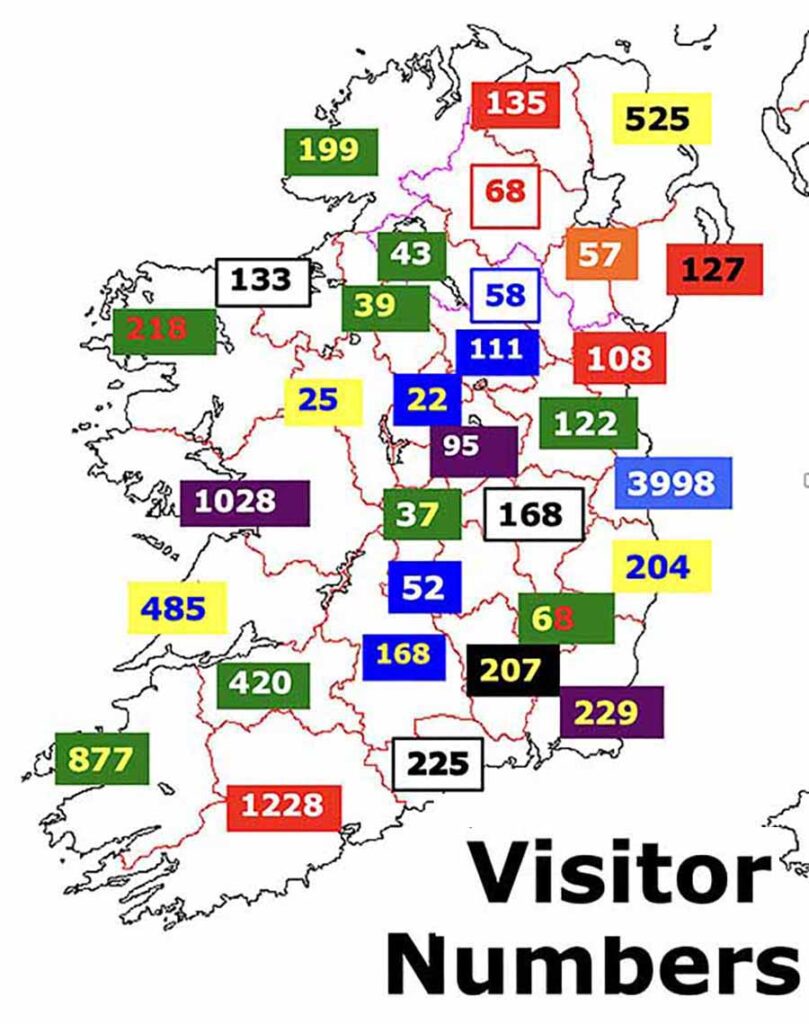
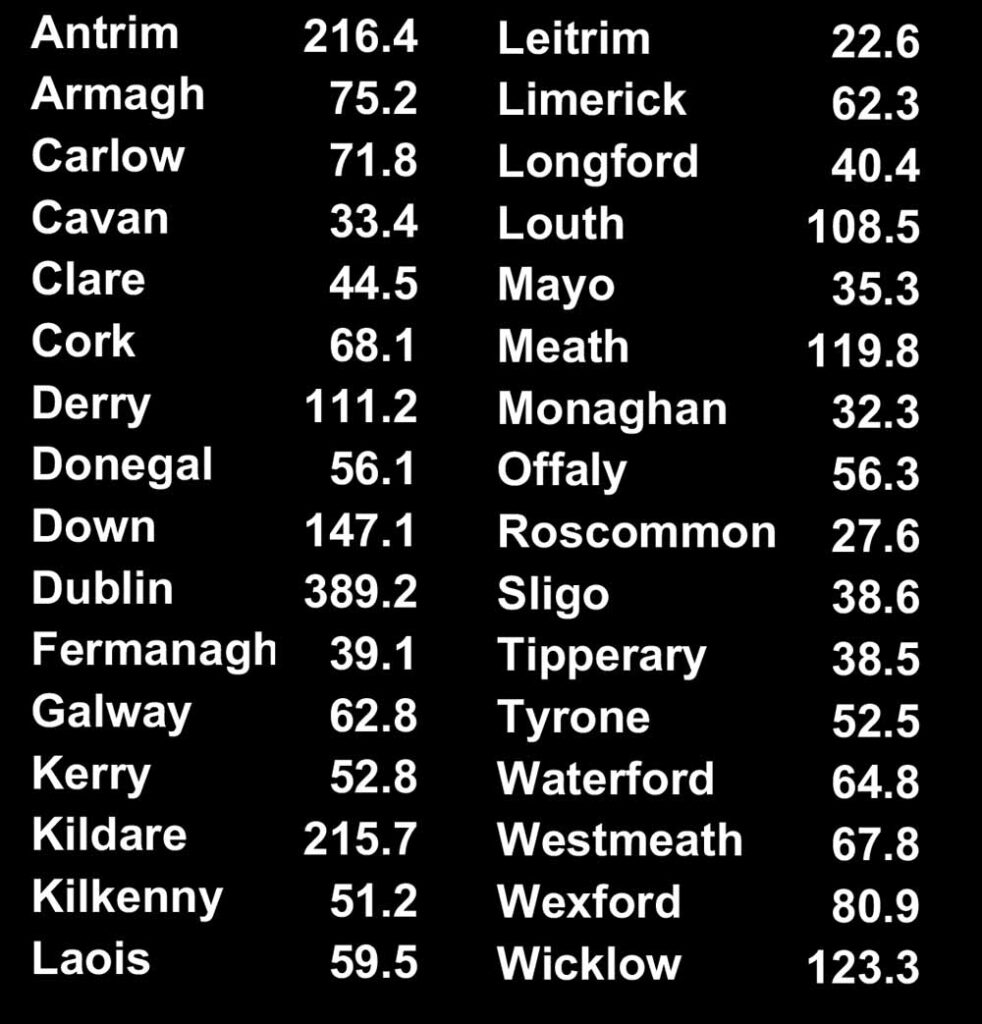
Ireland’s county Meath is steeped in Ireland’s ancient past, with the Hill of Tara offering a glimpse into royal history and panoramic views. The UNESCO-listed Brú na Bóinne complex, including Newgrange and Knowth, showcases intricate Neolithic tombs, while Trim Castle provides medieval grandeur. Other attractions include the Boyne River’s scenic walks and historic Slane Castle. Meath is Ireland’s 14th largest county by size (2,336 square km) and eighth largest by population (220,826). Population previously peaked at 183,828 in 1841 and reached its lowest point, 62,969 in 1926. In terms of hospitality, Meath is Ireland’s 19th most visited tourist county with around 122,000 international visitors per year.
Introduction – Adventure – Anthem – Archaeology – Attractions – Awards – Birdwatching – Camping – Castles – Churches – Contact list – Cycling – Dining – Equestrian – Festivals – Fishing – Folklore – Gardens – Golf – Graveyards – Happening – Haunted – Highest – Hiking – History – Holy Wells – Hotels – Hotels top 8 – Hunting & shooting – Instagrammable – Itineraries – Largest town – Luxury – MICE – Movies – Music – Name – New – Novelists – Off the beaten track – Poets – Pubs – Quotes – Random Facts – Restaurant Awards – Sacred Places – Saints – Songs – Spas – Sports – Sunsets – Sustainable – Things to do – Towns – Video – Villages – Walking – Wanderlist – Weddings – Wild swimming – Writers – 1837 – 1846 – 1852 – 1909 – 1955 – 1980 –