- Ardmore Cathedral and Round Tower: Ardmore, County Waterford, approximately 20 km northeast of Youghal (Coordinates: 51.949°N, 7.725°W).. Founded in the 7th century by St. Declan, Ardmore is one of Ireland’s earliest Christian sites, predating St. Patrick’s mission. The site includes a 12th-century round tower (30 metres high), a Romanesque cathedral with intricate carvings, and an oratory (St. Declan’s Oratory). The cathedral’s west gable features high-relief biblical panels, a rare example of Irish Romanesque art. Archaeological finds include early Christian grave slabs and a possible ogham stone. The site was a significant ecclesiastical centre in Munster, linked to the Déisi Muman, and remained active until the medieval period. Managed by the Office of Public Works (OPW), open year-round with free entry. Interpretive signage is available; check www.heritageireland.ie for details.
- Lismore Castle and St. Carthage’s Cathedral: Lismore, County Waterford, approximately 25 km northwest of Dungarvan (Coordinates: 52.140°N, 7.932°W).. Lismore was a major monastic centre founded by St. Mochuda (Carthage) in the 7th century. The current St. Carthage’s Cathedral, built in the 13th century with later modifications, incorporates remnants of the earlier monastery. Lismore Castle, established in 1185 by Prince John and later a residence of the FitzGerald family, stands nearby and was rebuilt in the 19th century. Archaeological evidence includes early Christian cross-slabs and the Book of Lismore (15th century), a key manuscript found in the castle. The site reflects Waterford’s transition from early Christian to Anglo-Norman influence. The cathedral is open to visitors as an active church; the castle is private but its gardens are open seasonally (April–October). Admission fees apply for the gardens; check www.lismorecastle.com and www.heritageireland.ie for details.
- Ogham Stones at Drumlohan: Drumlohan, near Stradbally, County Waterford, approximately 10 km west of Dungarvan (Coordinates: 52.094°N, 7.738°W).. The Drumlohan Ogham Stones, dating to c. 5th–7th century AD, are a collection of ten inscribed stones, seven of which remain in situ within a souterrain (underground chamber). These stones, bearing early Irish ogham script, were likely memorial markers for a local community, possibly linked to the Déisi Muman. Discovered in 1867, the site provides insight into early medieval literacy and burial practices in Munster. The souterrain suggests defensive or storage use, typical of early Christian Ireland. Managed by the OPW, open year-round with free access and protective fencing. No formal visitor centre; check www.heritageireland.ie or www.archaeology.ie for directions.
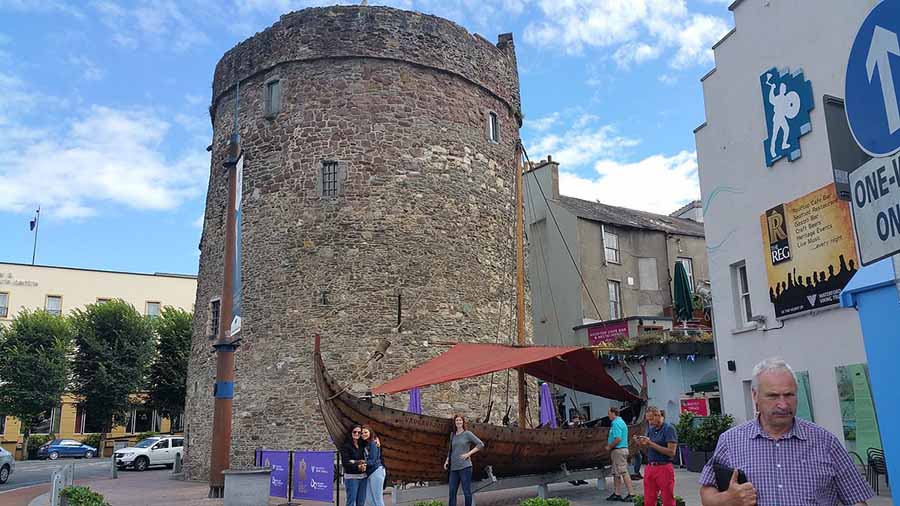
- Reginald’s Tower: The Quay, Waterford City, County Waterford (Coordinates: 52.260°N, 7.105°W).. Built in the early 13th century (c. 1204–1223) on the site of a Viking fortification, Reginald’s Tower is Ireland’s oldest civic building, named after the Norse leader Ragnall. Part of Waterford’s medieval city walls, it served as a defensive tower, mint, and prison. Archaeological excavations in the Waterford Viking Triangle have revealed 10th–11th-century Viking houses and artefacts, confirming Waterford as a major Norse settlement (Veðrafjǫrðr). The tower houses the Waterford Treasures Museum, displaying Viking and medieval finds, including weapons and jewellery. Managed by the OPW, open year-round with a museum and guided tours. Admission fees apply; check www.heritageireland.ie or www.waterfordtreasures.com for hours.
- Mothel Abbey: Mothel, near Carrick-on-Suir, County Waterford, approximately 20 km north of Waterford City (Coordinates: 52.299°N, 7.420°W).. Founded in the 13th century as an Augustinian priory, Mothel Abbey includes a church ruin with a nave and chancel, and medieval grave slabs. Associated with the Power family, it was a local religious centre until the Dissolution of the Monasteries (1536). Archaeological surveys indicate a small monastic enclosure with possible domestic buildings. The site reflects the spread of Augustinian monasticism in medieval Munster and the influence of Anglo-Norman lords. Located on private land but accessible with permission. Free entry; no formal facilities. Check www.archaeology.ie or www.discoverireland.ie for access guidance.
Archaeological sites
Antrim – Armagh – Carlow – Cavan – Clare – Cork – Derry – Donegal – Down – Dublin – Fermanagh – Galway – Kerry – Kildare – Kilkenny – Laois – Leitrim – Limerick – Longford – Louth – Mayo – Meath – Monaghan – Offaly – Roscommon – Sligo – Tipperary – Tyrone – Waterford – Westmeath – Wexford – Wicklow
County Waterford:
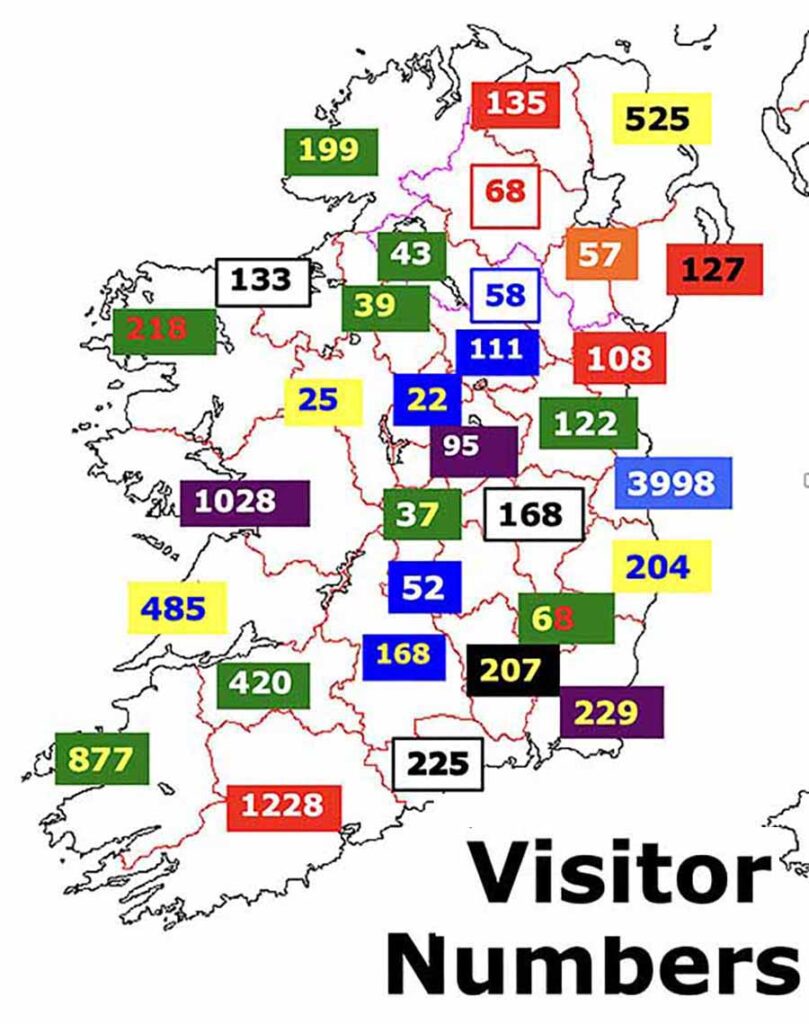
Ireland’s county Waterford is steeped in Viking and medieval history, with Waterford City’s Reginald’s Tower and Viking Triangle showcasing ancient artefacts. The Copper Coast, a UNESCO Geopark, offers dramatic coastal walks, while the Lismore Castle gardens provide serene beauty. Other attractions include the beaches of Tramore and historic Dunmore East. Waterford is Ireland’s 21st largest county by size (1,838 square km) and 20th largest by population (127,363). Population peaked at 196,187 in 1841 and reached its lowest point, 71,439 in 1961. In terms of hospitality, Waterford is Ireland’s ninth most visited tourist county with around 225,000 international visitors per year.
Introduction – Adventure – Anthem – Archaeology – Attractions – Awards – Birdwatching –– Camping –Castles – Churches – Contact list – Cycling – Dining – Equestrian – Festivals – Fishing – Folklore – Gardens – Golf – Graveyards – Happening – Haunted – Highest – Hiking – History – Holy Wells – Hotels – Hotels top 8 – Hunting & shooting – Instagrammable – Itineraries – Largest town – Luxury – MICE – Movies – Music – Name – New – Novelists – Off the beaten track – Poets – Pubs – Quotes – Random Facts – Restaurant Awards – Sacred Places – Saints – Songs – Spas – Sports – Sunsets – Sustainable – Things to do – Towns – Video – Villages – Walking – Wanderlist – Weddings – Wild swimming – Writers – 1837 – 1846– 1852 – 1909 – 1955 – 1980 –