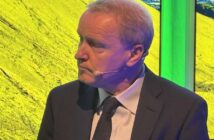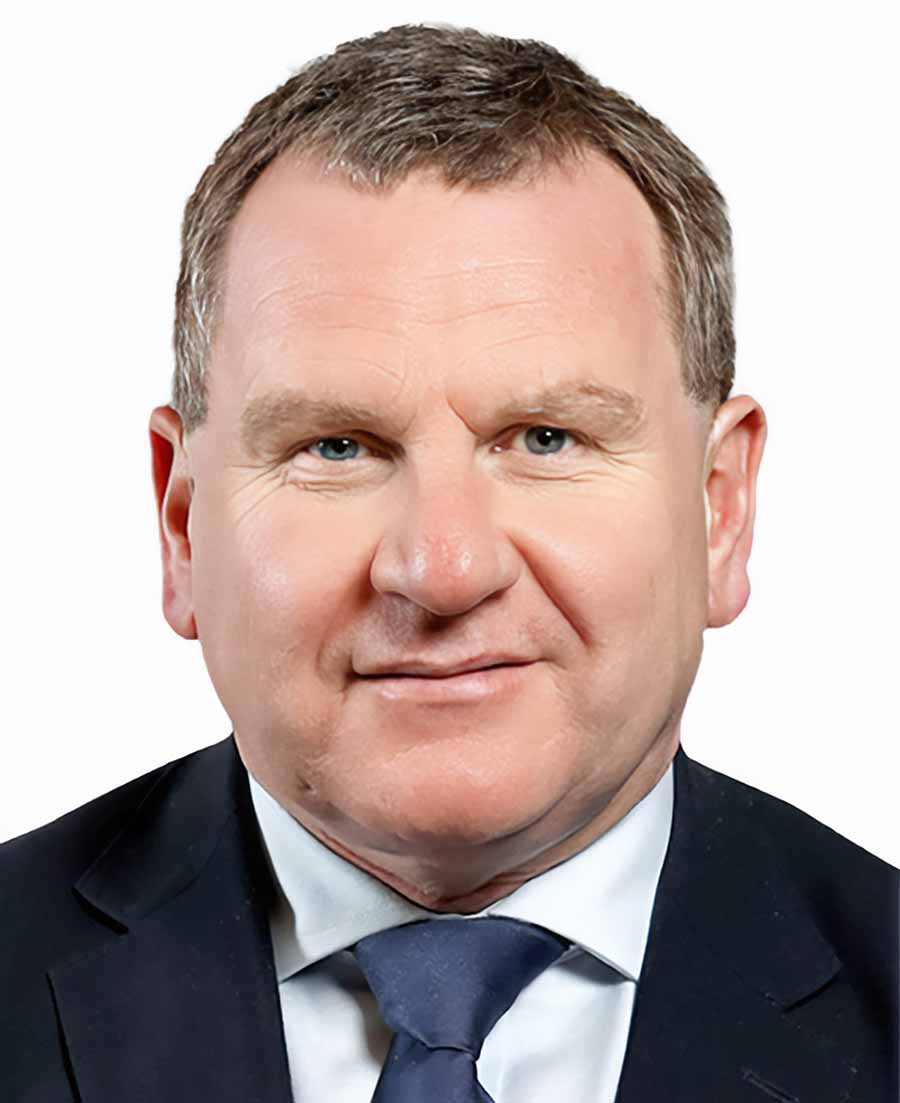
The world remains in rude good health economically, driven by a growing global middle class and falling long-term interest rates, but Europe faces profound challenges from shifting priorities towards competitiveness, defence, and centralised power, Ibec CEO Danny McCoy told delegates at the Irish Hotels Federation Annual Conference in Killarney.
Mr McCoy described the global economy as strong and resilient, with no signs of slowdown despite geopolitical tensions. He attributed this to a surge in savers worldwide, as more people enter the middle class and prioritise future consumption over immediate spending. This abundance of savings has pushed long-term interest rates downward, signalling a healthy economy where more projects become viable due to lower discount rates.
He illustrated the power of compound interest with an anecdote: folding a sheet of paper repeatedly to reach the moon takes 42 folds in one direction, but returning from the moon requires far fewer due to exponential halving – a metaphor for how interest rates compound costs and returns viciously in business.
McCoy argued that people’s core motivations remain unchanged: intergenerational concerns drive saving and consumption patterns. While technology like AI advances exponentially, it progresses too slowly in practical applications such as autonomous transport. He predicted AI would commoditise information and knowledge, pushing premium value towards human elements like care, wisdom, and authentic experiences – areas central to hospitality.
Turning to Europe, McCoy warned of rapid changes that threaten small open economies like Ireland. He highlighted the abandonment of the most favoured nation principle in trade deals, leading to inconsistencies across agreements with Mercosur, China, India, and others. The Draghi report on EU competitiveness, he said, risks undermining level playing fields by allowing state aid exceptions and diluting procurement rules for larger members.
Recent developments include “European preference” policies that favour core countries like France, Germany, and Italy, and the emergence of an informal E6 group (France, Germany, Italy, Poland, Spain, Netherlands) pushing enhanced cooperation on a savings and investment union potentially disadvantageous to Dublin’s funds industry.
McCoy urged greater focus on Brussels over Washington, noting Ireland’s perceived lack of engagement in European security and defence discussions. He criticised the EU’s capitulation in trade negotiations with the US and the impending overhaul of regulations like the pay transparency directive, which impose administrative burdens in a competitive global landscape where rivals do not follow suit.
On Ireland’s domestic position, McCoy pointed to enormous household savings as untapped potential. He revealed that Irish households held €172 billion in bank deposits the previous night – an average of €80,000 per household, or over €25,000 per person in a three-person household. This wealth, he argued, reflects confidence but requires policies to channel it into productive investment rather than low-yield accounts.
McCoy concluded that while the macroeconomic story remains positive globally, Europe’s trajectory demands vigilance. Ireland must advocate strongly to protect its interests amid moves towards centralisation and away from open, rules-based systems that have benefited small economies.
In addition, Danny McCoy, responded to questions on tourism’s place in national priorities, economic control, outbound travel, and Ireland’s upcoming EU Presidency.
On Tourism’s Emphasis in Policy
I do not see a new emphasis on tourism. To be frank about it, that is to its detriment. We are still beholden to certain sectors – still beholden to the export-focused tech sector when you cut to the chase. It should be much more significant.
The first move – bringing tourism under enterprise – is a good one. If you take my analogy, tourism used to be a derived demand: people would make stuff somewhere, get the money, and then want to spend it. It is now moving, I would argue, to be a primary aspect. If you take my logic of moving to the heart and the experience economy, that is the modernity of it.
There is a lot more to do to make it much more central and focused.
Paul is right. Some might think that the VAT cut has been done, so we can move on to somewhere else for a budget cycle. That is a real danger.
For the Irish Hotels Federation, it is really strong. The members should get behind that. Do not declare victory on this too soon.
On Maximising Tourism Potential and Regional Growth
Paul Gallagher is right that maximising potential means focusing on areas outside Dublin. We saw from Sarah’s data that a lot of the growth is centred in Dublin, but nationally the picture is quite positive.
The economy is too strong and it is not controllable. A lot of what is happening in Ireland economically is not in the control of Ireland.
The Department of Finance predictions for 10 years said corporate tax was going to keep stopping. It has not – it is going to be bigger again this year. We already see momentum. Eli Lilly paid €6.6 billion in corporate tax last year. One of our public broadcasters did not even think they were in the top three. Things are changing really quickly and continuing to get frothier.
The capacity to control the economy and resources is much more limited. We are very immature in terms of your industry.
The amount of Irish households holidaying abroad – whatever number it turns out to be – with 36 million passengers going through Dublin Airport as just one port, business travel has hardly got back to 2019 levels. How many foreign tourists come in? The vast majority of those trips are six and seven trips by rich Irish households spending their money abroad – importing leisure services by going away.
On Ireland’s EU Presidency and International Standing
With the European Presidency, all eyes will be on Ireland in the coming months. We can get over that kind of pat on the back for running it great.
We are going to have a lot of goodwill, a lot of numbers filling up hotel rooms at least.
Irish goodwill is really low internationally. A lot of the positions we have taken – reflecting our values – have not been backed up by our interests. We profess lots of things but we are not actually putting money behind our values. We are people receiving windfalls.
It is arguable – and others can argue this – that the resources we are benefiting from are a new form of colonisation. Older colonisations were taking tangible assets from other jurisdictions. We are benefiting from intangible assets that are actually in other jurisdictions.
We talk about the Apple windfall, yet migration-wise we want to move Nigerians back out of Ireland when they are in a tented community by the canal. Nigeria bought way more Apple products and created the profits which we run into – and then profess to have high boundaries.
Our hypocrisy, particularly around our security and our defence, is known by others. The notion that we run a good presidency and get tapped on the head is gone way beyond this.
Part of Ireland has been excluded from lots of things because people are fed up with the hypocrisy of what they see as running a Swiss model here – getting money even though we are playing by all the rules. We should be defending that we are playing by the rules, but in terms of how we recycle that money back to the benefit, it is unconscionable.
Europe is at war. It is not on the prospect of war. Certainly cyber security – we are being hit every day. We have the new defence strategy and spending that is coming in ahead of this summit taking place. We will have to see about the catch-up being put towards that.