- Ardmore Studios, Bray: Ireland’s historic film studio in Bray was the base for interior and some exterior work on This Other Eden (1959), a comedy about a small Irish town’s plan to erect a monument to an IRA hero; the studio supported the production’s period sets and ensemble scenes with Abbey Theatre actors, contributing to the film’s satirical take on post-independence Irish society.
- Avoca Mines, near Avoca: The abandoned copper and lead mine with gritty, rugged terrain stood in for forested wilderness in Cocaine Bear (2023), enhancing the film’s chaotic, bear-rampage sequences in a remote setting.
- Ballinastoe Forest and other Wicklow woodlands (plus Ardmore Studios for interiors): The primeval, moss-covered forests of Ballinastoe and surrounding areas created the vast, untouched, fairy-haunted woodland in The Watched (known as The Watchers in the USA, 2024), directed by Ishana Night Shyamalan and starring Dakota Fanning; the eerie, ancient trees and remote glens provided the claustrophobic, creature-stalked setting for this folk-horror tale of survival and observation.
- Ballyknockan, Valleymount, and rural Wicklow areas: The quiet village and countryside around Ballyknockan stood in for the fictional enclave of “Widows’ Peak” in Widows’ Peak (1994), a mystery-comedy starring Mia Farrow, Joan Plowright, and Natasha Richardson; the scenic, 1930s-era rural charm captured the gossipy, widows-only community and the story’s twists of intrigue and hidden pasts.
- Blessington Lakes (Poulaphouca Reservoir), Sally Gap, and Ballysmuttan Bridge: The scenic lakes, heather-covered moorlands, mountain passes, and historic stone bridge captured romantic walks, fishing mishaps, and heartfelt countryside moments in P.S. I Love You (2007); these spots, including rural drives and bridges over the River Liffey, evoked love, memory, and Irish scenery in the Gerard Butler-Hilary Swank drama.
- Blessington Lakes and Sally Gap (Wicklow Mountains): The scenic reservoir lakes and high mountain pass roads provided rolling moorland and heather-covered hills for rural Irish countryside moments in several films; they doubled for Highland landscapes and horseback escapes in Braveheart (1995), including a constructed tower for a dramatic leap scene.
- Bray Head Hotel and Wicklow Railway Station, Bray/Wicklow: These sites featured in Breakfast on Pluto (2005), directed by Neil Jordan and starring Cillian Murphy, contributing to the film’s 1970s Irish settings and transitional scenes in the satirical drama.
- Enniskerry village and surrounding areas: The picturesque planned village and nearby streets stood in for the fictional town of Clonmore in Irish Destiny (1926), a silent film dramatising the War of Independence; its rural charm and historic feel captured motorbike chases, community scenes, and dramatic outdoor sequences in this early Irish production.
- Enniskerry village, Bray, and Manor Kilbride (Manor House): These sites, including the charming village streets and historic manor house, formed the isolated Blackwood family home and surrounding community in We Have Always Lived in the Castle (2018), an adaptation of Shirley Jackson’s novel starring Alexandra Daddario; the locations evoked the film’s gothic, reclusive atmosphere of secrets, poisoning, and village suspicion.
- Enniskerry village: The picturesque, planned estate village with its charming streets and proximity to Powerscourt featured in P.S. I Love You (2007) for post-wedding and small-town scenes, and was transformed into a fairy-tale kingdom for Disenchanted (2022), showcasing its idyllic, storybook-like architecture. The village was transformed into the fairy-tale kingdom of Monroeville in Disenchanted (2022), starring Amy Adams, capturing whimsical, storybook-like settings for the Disney sequel.
- Glendalough (Wicklow Mountains National Park): The ancient monastic settlement in a dramatic glacial valley, featuring round towers, stone churches, lakes, and rugged scenery, provided atmospheric medieval and mystical settings for productions such as Excalibur (1981) for Arthurian landscapes, The Tudors for historical exteriors, and episodes of Vikings (2013–2020) utilising its haunting ruins and misty lakes to evoke Norse-era wilderness. The ancient monastic ruins, lakes, and dramatic glacial valley featured in the wedding reception marquee and romantic countryside scenes in Leap Year (2010); the area’s misty, scenic beauty stood in for idealised Irish landscapes in the romcom starring Amy Adams.
- Killruddery House & Gardens, Bray: This historic Elizabethan revival mansion with extensive formal gardens and parkland served as aristocratic homes and estates in films including My Left Foot (1989), Far and Away (1992), Excalibur (1981), Ella Enchanted (2004), and The Count of Monte Cristo (2002), offering grand interiors and manicured grounds perfect for period dramas; it also featured in P.S. I Love You (2007) for rural Irish cottage and estate scenes. The mansion and its formal gardens doubled as the eerie, haunted Bly Manor in The Turning (2020), the modern horror adaptation of Henry James’ The Turn of the Screw; the estate’s dark rooms, grand halls, and atmospheric grounds amplified the film’s themes of isolation, ghosts, and psychological dread.
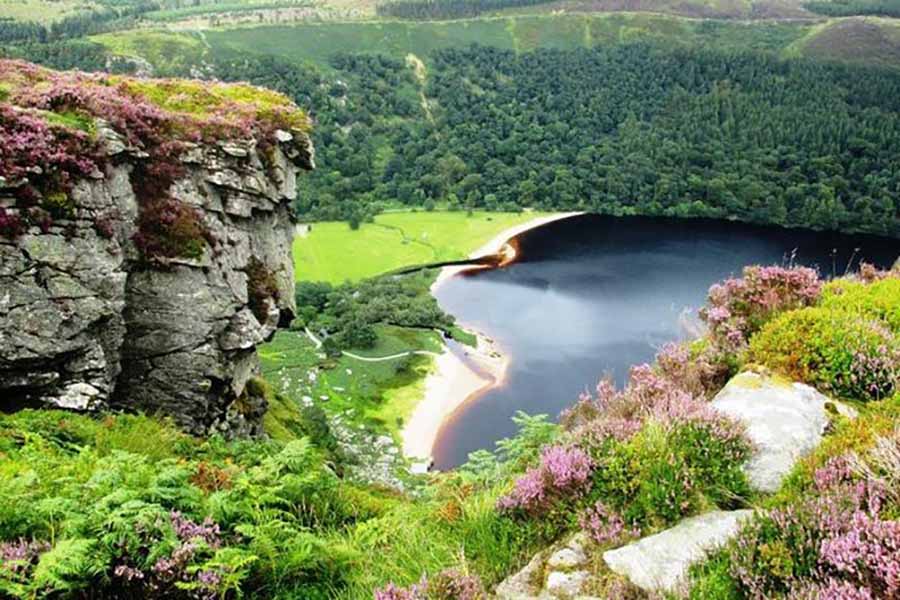
- Lough Tay (Guinness Lake), near Roundwood: This strikingly dark, crescent-shaped mountain lake with forested shores and dramatic views was a key location for Vikings (2013–2020) and Vikings: Valhalla, standing in for Scandinavian fjords and providing epic, brooding natural backdrops for Viking raids, journeys, and settlements; its unique shape and surrounding wilderness added to the series’ atmospheric Norse world. It provided a key backdrop in Cracks (2009), where its dramatic setting enhanced the film’s tense, isolated boarding-school drama.
- Luggala Estate / Lough Tay, Glencree Centre for Reconciliation, Brennanstown Riding School (Hollybrook Hall), and other Wicklow sites: These dramatic mountain and lake locations, including the brooding Lough Tay and remote valleys, featured extensively in Zardoz (1974), John Boorman’s cult sci-fi fantasy starring Sean Connery; the Vortex community and wasteland sequences used the county’s wild, surreal landscapes to depict a dystopian future of immortals, savages, and philosophical excess.
- Manor Kilbride and remote farm areas: Isolated rural farms and countryside around Manor Kilbride formed the eerie, remote setting for Isolation (2005), a sci-fi horror about a genetic experiment gone wrong on a cattle farm; the dirty, atmospheric locations amplified the film’s nightmarish tension and bovine horror elements.
- Powerscourt Estate, House & Gardens (near Enniskerry): This grand Georgian estate with magnificent formal gardens, terraces, lakes, and Ireland’s highest waterfall has been one of the most frequently used filming sites in the country, appearing in over 50 productions; notable uses include elegant interiors and grounds in Barry Lyndon (1975), where the ballroom and grounds provided opulent 18th-century aristocratic settings, Far and Away (1992), royal and period settings in The Tudors TV series, gothic and romantic backdrops in Mary Shelley (2017), fairy-tale transformations in Disenchanted (2022), romantic scenes in Irish Wish (2024), various sequences in Vikings (2013–2020) and its spin-offs, Ella Enchanted (2004), standing in for royal courts and castle interiors with its elegant architecture; Disenchanted (2022), contributing fairy-tale transformations and romantic backdrops; and Cocaine Bear (2023), where the waterfall and surrounding areas doubled for rugged wilderness scenes in the Georgia-set horror-comedy.
- Redcross, Laragh, and various rural sites (including Leinster areas): Remote farmlands, churches (such as St John’s Church of Ireland), and countryside stood in for rural England in Rawhead Rex (1986), Clive Barker’s horror about a rampaging pagan monster; the isolated locations heightened the film’s bloody, primal terror.
- Roundwood and surrounding rural sites: Peaceful countryside and small-town elements around Roundwood provided settings for Loss (2008), a Lithuanian-Irish drama about immigration and tragedy; the locations evoked quiet human stories amid Wicklow’s understated rural charm.
- Wicklow Gap and Glendalough areas: Dramatic mountain gaps, valleys, and ruins doubled for post-apocalyptic wastelands in Reign of Fire (2002), starring Christian Bale and Matthew McConaughey; a large custom-built keep/fort in the mountains served as the survivors’ stronghold amid dragon-ravaged landscapes.
- Wicklow Harbour and port areas (North Quay, Wicklow Town): The working harbour and coastal town provided authentic trawler and maritime exteriors for Sea Fever (2019), a sci-fi horror thriller; the location grounded the film’s isolated-at-sea parasite outbreak in realistic Irish fishing community settings.
- Wicklow Mountains National Park (various forested and remote glens): The stark, misty woodlands and natural landscapes of the national park created the isolated, cult-like compound for The Other Lamb (2019), a folk horror film; the verdant yet eerie scenery enhanced the story’s themes of control, femininity, and supernatural dread.
- Wicklow Town (including harbour, streets, and Black Castle), Greystones, and nearby coastal areas: These locations served as the primary setting for Taffin (1988), starring Pierce Brosnan as a debt collector facing local corruption; the town’s harbour hosted key action sequences, pubs and streets captured everyday Irish life, and the dramatic Black Castle provided a brooding backdrop for tense confrontations in this gritty thriller.
- Various rural and woodland sites (including Ashford, Kilpedder, and Wicklow Mountains areas): County Wicklow’s forests, seascapes, and countryside were used extensively in Arcadian (2024), starring Nicolas Cage, to create a post-apocalyptic dystopian world with real locations replacing heavy CGI for barren, eerie exteriors. Moody mountain exteriors and countryside contributed to atmospheric 1980s small-town scenes in Small Things Like These (2024), starring Cillian Murphy; the locations added to the film’s quiet, morally complex exploration of hidden truths in mid-20th-century Ireland (though primary town settings were in nearby counties). The rugged glens and stockade set in the Wicklow Mountains National Park doubled for medieval Scottish landscapes in Braveheart (1995), notably the English stockade attack sequence.
These locations highlight County Wicklow’s nickname as the “Hollywood of Europe” or “Garden County”, thanks to its lush mountains, ancient sites, grand estates, and proximity to Dublin (with Ardmore Studios in Bray supporting many productions). The county excels in period dramas, historical epics, fantasy, and romantic films, often providing versatile, photogenic Irish landscapes that double for other eras or countries.
Movie locations in the county
Antrim – Armagh – Carlow – Cavan – Clare – Cork – Derry – Donegal – Down – Dublin – Fermanagh – Galway – Kerry – Kildare – Kilkenny – Laois – Leitrim – Limerick – Longford – Louth – Mayo – Meath – Monaghan – Offaly – Roscommon – Sligo – Tipperary – Tyrone – Waterford – Westmeath – Wexford – Wicklow
County Wicklow:
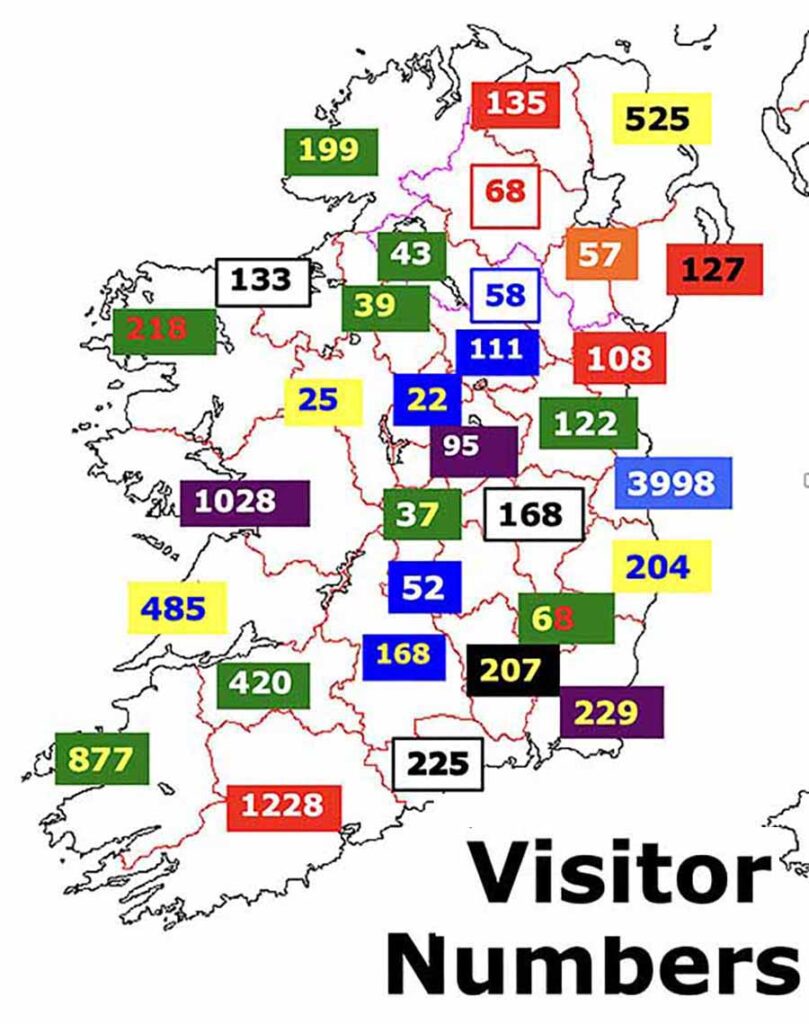
Ireland’s county Wicklow is known as the Garden of Ireland for its lush landscapes, with Glendalough’s monastic ruins and round tower set amidst serene lakes and valleys. The Wicklow Mountains National Park offers hiking trails with stunning views, while Powerscourt Estate’s manicured gardens and waterfall add natural elegance. Other attractions include the coastal paths of Bray. Wicklow is Ireland’s 17th largest county by size (,025 sq km) and 16th largest by population (155,851). Population peaked at 126,143 in 1841 and reached its lowest point, 57,591 in 1926. In terms of hospitality, Wicklow is Ireland’s twelfth most visited tourist county with around 204,000 international visitors per year.
Introduction – Adventure – Anthem – Archaeology – Attractions – Awards – Birdwatching – Camping – Castles – Churches – Contact list – Cycling – Dining – Equestrian – Festivals – Fishing – Folklore – Gardens – Golf – Graveyards – Happening – Haunted – Highest – Hiking – History – Holy Wells – Hotels – Hotels top 8 – Hunting & shooting – Instagrammable – Itineraries – Largest town – Luxury – MICE – Movies – Music – Name – New – Novelists – Off the beaten track – Poets – Pubs – Quotes – Random Facts – Restaurant Awards – Sacred Places – Saints – Songs – Spas – Sports – Sunsets – Sustainable – Things to do – Towns – Video – Villages – Walking – Wanderlist – Weddings – Wild swimming – Writers – 1837 – 1846– 1852 – 1909 – 1955 – 1980 –