- The Fairy Fort and the Uprooted Tree: In Glasnamullen, a large tree grew within a fairy fort; when a man attempted to cut it down, the tree was mysteriously uprooted and flung into the air by the fairies, landing far away, after which no one dared interfere with the site.
- Michael Dwyer and the Hume Family: Shortly after the 1798 rebellion, the renowned Wicklow chieftain Michael Dwyer met a representative of the Hume family in a dramatic encounter tied to his guerrilla resistance in the mountains against British forces.
- The Crock of Gold in Talbotstown: In Talbotstown, a man named Mr Kelly discovered a crock of gold buried beside an apple tree in his orchard, one of many tales of hidden treasure found in lonesome places throughout the county.
- Lights in the Fairy Raheen at Moneyteigue: Near Croghan Mountain in Moneyteigue, a raheen (small ring fort) is believed to be inhabited by fairies; mysterious lights are frequently seen in the trees beside it, and touching anything there risks misfortune.
- The Granny’s Rock on Lackens Hill: On Ballintubber hill, known locally as Lackens, stands a large rock shaped like a woman, earning it the name “The Granny’s Rock”; ancient tradition surrounds its formation and significance in the landscape.
Folklore
Antrim – Armagh – Carlow – Cavan – Clare – Cork – Derry – Donegal – Down – Dublin – Fermanagh – Galway – Kerry – Kildare – Kilkenny – Laois – Leitrim – Limerick – Longford – Louth – Mayo – Meath – Monaghan – Offaly – Roscommon – Sligo – Tipperary – Tyrone – Waterford – Westmeath – Wexford – Wicklow
County Wicklow:
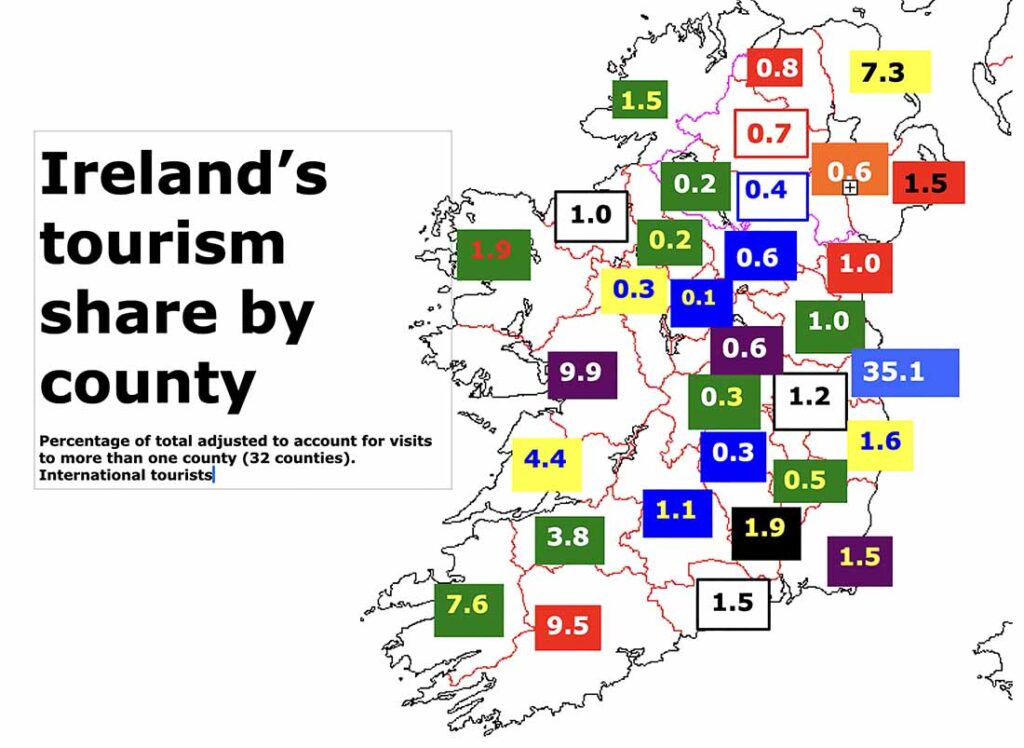
Ireland’s county Wicklow is known as the Garden of Ireland for its lush landscapes, with Glendalough’s monastic ruins and round tower set amidst serene lakes and valleys. The Wicklow Mountains National Park offers hiking trails with stunning views, while Powerscourt Estate’s manicured gardens and waterfall add natural elegance. Other attractions include the coastal paths of Bray. Wicklow is Ireland’s 17th largest county by size (,025 sq km) and 16th largest by population (155,851). Population peaked at 126,143 in 1841 and reached its lowest point, 57,591 in 1926. In terms of hospitality, Wicklow is Ireland’s twelfth most visited tourist county with around 204,000 international visitors per year.
Introduction – Adventure – Anthem – Archaeology – Attractions – Awards – Birdwatching – Camping – Castles – Churches – Contact list – Cycling – Dining – Equestrian – Festivals – Fishing – Folklore – Gardens – Golf – Graveyards – Happening – Haunted – Highest – Hiking – History – Holy Wells – Hotels – Hotels top 8 – Hunting & shooting – Instagrammable – Itineraries – Largest town – Luxury – MICE – Movies – Music – Name – New – Novelists – Off the beaten track – Poets – Pubs – Quotes – Random Facts – Restaurant Awards – Sacred Places – Saints – Songs – Spas – Sports – Sunsets – Sustainable – Things to do – Towns – Video – Villages – Walking – Wanderlist – Weddings – Wild swimming – Writers – 1837 – 1846– 1852 – 1909 – 1955 – 1980 –