- Glendalough Monastic Site: A 6th-century monastic settlement in a glacial valley, founded by St. Kevin. Visitors can expect to explore the iconic round tower, stone churches, and Celtic crosses, with a visitor center offering exhibits on monastic life. Scenic walking trails around the Upper and Lower Lakes provide stunning views, ideal for history buffs and hikers.
- Powerscourt House and Gardens: A 13th-century estate near Enniskerry with Ireland’s finest gardens, set against the Sugarloaf Mountain. Visitors can expect 47 acres of formal gardens, including Italianate designs, a Japanese garden, and a waterfall (Ireland’s tallest, see below). The mansion offers tours, a café, and Avoca shops, blending elegance with family-friendly appeal.
- Powerscourt Waterfall: Ireland’s highest waterfall at 121 meters, located 6km from Powerscourt Estate. Visitors can expect a scenic picnic area, nature trails, and views of the cascading falls surrounded by woodlands. The site is family-friendly, with a playground and seasonal refreshments, offering a peaceful outdoor experience.
- Wicklow Mountains National Park: A 20,483-hectare park encompassing rugged peaks, bogs, and heather-covered hills. Visitors can expect hiking trails like the Spinc Loop around Glendalough’s Upper Lake or the Wicklow Way, with chances to spot deer and rare birds. The visitor center near Glendalough provides maps and ecological insights for outdoor enthusiasts.
- Brayford and Russborough House: Russborough House, near Blessington, is an 18th-century Palladian mansion with a renowned art collection. Visitors can expect guided tours of opulent interiors, showcasing baroque plasterwork and the Beit art collection, plus walks through formal gardens and a maze. The nearby Blessington Lakes offer boating and scenic drives.
- Wicklow’s Historic Gaol: An 18th-century prison in Wicklow Town, offering a glimpse into Ireland’s penal history. Visitors can expect interactive tours through cells and dungeons, with actors portraying prisoners and tales of the 1798 Rebellion. The gaol’s immersive exhibits and genealogy resources appeal to history lovers.
- Avoca Village and Weaving Mill: A picturesque village famous for Avoca Handweavers, Ireland’s oldest working woollen mill, established in 1723. Visitors can expect tours of the mill to see traditional weaving, a shop with colorful textiles, and a café serving local fare. The village’s river setting and nearby gardens add charm.
- Bray Head and Cliff Walk: A coastal headland in Bray with a 7km cliff walk to Greystones. Visitors can expect a scenic trail with panoramic views of the Irish Sea, accessible paths, and a cross at Bray Head’s summit. Bray’s promenade, with its aquarium and cafés, complements the walk for a lively seaside experience.
- Killruddery House and Gardens: A 17th-century estate near Bray, home to the Brabazon family. Visitors can expect guided tours of the Elizabethan-Revival house (seasonal) and 800 acres of formal gardens, including a sylvan theatre and orangery. The farm shop, café, and seasonal farmers’ market make it a vibrant stop.
- Lugnaquilla and the Wicklow Way: Lugnaquilla, Wicklow’s highest peak at 925 meters, is part of the 131km Wicklow Way walking trail. Visitors can expect challenging hikes to Lugnaquilla’s summit, with sweeping views of the Wicklow Mountains, or shorter sections of the Wicklow Way through valleys and forests. Proper gear is essential for this rugged terrain.
Attractions
Antrim – Armagh – Carlow – Cavan – Clare – Cork – Derry – Donegal – Down – Dublin – Fermanagh – Galway – Kerry – Kildare – Kilkenny – Laois – Leitrim – Limerick – Longford – Louth\ – Mayo – Meath – Monaghan – Offaly – Roscommon – Sligo – Tipperary – Tyrone – Waterford – Westmeath – Wexford – Wicklow
County Wicklow:
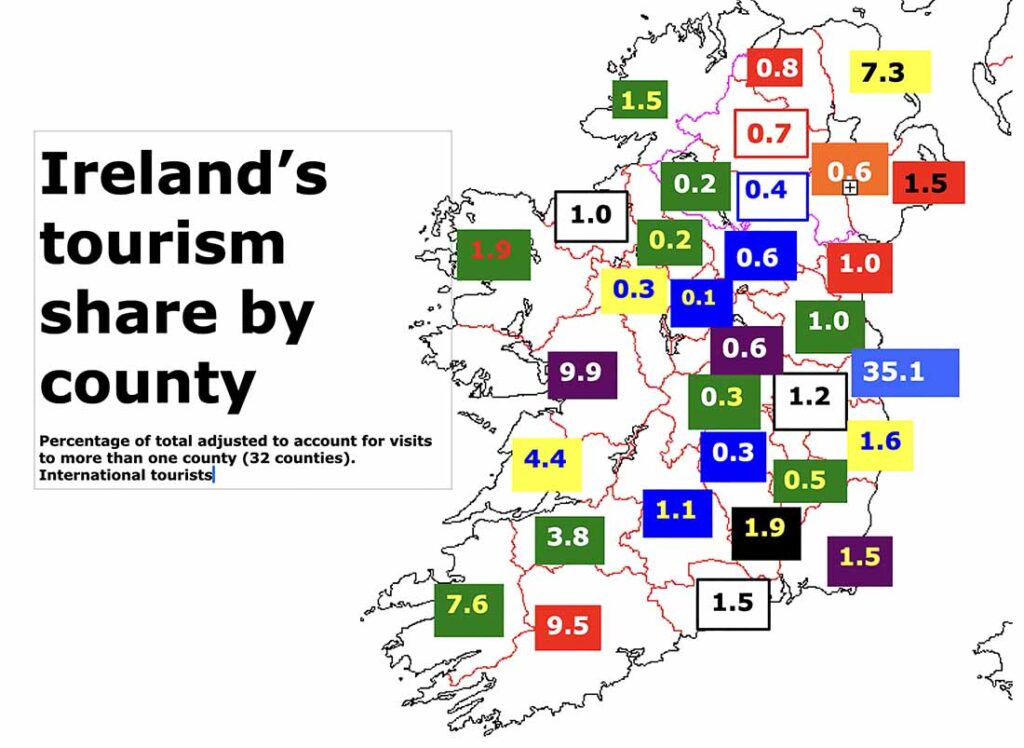
Ireland’s county Wicklow is known as the Garden of Ireland for its lush landscapes, with Glendalough’s monastic ruins and round tower set amidst serene lakes and valleys. The Wicklow Mountains National Park offers hiking trails with stunning views, while Powerscourt Estate’s manicured gardens and waterfall add natural elegance. Other attractions include the coastal paths of Bray. Wicklow is Ireland’s 17th largest county by size (,025 sq km) and 16th largest by population (155,851). Population peaked at 126,143 in 1841 and reached its lowest point, 57,591 in 1926. In terms of hospitality, Wicklow is Ireland’s twelfth most visited tourist county with around 204,000 international visitors per year.
Introduction – Adventure – Anthem – Archaeology – Attractions – Awards – Birdwatching – Camping – Castles – Churches – Contact list – Cycling – Dining – Equestrian – Festivals – Fishing – Folklore – Gardens – Golf – Graveyards – Happening – Haunted – Highest – Hiking – History – Holy Wells – Hotels – Hotels top 8 – Hunting & shooting – Instagrammable – Itineraries – Largest town – Luxury – MICE – Movies – Music – Name – New – Novelists – Off the beaten track – Poets – Pubs – Quotes – Random Facts – Restaurant Awards – Sacred Places – Saints – Songs – Spas – Sports – Sunsets – Sustainable – Things to do – Towns – Video – Villages – Walking – Wanderlist – Weddings – Wild swimming – Writers – 1837 – 1846– 1852 – 1909 – 1955 – 1980 –