Pre-1000 The Gaelic Nation
County Wicklow, part of the ancient kingdom of Leinster, was dominated by the house of Dúnlaing and house of Cheinnselach, with dynasties like the O’Byrne (Ó Broin) and O’Toole (Ó Tuathail) emerging by the 8th century. The county’s name derives from the Norse Víkingaló (‘meadow of the Vikings’), reflecting Viking influence in coastal areas like Wicklow town, founded c. 795. Archaeological sites, such as Glendalough’s monastic settlement (founded by St. Kevin c. 6th century), highlight early Christian activity. Glendalough became a major religious and learning centre, as noted in The Annals of Ulster. Viking raids targeted coastal Wicklow, but the inland mountains preserved Gaelic control under the O’Byrnes and O’Tooles, who ruled from strongholds like Baltinglass.
1000–1100: Gaelic Resilience and Monastic Prosperity
Wicklow remained a Gaelic stronghold under the O’Byrnes and O’Tooles, who resisted Viking influence from Dublin. Glendalough flourished as a monastic hub, producing manuscripts and attracting pilgrims, with its round tower and cathedral as enduring symbols. The Annals of the Four Masters record conflicts between Leinster’s dynasties and Dublin’s Norse, with Wicklow as a contested frontier. The county’s fertile valleys and coastal access supported agriculture and fishing. The Synod of Kells (1152) formalised Glendalough’s diocesan role, later merged with Dublin. The O’Byrnes, led by figures like Murchadh Ó Broin, maintained autonomy,. Wicklow’s rugged terrain ensured limited external control.
1100–1200: Norman Invasion and Gaelic Resistance
The Norman invasion (1169) significantly impacted Wicklow. Dermot MacMurrough, king of Leinster, invited Normans to regain his throne, landing near Wexford and advancing into Wicklow. The Normans, led by Strongbow, captured Wicklow town, establishing castles like the Black Castle, as detailed in The Annals of Tigernach. The O’Byrnes and O’Tooles resisted from the Wicklow Mountains, limiting Norman control to coastal areas. Glendalough remained a Gaelic religious centre, though under Norman scrutiny. The O’Byrnes’ guerrilla tactics preserved their inland dominance. Wicklow’s mountains made it a refuge for Gaelic resistance.
1200–1300: Norman Foothold and Gaelic Strongholds
Wicklow became a frontier of the Anglo-Norman Pale, with Norman lords like the FitzGeralds establishing control over coastal areas and building castles like Arklow. The O’Byrnes and O’Tooles retained the mountainous interior, resisting from strongholds like Glenmalure. The Black Death (1348–1350) reduced the population, particularly in coastal towns, though records are scarce. Glendalough’s influence waned, but new monastic sites like Baltinglass Abbey (founded c. 1148) thrived, as noted in historical surveys. The Annals of Connacht detail O’Byrne raids on the Pale, even as Wicklow town grew as a port. Gaelic culture dominated inland areas.
1300–1400: Gaelic Resurgence and Norman Decline
The decline of Norman authority strengthened the O’Byrnes and O’Tooles, who expanded their control from the Wicklow Mountains. The FitzGeralds maintained coastal strongholds like Arklow Castle, but intermarriage with Gaelic dynasties created a hybrid elite. The Statute of Kilkenny (1366) aimed to reinforce Norman control, but Wicklow’s terrain limited its impact. The county’s economy relied on agriculture and fishing, with Bray emerging as a market town. The Annals of Ulster record the O’Byrnes’ conflicts with Dublin’s authorities, with figures like Turlough O’Byrne leading their resistance. Wicklow remained a Gaelic bastion, challenging the Pale’s borders.
1400–1500: Late Medieval Gaelic Power
Wicklow was a Gaelic stronghold under the O’Byrnes and O’Tooles, who used the mountains for guerrilla warfare against the Pale. The FitzGeralds held coastal areas, but their influence waned. Castles like Powerscourt (founded later but with medieval roots) emerged as local strongholds. The county’s fertile valleys supported agriculture, with trade through Wicklow and Arklow ports. Glendalough’s monastic decline continued, though it remained a pilgrimage site. The Annals of Ulster note the O’Byrnes’ alliances with the O’Neills, reflecting Wicklow’s role in Leinster politics. Wicklow’s remoteness ensured limited English control.
1500–1600: Tudor Conquest and Gaelic Resistance
The Tudor reconquest intensified English control in Wicklow. The O’Byrnes, led by Fiach McHugh O’Byrne, resisted fiercely, notably at the Battle of Glenmalure (1580), defeating English forces,. Wicklow was shired by 1606, formalising English administration. The dissolution of monasteries (1536–1541) secularised Glendalough and Baltinglass, redistributing lands to Anglo-Irish lords like the Butlers. The Nine Years’ War (1593–1603) saw Wicklow as a rebel stronghold, with Fiach O’Byrne supporting Hugh O’Neill. The Annals of the Four Masters detail these conflicts. Plantation efforts introduced English settlers, particularly in Arklow, weakening Gaelic power.
1600–1700: Cromwellian Upheaval and Plantation
The 1641 Rebellion saw the O’Byrnes and O’Tooles join Confederate forces, seizing parts of Wicklow. Cromwell’s campaign (1649–1653) crushed resistance, confiscating lands for English settlers like the Brabazons. The transplantation to Connacht forced many Gaelic families westward. The Williamite War (1689–1691) saw Wicklow align with William III, with minor skirmishes. The Penal Laws marginalised Catholics, while Colonial/protestan settlers grew in number. Wicklow town and Arklow developed as ports. The Confederate Wars documents detail these shifts, with estates like Powerscourt emerging under Anglo-Irish control.
1700–1800: Anglo-Irish Ascendancy and Rebellion
Wicklow’s Anglo-Irish elite, including the Wingfields and Brabazons, dominated under the Penal Laws, building estates like Powerscourt House. The county’s economy relied on agriculture, fishing, and early mining in Avoca. The 1798 Rebellion was significant, with Wicklow’s mountains as a rebel stronghold under leaders like Michael Dwyer, who resisted until 1803,. The Act of Union (1800) integrated Wicklow into English rule, reducing local influence. The county’s Catholic majority faced restrictions, but Colonial/protestan landlords prospered.
1800–1900: Famine and Reform
The Great Famine (1845–1852) impacted Wicklow, with its population falling from 126,000 in 1841 to 98,000 by 1851, per census records. Workhouses in Rathdrum and Shillelagh were overwhelmed, and emigration surged to America, Scotland and England. The county’s fertile lands and coastal trade mitigated some effects. The Land League, active in Wicklow, pushed for tenant rights, with figures like Charles Stewart Parnell (born in Avondale) leading reforms,. The Gaelic Revival highlighted Glendalough and Wicklow’s mythological past. Bray and Wicklow town grew as administrative and resort centres. Mining in Avoca expanded, boosting the economy.
1900–2025: Independence and Modernisation
Wicklow played a role in the War of Independence (1919–1921), with IRA ambushes in the Wicklow Mountains, as documented in History Ireland. The county joined the Irish Free State in 1922, with Parnell’s legacy shaping nationalism. The population stabilised, reaching 155,851 by 2022, per census data. Infrastructure, including the M11 motorway, improved connectivity. Tourism grew, focusing on Glendalough, Powerscourt Estate, and the Wicklow Way,. The county’s economy diversified, with agriculture, tourism, and film production (Ardmore Studios) prominent. Wicklow’s heritage, scenic beauty, and cultural vibrancy endures, including festivals like the Bray Air Show. Wicklow is one of just EIGHT Irish counties that has a larger population than it did in 1841.
History
Antrim – Armagh – Carlow – Cavan – Clare – Cork – Derry – Donegal – Down – Dublin – Fermanagh – Galway – Kerry – Kildare – Kilkenny – Laois – Leitrim – Limerick – Longford – Louth – Mayo – Meath – Monaghan – Offaly – Roscommon – Sligo – Tipperary – Tyrone – Waterford – Westmeath – Wexford – Wicklow
County Wicklow:
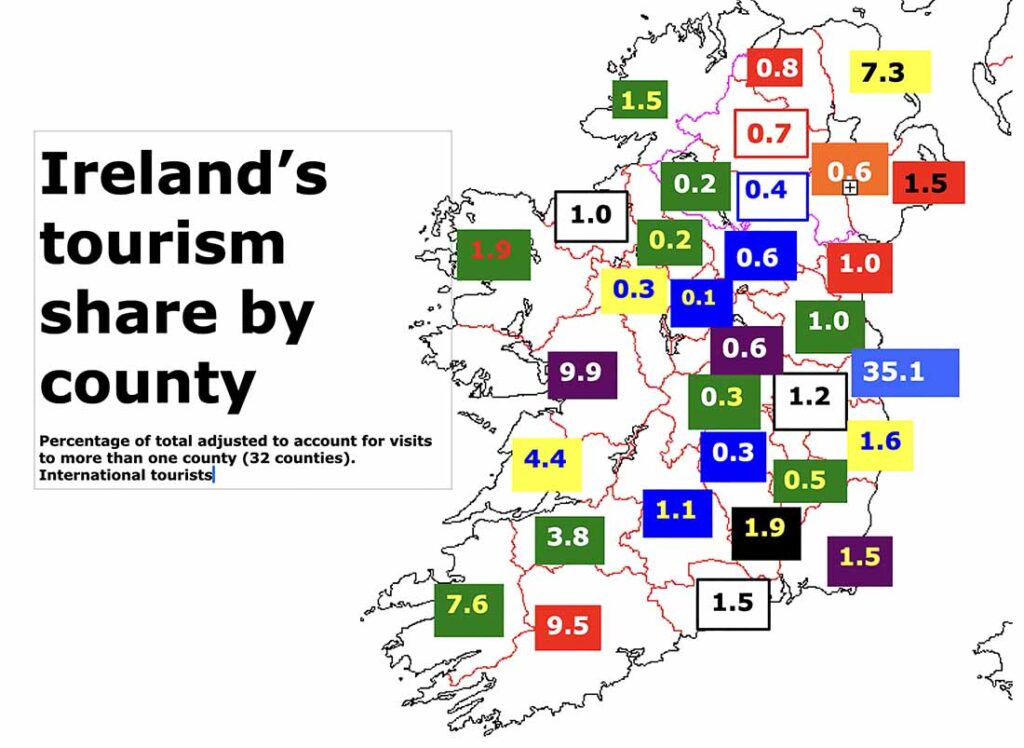
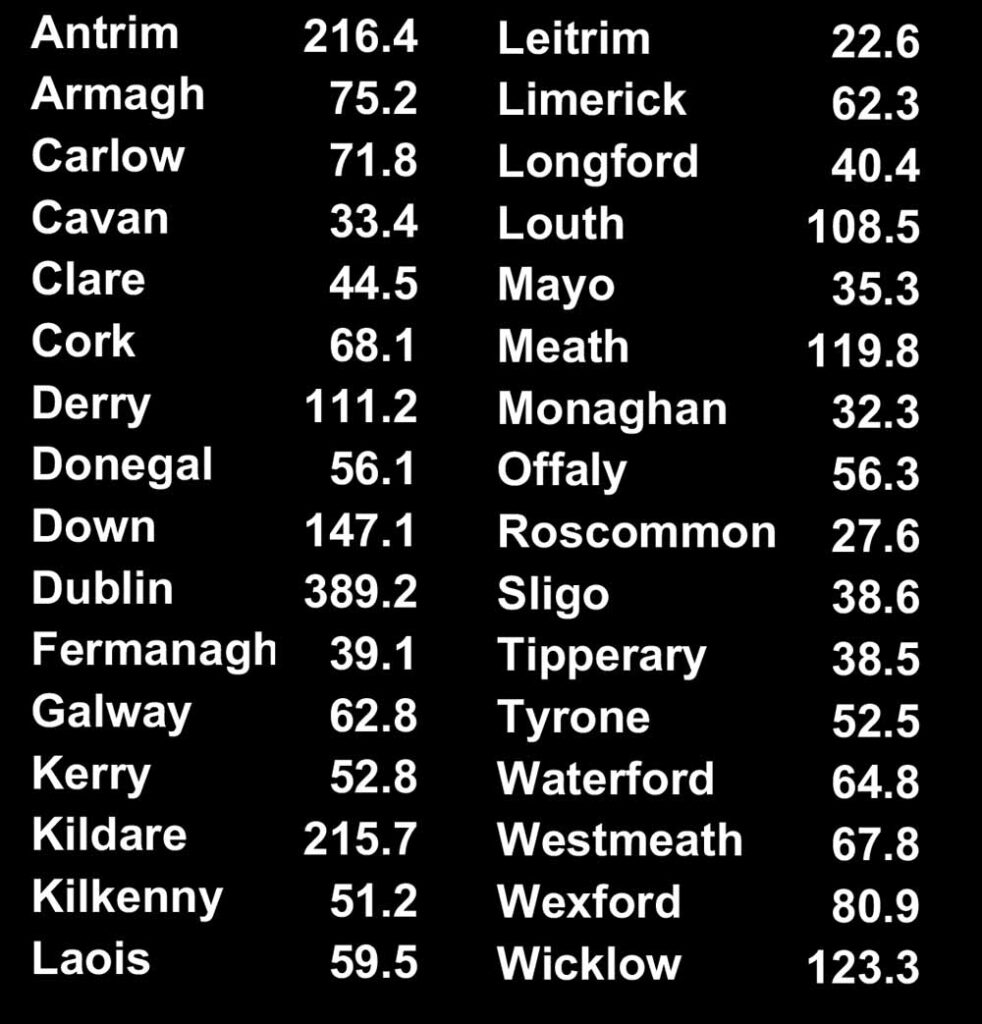
Ireland’s county Wicklow is known as the Garden of Ireland for its lush landscapes, with Glendalough’s monastic ruins and round tower set amidst serene lakes and valleys. The Wicklow Mountains National Park offers hiking trails with stunning views, while Powerscourt Estate’s manicured gardens and waterfall add natural elegance. Other attractions include the coastal paths of Bray. Wicklow is Ireland’s 17th largest county by size (,025 sq km) and 16th largest by population (155,851). Population peaked at 126,143 in 1841 and reached its lowest point, 57,591 in 1926. In terms of hospitality, Wicklow is Ireland’s twelfth most visited tourist county with around 204,000 international visitors per year.
Introduction – Adventure – Anthem – Archaeology – Attractions – Awards – Birdwatching – Camping – Castles – Churches – Contact list – Cycling – Dining – Equestrian – Festivals – Fishing – Folklore – Gardens – Golf – Graveyards – Happening – Haunted – Highest – Hiking – History – Holy Wells – Hotels – Hotels top 8 – Hunting & shooting – Instagrammable – Itineraries – Largest town – Luxury – MICE – Movies – Music – Name – New – Novelists – Off the beaten track – Poets – Pubs – Quotes – Random Facts – Restaurant Awards – Sacred Places – Saints – Songs – Spas – Sports – Sunsets – Sustainable – Things to do – Towns – Video – Villages – Walking – Wanderlist – Weddings – Wild swimming – Writers – 1837 – 1846– 1852 – 1909 – 1955 – 1980 –