- The Department of Foreign Affairs says two Irish passport holders are aboard stricken ship
- Three people died from the suspected hantavirus outbreak on MV Hondius.
- One laboratory confirmed case and five suspected cases affected individuals.
- A 69 year old British national stayed in intensive care in Johannesburg.
- Two crew members on board required urgent medical care.
- Cape Verde authorities withheld permission for symptomatic passengers to disembark.
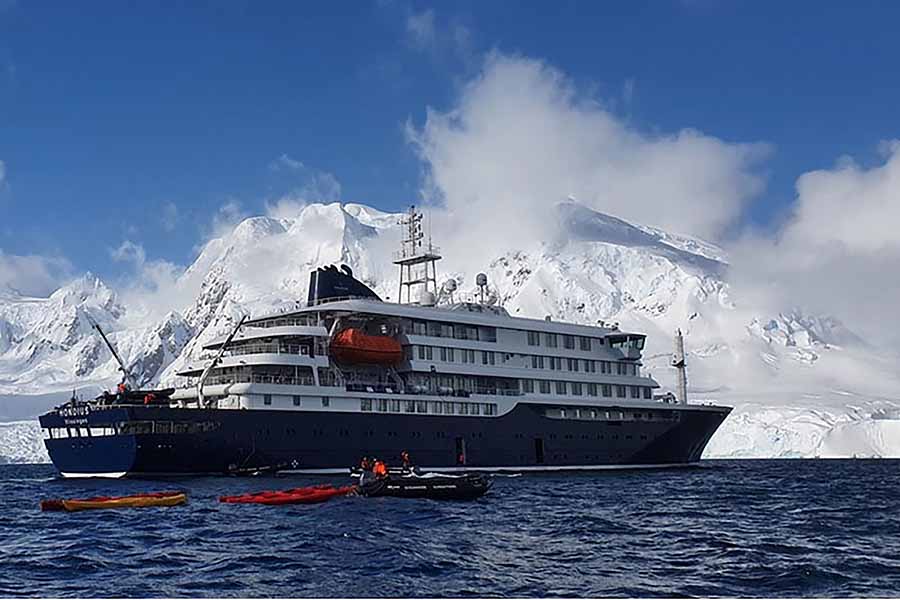
The Department of foreign Affairs says two Irish passport holders are aboard stricken ship as a suspected outbreak of hantavirus has resulted in three deaths and several illnesses aboard the MV Hondius during a voyage from Ushuaia in Argentina.
Oceanwide Expeditions confirmed the incidents on the polar expedition vessel that now remains stationary off Praia in Cape Verde. One 69 year old British national receives treatment in intensive care in Johannesburg.
Cape Verdean authorities denied permission for symptomatic individuals to disembark for treatment on the island. Oceanwide Expeditions and Dutch authorities worked with the World Health Organization to coordinate medical evacuation and repatriation of affected people and the deceased to the Netherlands. Two crew members on board required urgent medical care as of 3 May 2026.
Local health authorities visited the vessel to assess the two symptomatic individuals. The company revealed plans to include the body of one deceased in the repatriation along with one associated guest. Approximately 150 passengers and 70 crew members stayed on board during the risk assessment.
MV Hondius offers various Antarctic voyages from Ushuaia, Argentina, ranging from 11-day “Classic Antarctica” trips to extensive 23-day journeys including South Georgia and the Falklands. Operating with Oceanwide Expeditions, the 176-passenger vessel features rapid zodiac deployment for maximum shore exploration of glaciers, penguins, and whales.
MV Hondius departed from Ushuaia in Argentina on 20 March and was expected to complete its journey on 4 May in Cape Verde, an island nation in the Atlantic west of Africa. Oceanwide Expeditions has founded 1993 and operate around 100 voyages each year. The Van Gessel family established the company after they bought a sailing vessel in 1992. Michel and his father Wijnand set out to follow Dutch explorers such as Willem Barentsz and brought passengers on their journeys.
The company operates three motor vessels and one three-mast schooner Rembrandt van Rijn (1947, sailing vessel that operates only in Greenland, Iceland and Svalbard), Plancius (1976), Ortelius (1989) and Hondius (2019) with a fifth anticipated in 2027. The operator organises special interest trips with open-air activities and maintains a focus on sustainability and nature conservation. Oceanwide Expeditions won the award for World’s Leading Polar Expedition Operator five times.
Hantavirus refers to a strain of viruses carried by rodents, primarily transmitted to humans through inhalation of airborne particles from dried rodent droppings. Experts say the passengers may have contracted the disease before boarding the ship as it has a long incubation period and is ‘very unusual’ on board a cruise ship;
Ann Lane, who is originally from Cork but lives in Donnybrook, south Dublin, shared: “The real shock was when the first people died because we just didn’t know what this was.”