- Cavan Burren Park (Giant’s Grave Wedge Tomb and Other Monuments): Blacklion, Co. Cavan, F91 YK28. This 1,000-acre park in west Cavan contains a rich concentration of prehistoric monuments, including the Giant’s Grave, a wedge tomb from c. 2500-2000 BC, used for communal burials. Other features include portal tombs, cairns, and prehistoric wall systems, set in a relict landscape of karst limestone. The park, managed by Cavan County Council, offers interpretative trails and a visitor centre, showcasing Neolithic and Bronze Age life.
- Clough Oughter Castle: Lough Oughter, near Killeshandra, Co. Cavan, H12 RX6Y. A 13th-century castle built on a crannog (artificial island) in Lough Oughter, likely by the Anglo-Norman de Lacy family. It became a stronghold of the O’Reilly clan and played a key role in the 1641 Rebellion, where Rory O’Moore was imprisoned. The castle, a National Monument, is accessible by boat or kayak, offering a dramatic glimpse into medieval Gaelic and Norman history. Managed by the OPW, it’s a popular site for its scenic and historical significance.
- Killycluggin Stone and Circle: Near Ballyconnell, Co. Cavan, H14 VF67. This Iron Age decorated stone, dating to c. 500 BC, is one of Ireland’s finest examples of La Tène art, featuring intricate Celtic carvings. Found near a stone circle, it likely served ritual purposes, possibly linked to the nearby Magh Slecht, a significant pagan ceremonial site. The original stone is in the Cavan County Museum, with a replica at the site. Access is on private land, requiring permission, but the site reflects Cavan’s pre-Christian spiritual landscape.
- Magh Slecht (Plain of Prostrations): Near Ballyconnell, Co. Cavan, H14 XW29. An Iron Age ritual landscape, Magh Slecht was a major pagan worship site associated with the god Crom Cruach, referenced in early Christian texts. Artefacts like the Killycluggin Stone and a gold idol (now lost) suggest its importance c. 500 BC-400 AD. Scattered remains include stone circles and earthworks. The site is less developed for tourism, with access often on private land, but it offers insight into ancient Irish religion.
- Drumlane Abbey and Round Tower: Near Milltown, Co. Cavan, H12 T207. Founded in the 6th century, this early Christian monastic site features a well-preserved round tower and Romanesque church ruins from the 12th-13th centuries. Associated with St. Mogue, it was a centre of learning and religion until its dissolution in the 16th century. The site, accessible via public roads, is a National Monument, reflecting Cavan’s early medieval ecclesiastical heritage.
- Corleck Head: Corleck Hill, near Bailieborough, Co. Cavan, H12 F598 (original context; artefact in National Museum, replica at Cavan County Museum). A triple-faced Iron Age stone head, dating to c. 1st-2nd century AD, likely used in Celtic rituals, possibly representing a deity or ancestor worship. Found on Corleck Hill, it suggests a local ceremonial site. The original is in the National Museum of Ireland, but a replica at Cavan County Museum (Dundalk St, Cavan, H12 A5D6) contextualises its significance. The hill is accessible but lacks formal visitor infrastructure.
- Cabra Castle (Motte and Bailey): Near Kingscourt, Co. Cavan, A82 EC64. A Norman motte-and-bailey from the 12th century, built by the de Verdun family, later replaced by a stone castle (now a hotel). The original earthwork mound and ditch reflect early Norman defensive strategies in Breifne (Cavan’s ancient name). The site is on private hotel grounds but accessible to visitors, offering a glimpse into Cavan’s Norman past.
- Tullymongan Hill (Cavan Town): Tullymongan, Cavan Town, Co. Cavan, H12 XW68. A Bronze Age hillfort with evidence of earlier Neolithic activity, overlooking Cavan Town. Likely used for ceremonial or defensive purposes, it reflects early settlement patterns. The site is accessible via public paths, though minimally developed, and offers views of Cavan’s drumlin landscape, tying it to the county’s prehistoric heritage.
- Moneygashel Cashel: Near Blacklion, Co. Cavan, F91 W8Y4. A Bronze Age stone enclosure (cashel) in the Cavan Burren Park area, dating to c. 2000-1000 BC. Used as a fortified dwelling or ritual site, it showcases early community organisation. Accessible via park trails, it complements the park’s other prehistoric monuments, providing insight into Bronze Age life in a rugged karst setting.
- Kilmore Cathedral (Old Cathedral Site): Near Ballinagh, Co. Cavan, H12 KX65. The original site of Kilmore Cathedral, founded in the 6th century by St. Felim, includes early Christian remains such as a high cross and ecclesiastical ruins. It served as a diocesan centre until the cathedral moved in the 19th century. The site, accessible via public roads, reflects Cavan’s early Christian history and is maintained as a heritage site.
Archaeological sites
Antrim – Armagh – Carlow – Cavan – Clare – Cork – Derry – Donegal – Down – Dublin – Fermanagh – Galway – Kerry – Kildare – Kilkenny – Laois – Leitrim – Limerick – Longford – Louth – Mayo – Meath – Monaghan – Offaly – Roscommon – Sligo – Tipperary – Tyrone – Waterford – Westmeath – Wexford – Wicklow
County Cavan:
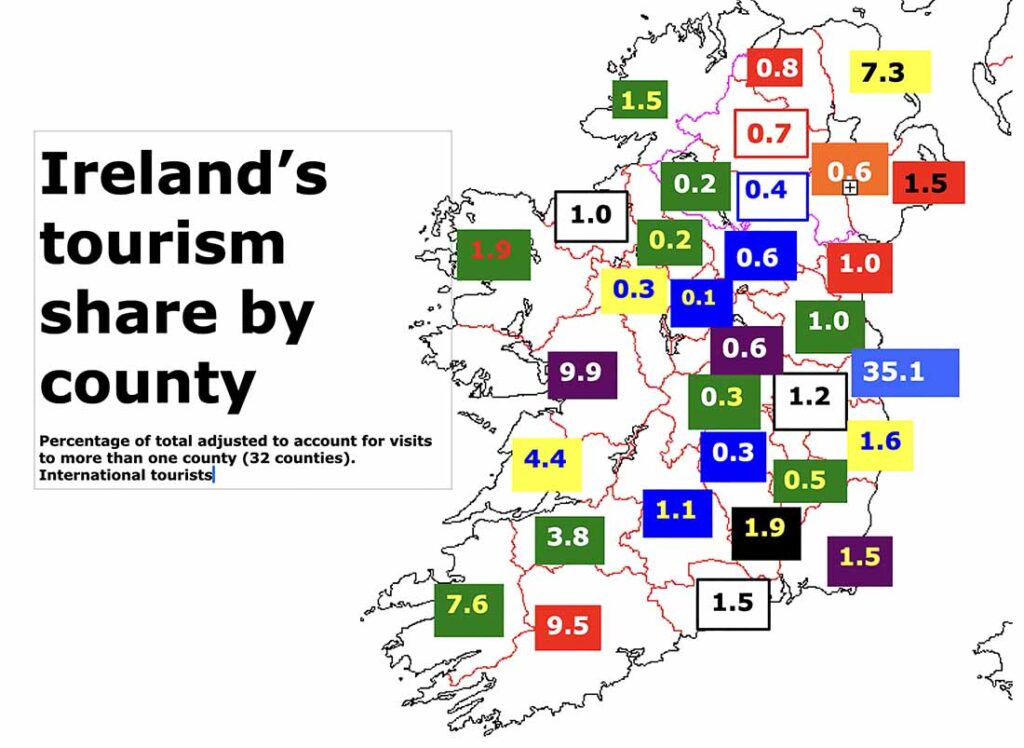
Ireland’s county Cavan is a haven of lakes and rolling hills, with the Shannon-Erne Waterway offering tranquil boating and fishing opportunities. The Cavan County Museum in Ballyjamesduff explores local history, while the Marble Arch Caves, part of a UNESCO Geopark, showcase stunning underground formations. Other attractions include the Killykeen Forest Park’s walking trails. Cavan is Ireland’s 19th largest county by size (1,891 sq km) and eighth smallest by population (81,704). Population peaked at 243,158 in 1841 and reached its lowest point, 52,618 in 1971. In terms of hospitality, Cavan is Ireland’s 20th most visited tourist county with around 111,000 international visitors per year.
IIntroduction – Adventure – Anthem – Archaeology – Attractions – Awards – Birdwatching – Camping – Castles – Churches – Contact list – Cycling – Dining – Equestrian – Festivals – Fishing – Folklore – Gardens – Golf – Graveyards – Happening – Haunted – Highest – Hiking – History – Holy Wells – Hotels – Hotels top 8 – Hunting & shooting – Instagrammable – Itineraries – Largest town – Luxury – MICE – Movies – Music – New – Name – Novelists – Off the beaten track – Poets – Pubs – Quotes – Random Facts – Restaurant Awards – Sacred Places – Saints – Songs – Spas – Sports – Sunsets – Sustainable – Things to do – Towns – Video – Villages – Walking – Wanderlist – Weddings – Wild swimming – Writers – 1837– 1846 – 1852 – 1909 – 1955 – 1980 –