- Cloughoughter Castle: Cloughoughter Castle, located on a small island in Lough Oughter near Killeshandra, is a striking 13th-century circular tower castle, a rare example of an Irish lake castle. Initially built by William Gorm de Lacy, it was later controlled by the O’Rourkes and O’Reillys. Its thick walls (up to 15 feet) and strategic island location made it a formidable stronghold during the Irish Rebellion of 1641, when it was seized by Philip O’Reilly and used as a prison. It was abandoned after the Williamite Wars in the 17th century and is now a picturesque ruin, mantled with Irish ivy. The castle is a protected ruin, accessible primarily by boat, with conservation efforts ongoing since 1987. It is managed as a National Monument. Visitors can arrange boat tours through local operators (e.g., Killykeen Forest Park) to reach the island and explore the castle’s circular tower ruins. The setting is breathtaking, surrounded by Lough Oughter’s serene waters and wooded shores, ideal for photography and history enthusiasts. There are no on-site facilities, so visits are self-guided, and the focus is on the castle’s stark architecture and historical significance. The nearby Killykeen Forest Park offers walking and cycling trails to complement the visit. The dramatic island setting, the castle’s unique circular design, and its role in the 1641 Rebellion make it a must-see. The surrounding lake offers opportunities for kayaking or fishing, enhancing the adventure. Access requires planning due to the boat trip; check with local tourism boards like visitcavan.ie for operators.
- Castle Saunderson: Castle Saunderson, near Belturbet, is a 19th-century Tudor Gothic castle built around 1840 for the Saunderson family, who acquired the site during the Ulster Plantation. Originally known as Breffni Castle under the O’Reillys, it was extensively renovated in the Gothic Revival style with turrets and ornate stonework. The castle was gutted by fire in 1990 and is now a ruin, but its grounds host the Castle Saunderson International Scouting Centre, opened in 1997 by Scouting Ireland. The castle is a ruin, not open for interior tours, but the grounds and Scouting Centre are accessible to visitors, particularly for outdoor activities. Visitors can explore the castle’s exterior, admiring its Tudor Gothic features like towers and castellated doorcases. The 100-acre demesne includes walking trails, a walled garden, and parkland, ideal for hiking, birdwatching, or camping. The Scouting Centre offers guided tours of the grounds, focusing on the castle’s history and local folklore, including tales of the “White Lady” ghost. The nearby Finn River and Upper Lough Erne add scenic beauty. The castle’s picturesque ruins, the lush estate with diverse flora and fauna, and its accessibility make it appealing. The Scouting Centre adds a community-focused element, with occasional events or activities. The castle’s ruinous state limits exploration, but the grounds are a highlight. Contact Scouting Ireland for event schedules or tour availability.
- Cabra Castle: Cabra Castle, located near Kingscourt, is a 19th-century neo-Norman and Gothic-style castle built in the early 1800s for the Foster family. It served as a residence for the Pratt family before becoming a luxury hotel. The castle is set on 100 acres of parkland and is reputed to be haunted, adding to its mystique. Its elegant architecture includes a round tower and ornate interiors, making it one of Cavan’s most intact and accessible castles. Now a 4-star hotel and popular wedding venue, Cabra Castle is fully accessible to guests and day visitors. Visitors can stay overnight in luxurious rooms, dine at the Conall Cearnach Restaurant, or enjoy afternoon tea. Non-guests can explore the grounds, which feature woodlands, a lake, and an 18-hole golf course. Guided historical tours may be available, detailing the castle’s history and ghostly legends. The hotel’s proximity to local attractions like Dun a Ri Forest Park adds to its appeal. The castle’s well-preserved interiors, romantic ambiance, and extensive grounds make it ideal for luxury seekers, history buffs, and those intrigued by its haunted reputation. Activities like golf, cycling, or hiking enhance the experience. Booking is recommended for dining or tours, especially during peak seasons. Check cabracastle.com for details.
- Bailieborough Castle (Castle House): Bailieborough Castle, also known as Castle House, is a 19th-century Palladian-style country house in Bailieborough, built for the Bailie family during the Plantation of Ulster. Designed by William Halfpenny, it features a columned portico and detached wings, distinguishing it from typical Irish architecture. While the main building was demolished, the 16-acre Bailieborough Demesne remains a public park, preserving the estate’s historical significance. The castle itself no longer stands, but the demesne is a public park open to all, with remnants of the estate’s layout. Visitors can explore the Bailieborough Demesne, which offers woodlands, walking paths, and a small lake. The park is ideal for leisurely strolls, picnics, or nature walks, with interpretive signage providing historical context. The absence of the main structure means the focus is on the estate’s natural beauty and historical legacy rather than a castle visit. The serene park setting, historical significance tied to the Plantation of Ulster, and proximity to Bailieborough town make it a pleasant stop for casual visitors or those exploring Cavan’s heritage. Expect a park experience rather than a castle tour; combine with visits to nearby attractions like the Cavan County Museum.
Visitor Expectations
- Access and Facilities: Cloughoughter requires boat access, making it the most adventurous visit, with no on-site facilities. Castle Saunderson’s grounds are accessible, with the Scouting Centre providing some structure. Cabra Castle, as a hotel, offers full amenities, including dining and accommodation. Bailieborough Demesne is a free public park with basic facilities like paths and parking.
- Cavan’s castles span medieval (Cloughoughter), early modern (Castle Saunderson), and 19th-century (Cabra, Bailieborough) periods, reflecting the county’s complex history of Gaelic, Norman, and Plantation influences. Visitors will encounter a mix of ruins and restored structures.
Castles
Antrim – Armagh – Carlow – Cavan – Clare – Cork – Derry – Donegal – Down – Dublin – Fermanagh – Galway – Kerry – Kildare – Kilkenny – Laois – Leitrim – Limerick – Longford – Louth – Mayo – Meath – Monaghan – Offaly – Roscommon – Sligo – Tipperary – Tyrone – Waterford – Westmeath – Wexford – Wicklow
County Cavan:
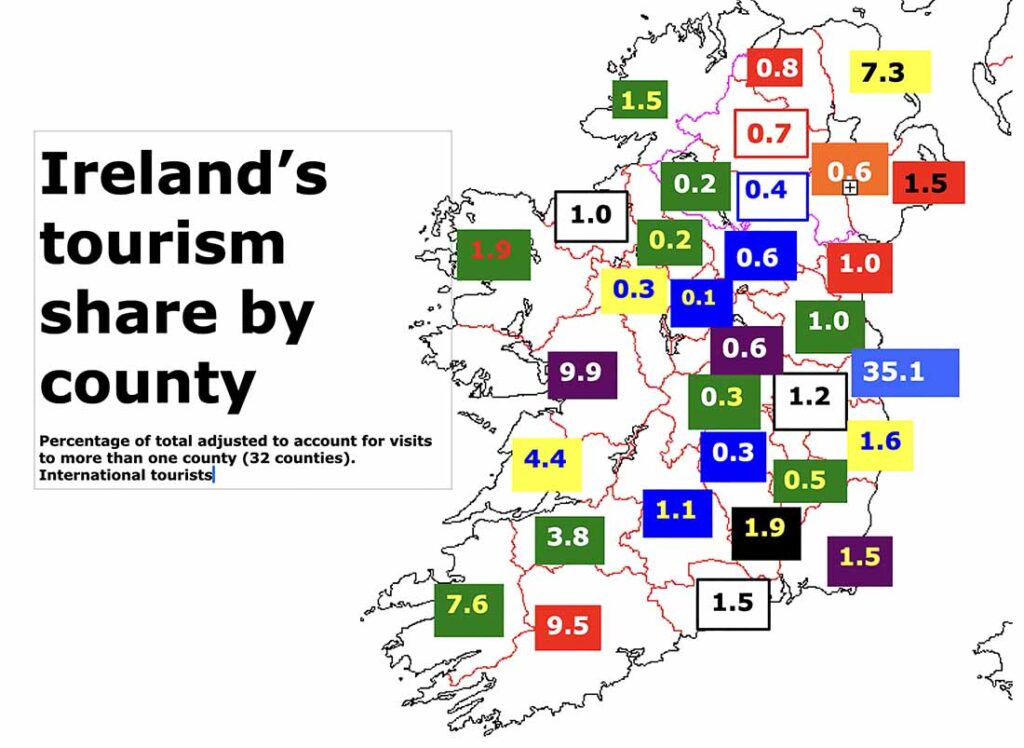
Ireland’s county Cavan is a haven of lakes and rolling hills, with the Shannon-Erne Waterway offering tranquil boating and fishing opportunities. The Cavan County Museum in Ballyjamesduff explores local history, while the Marble Arch Caves, part of a UNESCO Geopark, showcase stunning underground formations. Other attractions include the Killykeen Forest Park’s walking trails. Cavan is Ireland’s 19th largest county by size (1,891 sq km) and eighth smallest by population (81,704). Population peaked at 243,158 in 1841 and reached its lowest point, 52,618 in 1971. In terms of hospitality, Cavan is Ireland’s 20th most visited tourist county with around 111,000 international visitors per year.
IIntroduction – Adventure – Anthem – Archaeology – Attractions – Awards – Birdwatching – Camping – Castles – Churches – Contact list – Cycling – Dining – Equestrian – Festivals – Fishing – Folklore – Gardens – Golf – Graveyards – Happening – Haunted – Highest – Hiking – History – Holy Wells – Hotels – Hotels top 8 – Hunting & shooting – Instagrammable – Itineraries – Largest town – Luxury – MICE – Movies – Music – New – Name – Novelists – Off the beaten track – Poets – Pubs – Quotes – Random Facts – Restaurant Awards – Sacred Places – Saints – Songs – Spas – Sports – Sunsets – Sustainable – Things to do – Towns – Video – Villages – Walking – Wanderlist – Weddings – Wild swimming – Writers – 1837– 1846 – 1852 – 1909 – 1955 – 1980 –