County Cavan, in Ireland’s Border Region, is rich in spiritual heritage, with holy wells that reflect a blend of pre-Christian and early Christian traditions. These wells, often linked to local saints or healing properties, were historically focal points for community devotion, particularly on pattern days (feast days of patron saints). While some remain active pilgrimage sites, others are obscure or neglected, and pattern days may no longer be widely observed due to historical disruptions like the Famine, Penal Laws, and church reforms.
- Saint Brigid’s Well, Kilnavert: Pattern day: February 1 (Saint Brigid’s Day), likely a historical focus, though modern observance is rare. Situated near Virginia, this well is dedicated to Saint Brigid, known for her association with healing and fertility. Pilgrims historically drank or bathed in the water to cure ailments like headaches, leaving ribbons or rosaries on nearby bushes. The well’s rural setting keeps it off the tourist trail, preserving its quiet sanctity. Kilnavert, near Virginia, Co. Cavan.
- Saint Mogue’s Well, Templeport: Pattern day: January 31 (Saint Mogue’s Day), historically observed, though active patterns may have declined. Located near Templeport’s monastic site, this well is dedicated to Saint Mogue (also Maodhóg or Aidan), a 6th-century saint who founded a monastery here. The well’s waters were used for healing, particularly for eye ailments, with pilgrims performing rounds and leaving clooties (rags) on nearby trees. Its proximity to a ruined church enhances its sacred atmosphere. Templeport, Co. Cavan.
- Tobar Patrick, Drumcalpin: Pattern day: March 17 (Saint Patrick’s Day), though specific pattern records are scarce. Known as Saint Patrick’s Well, this site near Belturbet is linked to Saint Patrick, who is said to have baptized converts here, endowing the water with curative powers for general ailments. Pilgrims performed sunwise rounds (deiseal) and used the water for blessings. Its obscurity adds to its charm as a hidden spiritual site. Drumcalpin, near Belturbet, Co. Cavan.
- Tobar na Súl, Near Bailieborough: Pattern day: Unknown, possibly tied to summer festivals like Lughnasa (August 1). The “Eye Well” near Bailieborough was renowned for curing eye ailments. Pilgrims would bathe their eyes with the water and leave clooties on nearby trees, believing ailments would fade as the rags decayed. Its rural location and specialized healing focus make it a lesser-known gem. Near Bailieborough, Co. Cavan.
- Saint Felim’s Well, Kilmore: Pattern day: August 9 (Saint Felim’s Day), historically significant but likely inactive now. Near Kilmore Cathedral, this well is dedicated to Saint Felim, a 6th-century saint associated with Cavan’s early Christian history. Its waters were used for healing, particularly for skin conditions, with pilgrims performing rounds and leaving offerings. The well’s proximity to a historic ecclesiastical site adds to its significance. Kilmore, Co. Cavan.
- Tobar na nGealt, Near Cootehill: Pattern day: Unknown, possibly linked to local saint’s days or summer gatherings. Known as the “Well of the Insane,” this well near Cootehill was believed to cure mental illnesses. Pilgrims performed rounds, recited prayers, and left votive offerings, reflecting ancient beliefs in the well’s Otherworldly powers. Its remote setting keeps it largely undiscovered. Near Cootehill, Co. Cavan.
- Saint Dympna’s Well, Near Killeshandra: Pattern day: May 15 (Saint Dympna’s Day), though active observance is uncertain. Dedicated to Saint Dympna, the patron saint of mental health, this well near Killeshandra was visited for relief from psychological ailments. Pilgrims would drink the water and tie ribbons to nearby trees during rounds. Its association with Dympna’s universal cult makes it a unique site in Cavan. Near Killeshandra, Co. Cavan.
- Tobar na Baiste, Near Cavan Town: Pattern day: June 24 (Saint John the Baptist’s Day), likely a historical focus. The “Well of Baptism” near Cavan town was used for early Christian baptisms and believed to aid children’s ailments. Pilgrims performed rounds and used the water for purification. Its quiet, rural location and lack of modern signage keep it a hidden treasure. Near Cavan Town, Co. Cavan.
- Saint Mogue’s Well, Bawnboy: Pattern day: January 31 (Saint Mogue’s Day), though specific pattern traditions are poorly documented. Another well dedicated to Saint Mogue, located in Bawnboy, this site was used for general healing, with pilgrims reciting prayers and leaving coins or cloths. Its waters were believed to have spiritual potency, and the well’s rural setting adds to its serene appeal. Bawnboy, Co. Cavan.
- Holy Well, Corlough: Pattern day: Unknown, possibly aligned with local traditions or summer festivals. This simple spring in Corlough is tied to early Christian or pre-Christian rituals, with local lore suggesting it was used for healing ailments like rheumatism. Pilgrims left offerings and performed rounds, though the well is now neglected and rarely visited, preserving its mystique. Corlough, Co. Cavan.
- Saint Columba’s Well, Near Swanlinbar: Pattern day: June 9 (Saint Columba’s Day), though active patterns may have lapsed. Dedicated to Saint Columba (Colmcille), this well near Swanlinbar was used for spiritual blessings and healing, particularly for respiratory issues. Pilgrims performed rounds and left tokens like coins or rosaries. Its remote location in Cavan’s rugged west makes it a hidden spiritual site. Near Swanlinbar, Co. Cavan.
- Tobar na Plaighe, Near Ballyconnell: Pattern day: Unknown, possibly linked to plague-related rituals or local saint’s days. Known as the “Well of the Plague,” this well near Ballyconnell was visited during times of disease for protection or healing. Pilgrims performed rounds and used the water in rituals, leaving offerings like cloths. Its historical role in community survival makes it a poignant, if obscure, site. Near Ballyconnell, Co. Cavan.
Many of Cavan’s holy wells are on private land or in remote areas, so seek landowner permission where necessary. Some, like Tobar na nGealt or Corlough’s Holy Well, may be overgrown or neglected, as many wells in Ireland have fallen into disrepair.
Holy Wells
Antrim – Armagh – Carlow – Cavan – Clare – Cork – Derry – Donegal – Down – Dublin – Fermanagh – Galway – Kerry – Kildare – Kilkenny – Laois – Leitrim – Limerick – Longford – Louth – Mayo – Meath – Monaghan – Offaly – Roscommon – Sligo – Tipperary – Tyrone – Waterford – Westmeath – Wexford – Wicklow
Sacred Places
Antrim – Armagh – Carlow – Cavan – Clare – Cork – Derry – Donegal – Down – Dublin – Fermanagh – Galway – Kerry – Kildare – Kilkenny – Laois – Leitrim – Limerick – Longford – Louth – Mayo – Meath – Monaghan – Offaly – Roscommon – Sligo – Tipperary – Tyrone – Waterford – Westmeath – Wexford – Wicklow
County Cavan:
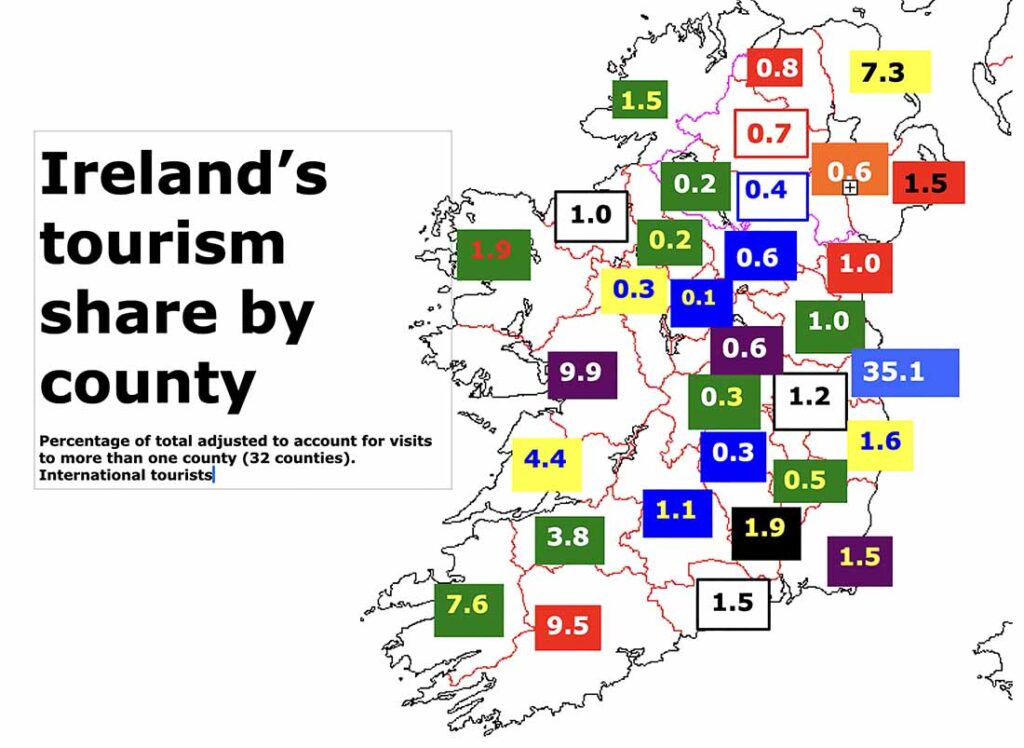
Ireland’s county Cavan is a haven of lakes and rolling hills, with the Shannon-Erne Waterway offering tranquil boating and fishing opportunities. The Cavan County Museum in Ballyjamesduff explores local history, while the Marble Arch Caves, part of a UNESCO Geopark, showcase stunning underground formations. Other attractions include the Killykeen Forest Park’s walking trails. Cavan is Ireland’s 19th largest county by size (1,891 sq km) and eighth smallest by population (81,704). Population peaked at 243,158 in 1841 and reached its lowest point, 52,618 in 1971. In terms of hospitality, Cavan is Ireland’s 20th most visited tourist county with around 111,000 international visitors per year.
IIntroduction – Adventure – Anthem – Archaeology – Attractions – Awards – Birdwatching – Camping – Castles – Churches – Contact list – Cycling – Dining – Equestrian – Festivals – Fishing – Folklore – Gardens – Golf – Graveyards – Happening – Haunted – Highest – Hiking – History – Holy Wells – Hotels – Hotels top 8 – Hunting & shooting – Instagrammable – Itineraries – Largest town – Luxury – MICE – Movies – Music – New – Name – Novelists – Off the beaten track – Poets – Pubs – Quotes – Random Facts – Restaurant Awards – Sacred Places – Saints – Songs – Spas – Sports – Sunsets – Sustainable – Things to do – Towns – Video – Villages – Walking – Wanderlist – Weddings – Wild swimming – Writers – 1837– 1846 – 1852 – 1909 – 1955 – 1980 –