Follow the fjord and you will find it. A real fjord, not as spectacular as the ones in the western Atlantic seaboard, but something green, forested, and refreshing. Oslo’s fjord is 100 kilometres deep and is narrower in the middle than it is at the end.
The city loiters around the end of the fjord, some of the waters have sunken propeller blades to prevent the harbour icing up, and an imposing fort reminds us of the risks of moving the capital here from the more windswept Bergen, as it faces the traditional enemies, Sweden and Denmark.
Norway lost its independence because of a population wipe-out caused by the Black Death in the 14th century, it got it back by peaceful negotiation in 1904. Oslo had no intention of becoming the sleepy capital of an impoverished country, however. Munch, Ibsen, Alfred Nobel all propelled it to the heart of international culture.
Each is celebrated in its own right, the brand new Ibsen museum, the Nobel peace centre, the Much museum and national gallery, and many tributes to a great maritime and polar history, the strongest wooden ship ever built that carried Norwegians to the Arctic and Antarctic, the thousand year old Viking ships and the Kon Tiki, lovingly placed in a building dedicated to Thor Heyerdahl’s travels.
The Nobel Peace Prize is hosted here every year, and its museums and galleries match those in the big old empire cities to the south and east. A winter Olympic ski jump dominates the landscape, and when the sun shines from early morning to late evening the plazas around Karl Johan Street burst into life.
Throw in the famous infrastructure, starting with the 19 minute express train from the airport, and you have a flavour of what Oslo can do for your spirits on a weekend break.
Ski jump arena
Best start at the top. You can see the Holmenkollan ski jump arena on a mountain overlooking the city from almost everywhere. Don’t miss the ski jump simulator, enough to give you vertigo without leaving the ground.
The jump itself, built for the 1952 winter Olympics, is going to be taken down this summer and replaced with something which might produce a jump bigger than the 180 odd meters that it currently facilitates – a ski jump specially constructed for the 2011 world championships. Oslo has several ice-skating rinks, including the old Frogner stadium where they are planning to build a new, larger ice surface.
Tourists arriving in the city in winter can test their ice skating skills at Narvisen in the city centre. But this is not a winter city at all. In March Oslo sweeps the snow aside and makes way for something brighter. The flowers bloom and the parks come to life.
Favourite outdoor stroll
The city’s favourite outdoor stroll is through Frogner Park, a statue park decorated with the lifetime works of Adolf Gustav Vigeland, a student friend of Munch’s who never spoke again to the painter after a row about a girl.
His earlier sculptures, mostly portrait busts and reliefs, are now in the nearby Vigeland Museum. The later, monumental works are concentrated in Oslo’s largest park.
He is said to have been the most prolific sculptor of all time and walking through the park amid the dogs, lovers, and perambulators, you can see why, with more than 200 individual sculptural projects, including an entrance, bridge, fountain, circular staircase, mosaic labyrinth, a stone forest of people, and a central monolith, carved from a single block of solid granite 57 feet high, weighed 270 tons before sculpting began.
It consists of 121 figures and is surrounded by 36 major groupings, all dealing with the various periods in the cycle of life—birth, childhood, adolescence, maturity, old age, and death.
The angry boy, stomping his foot at the bridge near the exit point is one of the greatest pieces of sculpture you will find anywhere. Check out the grumpy girl in fountain square, the descent and rebirth scenes, and the woman with a mouth-gag being ridden in wild west horsey style by her infant.
Vigeland’s parents were farmers, and he was apprenticed to a wood-carver when he was 14 years old. His first work was shown in 1889, and, though influenced by Auguste Rodin, he developed a unique and controversial realistic style – so controversial that he remained poor all his life.
Now his art is Oslo’s most photographed tourist attraction.
Munch’s mjuseum
Meanwhile Munch was making his name indoors and, unsurprisingly, has a museum of his own in his native city.
It is a must-see, but here is a tip if time is short. The best Munch exhibits are not in the Munch museum at all but in the national gallery, placing a context on the great painter and his famous Madonna and Skrik – translated as The Scream, but the old Viking-Irish word Screach seems closer to the Norwegian and captures the mood with greater subtlety.
The gallery has some great collection work from other European painters and a great spring exhibition showing off the vast landscape work of Norwegian painters in the 19th and early 20th centuries. What a landscape?
See Haral Sahlberg’s Winternight in Rondone and let the awe and chill coarse through your veins. The National Gallery is free to visitors, but if you want to tour the museums the Oslo card is almost a prerequirement. It also gives you carriage on the excellent public transport system. Prices are NOK210 u25.75 for an adult for 24 hours and NOK90/11 for a child, rising to NOK390/u u47.83 (adult) and NOK140 u17 (child) for three days.
Bunratty style folk park
The rest of Norway beckons beyond its capital, but not everyone will have time to see it. So they have helpfully gathered the whole of Norway and placed it in another little park near the city centre for your perusal.
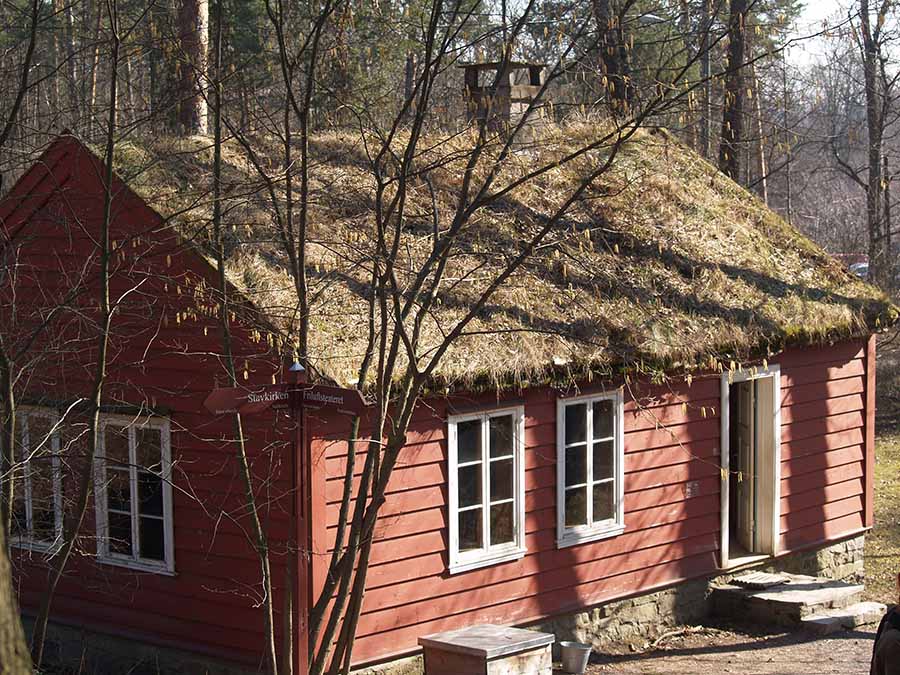
The Norsk Folkesmuseum is a Bunratty style folk park which offers a slice of Norwegian rural life. The 13th century Stave church, decorated with uncommonly pagan looking dragons, is the star attraction. But in the medieval guesthouse you will find prototype lavatories, holes in the floor of the second floor which, like most in this snow-laden land, protrudes out a little over the first storey.
Every valley had its separate and distinctive traditions and crafts, even knitting patterns changed over the other side of the mountain, and most of them are assembled here with echoes of the enduring strengths of a country defined by landscape, climate and a sun that was reluctant to ever put its smig down below the surface.
And the city that reflects its midsummer mood.
- The Thon Hotel Stefan, centrally located in Rosenkrontzgate, close to the Municipal Court. Streetside rooms can be noisy but the location and price make this an ideal choice for the citybreaker. The Thon group run 10 of the 35-odd hotels in the city.
- Munch Museum. Dedicated to Norway’s most famous painters with influences and contemporaries. www.munch.museum.no
- National Gallery. More (and better) Munch and some astonishing Norwegian and European collection art. www.nationalmuseum.no
- Norse Folkemuseum. Rural buildings preserved and relocated as a reminder of bygone days, complete with 13th century wooden church and a recreation of old Oslo. www.norskfolkemuseum.no
- Kon Tiki museum. NOK50. www.kon-tiki.no
- Holmenkollen arena is Norway’s most visited tourist attraction, used for world cup events in ski jumping, cross country skiing and biathlon with ski simulator. www.skiforeningen.no
- Fram Museum, the strongest wooden ship ever built, for pioneering polar explorer Fridtjof Nansen, it carried Amundsen to the Antarctic and voyaged around Greenland, Siberia and Canada. www.fram.museum.no
- Viking ship museum at Bygdoy. The best preserved Viking ships in the world, placed in a burial barrow 1100 years ago. Check out the huge number of Irish artefacts. www.khm.ulo.no