County Galway in Ireland, with its iconic Connemara landscapes, dramatic coastlines, the Aran Islands, and historic sites, has long attracted filmmakers drawn to its wild beauty, rural charm, and cultural authenticity. The county features prominently in classic romantic epics, modern award-winners, and horror thrillers.
- Lettergesh Beach (Renvyle Peninsula, Connemara): This wide, sandy strand backed by mountains and overlooking the Atlantic served as the memorable horse-racing scene in The Quiet Man (1952), John Ford’s classic romantic comedy starring John Wayne and Maureen O’Hara. The thundering hooves, bagpipes, and cheering crowds captured the film’s spirited Irish spirit amid the stunning coastal scenery.
- Ballyglunin Railway Station (near Tuam, north County Galway): This preserved 19th-century station, with its platform and “Castletown” sign, stood in for the arrival point of Sean Thornton in The Quiet Man (1952). It marked the iconic opening where John Wayne’s character returns to Ireland by steam train, now a visitor centre dedicated to the film.
- The Quiet Man Bridge (Leam, near Maam Cross, Connemara): This picturesque stone bridge over the Owenriff River featured in a poignant dream sequence in The Quiet Man (1952), where Sean recalls his mother’s words about White O’Mornin’ Cottage. The unchanged rural setting and rushing water evoke the film’s nostalgic romance.
- Inis Mór (Aran Islands) (off the coast of Galway, particularly areas around Dún Aonghasa and coastal paths): The largest Aran Island, with its stark limestone landscapes, ancient fort, and rugged cliffs, doubled for the fictional island of Inisherin in The Banshees of Inisherin (2022), Martin McDonagh’s Oscar-nominated tragicomedy starring Colin Farrell and Brendan Gleeson. It showcased the isolation, beauty, and underlying tension of rural Irish life.
- Athenry: Old Church Street, Davis Street, Church Street, and North Gate Street were used for location shots in the 1971 film Flight of the Doves
- Leenane village and surrounding areas (north Connemara, near Killary Harbour): This small village on the fjord-like Killary Harbour, along with nearby fields and pubs like Gaynor’s, provided the central setting for The Field (1990), Jim Sheridan’s intense drama starring Richard Harris as the Bull McCabe defending his land. The film’s themes of obsession and rural hardship unfolded against the dramatic, windswept backdrop.
- Connemara National Park and various Connemara spots (including Maam Cross and Inagh Valley): These vast boglands, mountains, lakes, and green valleys appeared in The Banshees of Inisherin (2022) for sweeping scenic shots; in Leap Year (2010) for romantic countryside travels; and in The Watchers (2024), M. Night Shyamalan’s horror thriller starring Dakota Fanning, which used Galway City and Connemara forests for its eerie woodland survival story.
Other notable uses include Maam Cross for scenes in Far and Away (1992) with Tom Cruise; Inis Mór for parts of Leap Year (2010); and various Connemara locations in titles like The Guard (2011, though more tied to nearby areas) or Pilgrimage (2017). County Galway’s film heritage emphasises timeless Irish classics like The Quiet Man, still the most celebrated, and recent critical successes like The Banshees of Inisherin, with Connemara and the Aran Islands as the standout, visitable cinematic regions for their raw, elemental landscapes.
Movie locations in the county
Antrim – Armagh – Carlow – Cavan – Clare – Cork – Derry – Donegal – Down – Dublin – Fermanagh – Galway – Kerry – Kildare – Kilkenny – Laois – Leitrim – Limerick – Longford – Louth – Mayo – Meath – Monaghan – Offaly – Roscommon – Sligo – Tipperary – Tyrone – Waterford – Westmeath – Wexford – Wicklow
County Galway:
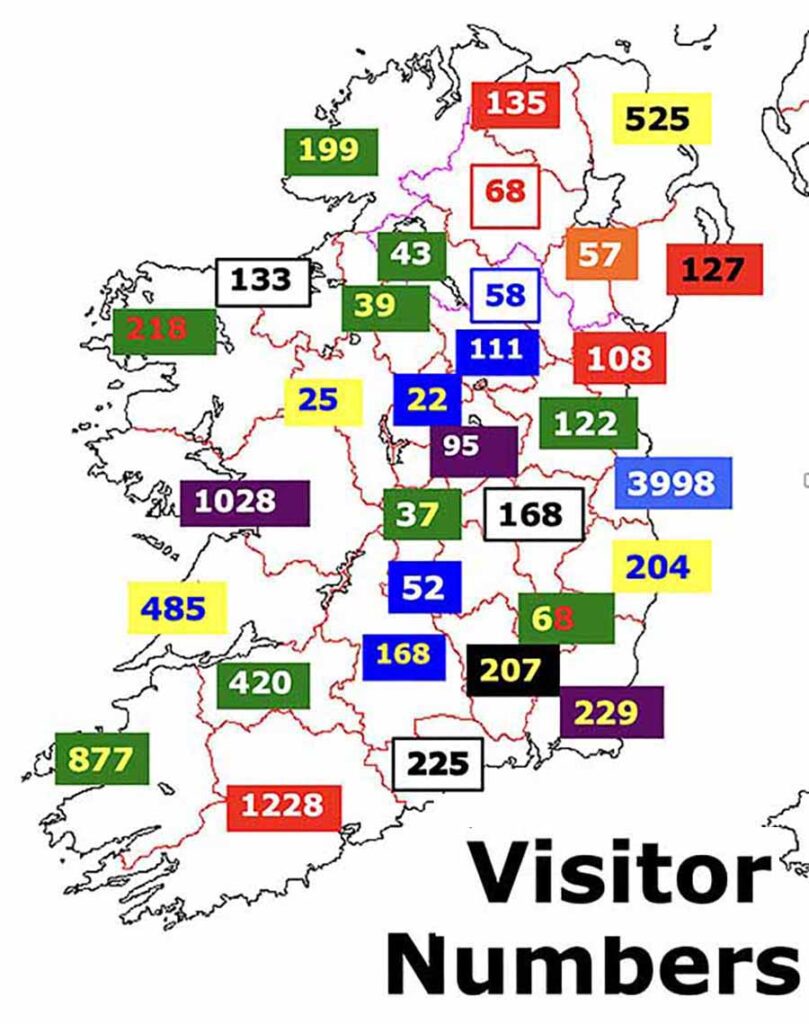
Ireland’s county Galway offers a delightful mix of cultural heritage and coastal beauty, with Galway City’s Latin Quarter showcasing historic streets and traditional music venues. The Connemara National Park provides hiking trails through rugged mountains and bogs, while the Aran Islands offer ancient stone forts like Dún Aonghasa. Other favourite stop is ithe Kylemore Abbey’s Victorian gardens and coastal cliffs. Galway is Ireland’s second largest county by size (5,939 sq km) and fifth largest by population (277,737). Population peaked at 440,198 in 1841 and reached its lowest point, 148,340 in 1966. In terms of hospitality, Galway is Ireland’s third most visited tourist county with around 1,028,000 international visitors per year.
Introduction – Adventure – Anthem – Archaeology – Attractions – Awards – Birdwatching – Camping – Castles – Churches – Contact list – Cycling – Dining – Equestrian – Festivals – Fishing – Folklore – Gardens – Golf – Graveyards – Happening – Haunted – Highest – Hiking – History – Holy Wells – Hotels – Hotels top 8 – Hunting & shooting – Instagrammable – Itineraries – Largest town – Luxury – MICE – Movies – Music – Name – New – Novelists – Off the beaten track – Poets – Pubs – Quotes – Random Facts – Restaurant Awards – Sacred Places – Saints – Songs – Spas – Sports – Sunsets – Sustainable – Things to do – Towns – Video – Villages – Walking – Wanderlist – Weddings – Wild swimming – Writers – 1837 – 1846 – 1852 – 1909 – 1955 – 1980 –