- Saint Augustine’s Well (Tobar Agaistín), Lough Atalia, Galway City: Pattern day: Last Sunday in July or first Sunday in August. A tidal well on Lough Atalia’s shores, named after Saint Augustine of Hippo, who legend says blessed it in the 5th century. Famed for curing eye and ear ailments, pilgrims perform barefoot rounds in Irish, leaving clooties, coins, or rosaries. Submerged twice daily, it’s maintained by Galway Civic Trust with a stone cross and plaque. A swan often rests nearby, adding to its serene beauty. Lough Atalia Road, Galway City, Co. Galway.
- Saint Patrick’s Well (Tobar Phádraig), Mám Éan, Connemara: Pattern day: Saint Patrick’s Day (March 17), Good Friday, and Reek Sunday (last Sunday in July). Located in the Maumturk Mountains, this well is linked to Saint Patrick, who blessed it during a 5th-century visit. A Lughnasa pilgrimage site, it draws thousands for Mass, rounds, and offerings (coins, rags on a hawthorn tree). Known for healing various ailments, its remote location offers stunning views, blending spiritual and devotion. Mám Éan, near Maam, Connemara, Co. Galway.
- Ladywell, Abbey Village: Pattern day: August 15 (Feast of the Assumption) to September 8 (Nativity of Mary). Near Kilnalahan Friary, this well is dedicated to the Blessed Virgin Mary and used by medieval Franciscan monks. Pilgrims perform barefoot rounds and leave offerings (coins, rosaries, flowers) for healing, especially women’s health. Its stone basin and tranquil setting make it a cherished site, though less visited today. Abbey Village, near Portumna, Co. Galway.
- Saint Dominic’s Well, Esker: Pattern day: January 5 and 6, unique for blessing rather than healing. Near the Redemptorist monastery in Esker, this well isn’t associated with healing but with blessing fields, homes, and animals. Pilgrims collect water after a Mass and procession led by priests, using it for protection. Its communal ritual, supported by the monastery, keeps it active, with troughs refilled for large crowds. Esker, near Athenry, Co. Galway.
- Tobar na Croise Naofa (Well of the Holy Cross), Cappagh: Pattern day: Garland Sunday (last Sunday in July). In Cappagh, this well is linked to Saint Patrick, who blessed it en route to Croagh Patrick. Known for general healing, pilgrims perform rounds around the well, an ash tree, and an altar, leaving clooties. A legendary bird’s arrival marked its origin. The site, with a dean’s grave nearby, hosts hurling and dancing post-rituals. Cappagh, near Dunmore, Co. Galway.
- Tobar na Súl, Near Oranmore: Pattern day: Unknown, possibly Lughnasa (August 1). Known as the “Eye Well,” this well near Oranmore is famed for curing eye ailments. Pilgrims bathe their eyes with the water and tie clooties to nearby bushes, believing ailments fade as the rags decay. Its rural setting is now near urban sprawl, reducing its prominence, but it retains local lore. Near Oranmore, Co. Galway.
- Saint Enda’s Well, Inishmore, Aran Islands: Pattern day: Last weekend of June (Patrún Naomh Éanna). Dedicated to Saint Enda, founder of Aran’s monastic tradition, this well on Inishmore is used for healing, particularly rheumatism. Pilgrims perform rounds and leave offerings like medals or rags. Its island setting and connection to early Christianity make it a significant site, though patterns are now smaller. Inishmore, Aran Islands, Co. Galway.
- Our Lady’s Well, Athenry: Pattern day: August 15 (Lady’s Day, Feast of the Assumption). A major pilgrimage site in Athenry, this well is dedicated to the Virgin Mary. Pilgrims attend open-air Mass, perform rounds, and leave offerings (statues, candles). Historically, water was carted to the well if dry, and a statue was carried annually. Its festival atmosphere, with emigrants returning, keeps it vibrant. Athenry, Co. Galway.
- Saint Feichin’s Well, Near Ballinasloe: Pattern day: January 20 (Saint Feichin’s Day), though patterns are rare. Linked to Saint Feichin, a 7th-century monk, this well near Ballinasloe was used for healing, particularly headaches. Pilgrims performed rounds and left clooties or coins. Its rural setting and association with a local saint preserve its historical significance, though it’s now less visited. Near Ballinasloe, Co. Galway.
- Tobar na nGealt, Near Gort: Pattern day: Unknown, possibly summer festivals. The “Well of the Insane” near Gort was believed to cure mental illnesses, reflecting pre-Christian Otherworldly beliefs. Pilgrims performed rounds, recited prayers, and left clooties. Its secluded location in south Galway keeps it obscure, with minimal modern use but strong folklore ties. Near Gort, Co. Galway.
- Saint Colman’s Well, Near Clarinbridge: Pattern day: November 24 (Saint Colman’s Day), though patterns have lapsed. Dedicated to Saint Colman, this well near Clarinbridge was used for healing stomach ailments. Pilgrims performed rounds and left offerings like rosaries or rags. Its proximity to historic church ruins enhances its spiritual context, but urban growth has reduced its prominence. Near Clarinbridge, Co. Galway.
- Tobar na Plaighe, Near Tuam: Pattern day: Unknown, possibly linked to plague-related rituals. The “Well of the Plague” near Tuam was visited during disease outbreaks for protection or healing. Pilgrims performed rounds and left clooties, believing the water held curative powers. Its historical role in community survival makes it significant, though it’s now overgrown and rarely visited. Near Tuam, Co. Galway.
Holy Wells
Antrim – Armagh – Carlow – Cavan – Clare – Cork – Derry – Donegal – Down – Dublin – Fermanagh – Galway – Kerry – Kildare – Kilkenny – Laois – Leitrim – Limerick – Longford – Louth – Mayo – Meath – Monaghan – Offaly – Roscommon – Sligo – Tipperary – Tyrone – Waterford – Westmeath – Wexford – Wicklow
Sacred Places
Antrim – Armagh – Carlow – Cavan – Clare – Cork – Derry – Donegal – Down – Dublin – Fermanagh – Galway – Kerry – Kildare – Kilkenny – Laois – Leitrim – Limerick – Longford – Louth – Mayo – Meath – Monaghan – Offaly – Roscommon – Sligo – Tipperary – Tyrone – Waterford – Westmeath – Wexford – Wicklow
County Galway:
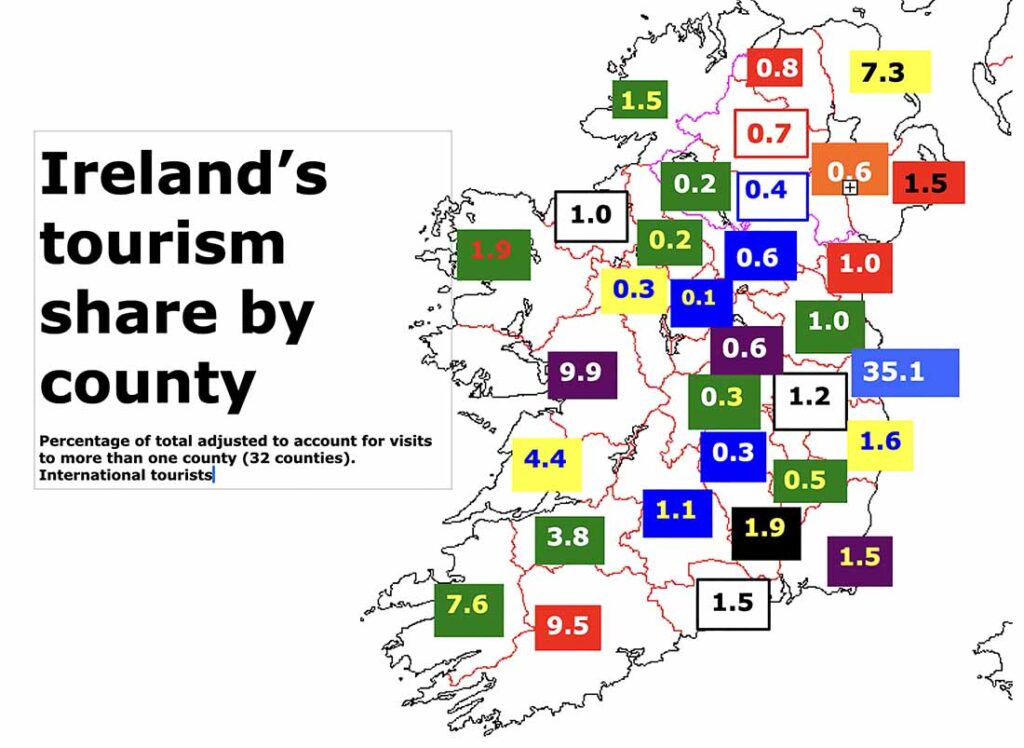
Ireland’s county Galway offers a delightful mix of cultural heritage and coastal beauty, with Galway City’s Latin Quarter showcasing historic streets and traditional music venues. The Connemara National Park provides hiking trails through rugged mountains and bogs, while the Aran Islands offer ancient stone forts like Dún Aonghasa. Other favourite stop is ithe Kylemore Abbey’s Victorian gardens and coastal cliffs. Galway is Ireland’s second largest county by size (5,939 sq km) and fifth largest by population (277,737). Population peaked at 440,198 in 1841 and reached its lowest point, 148,340 in 1966. In terms of hospitality, Galway is Ireland’s third most visited tourist county with around 1,028,000 international visitors per year.
Introduction – Adventure – Anthem – Archaeology – Attractions – Awards – Birdwatching – Camping – Castles – Churches – Contact list – Cycling – Dining – Equestrian – Festivals – Fishing – Folklore – Gardens – Golf – Graveyards – Happening – Haunted – Highest – Hiking – History – Holy Wells – Hotels – Hotels top 8 – Hunting & shooting – Instagrammable – Itineraries – Largest town – Luxury – MICE – Movies – Music – Name – New – Novelists – Off the beaten track – Poets – Pubs – Quotes – Random Facts – Restaurant Awards – Sacred Places – Saints – Songs – Spas – Sports – Sunsets – Sustainable – Things to do – Towns – Video – Villages – Walking – Wanderlist – Weddings – Wild swimming – Writers – 1837 – 1846 – 1852 – 1909 – 1955 – 1980 –