- Dunguaire Castle: Currently closed attraction located on the shores of Galway Bay near Kinvara, Dunguaire Castle is a 16th-century tower house built in 1520 by the O’Hynes clan. Named after the mythical King Guaire, it was later owned by the Martyn family of Galway. The castle’s picturesque setting on a rocky outcrop, surrounded by water, and its well-preserved structure make it one of Ireland’s most iconic castles. It was restored in the 20th century and is famous for its medieval banquets. Open seasonally (April-October) for daytime tours and evening banquets, managed by Shannon Heritage. Daytime guided tours (€7.50 adults, €4 children) explore the castle’s interiors, including the great hall and battlements, with views over Galway Bay. Evening medieval banquets (€55-€65 per person) offer a lively experience with traditional Irish food, music, and storytelling, lasting about 2 hours. The grounds include a small craft shop and tea room. Allow 1 hour for tours or 2-3 hours for banquets. The nearby village of Kinvara adds charm with its harbor and pubs. Accessible by car or bus from Galway City (40-minute drive). The castle’s scenic bay setting, engaging banquets, and compact yet evocative interiors make it ideal for history lovers and those seeking a cultural experience. Book banquets in advance via shannonheritage.com, especially in summer. The castle has steep stairs, limiting accessibility.
- Athenry Castle: Athenry Castle, in the historic town of Athenry, is a 13th-century Norman fortress built around 1235 by Meiler de Bermingham. A well-preserved example of a medieval tower house, it features a rectangular keep with defensive walls and a great hall. The castle played a key role in Galway’s Anglo-Norman history and is part of Athenry’s medieval heritage, alongside its town walls and priory. Open seasonally (April-October), managed by the Office of Public Works, with guided and self-guided tours. Visitors can explore the castle’s three-story keep, including restored interiors, battlements, and exhibits on medieval life (€5 adults, €3 seniors/children). The visitor center provides historical context via displays and videos. Guided tours (30-45 minutes) offer insights into Norman architecture and the de Bermingham family. The surrounding town, with its medieval walls and market square, enhances the visit. Allow 1-1.5 hours, reachable by train or bus from Galway City (25-minute drive). The castle’s authentic medieval structure and Athenry’s well-preserved heritage make it a must for history enthusiasts. Check opening hours on heritageireland.ie, as winter closures are common. Uneven surfaces may challenge mobility.
- Portumna Castle: Portumna Castle, near the shores of Lough Derg in Portumna, is a 17th-century semi-fortified manor house built around 1618 by Richard Burke, 4th Earl of Clanricarde. Blending Renaissance and Jacobean styles, it features ornate chimneys, mullioned windows, and a symmetrical design. Partially destroyed by fire in 1826, it was restored by the Office of Public Works, with ongoing work to its 17th-century walled garden and kitchen garden. Open seasonally (April-October), with guided tours and access to grounds, managed by the Office of Public Works. Guided tours (€5 adults, €3 seniors/children) explore the castle’s ground floor, showcasing restored rooms and historical exhibits. The 17-acre grounds, including a restored walled garden with geometric designs and an organic kitchen garden, are a highlight. A small tea room is available, and the nearby Portumna Forest Park offers walking trails. Allow 1-2 hours, accessible by car from Galway City (50-minute drive). Combine with the nearby Dominican Priory. The castle’s unique Renaissance architecture, beautiful gardens, and serene lakeside setting appeal to those interested in history and horticulture. The upper floors are inaccessible due to restoration; check heritageireland.ie for updates. The grounds are wheelchair-friendly.
- Menlo Castle: Menlo Castle, located on the River Corrib near Galway City, is a 16th-century ruined castle once home to the Blake family, prominent Galway landowners. Destroyed by fire in 1910, its ivy-clad ruins include towers and walls, creating a romantic, atmospheric site. Set in a scenic riverside location, it’s less touristy but evocative of Galway’s Gaelic past. A ruin on private land, accessible to the public with free entry, but no formal facilities. Visitors can view the castle’s exterior from nearby paths, enjoying its ivy-covered ruins and riverside setting. No guided tours or amenities are available, making it a self-guided stop best suited for those exploring the Corrib area. The site is a 10-minute drive from Galway City, ideal for a quick visit or photography. Allow 30-45 minutes, best combined with walks along the river or a visit to nearby NUIG campus. The castle’s haunting, overgrown ruins and tranquil riverside location offer a peaceful, off-the-beaten-path experience. Access may be restricted due to private ownership; respect signage. Wear sturdy shoes for uneven terrain.
- Oranmore Castle: Oranmore Castle, in the coastal village of Oranmore, 9 km east of Galway City, is a 15th-century tower house built by the Clanricarde family. Restored in the 1940s, it’s a fine example of a medieval Irish castle, with a rectangular keep and battlements. Its location near Galway Bay adds scenic charm, and it remains privately owned but occasionally opens for tours. Limited public access, with occasional guided tours or open days, typically in summer. When open, guided tours (€10-€15, check oranmorecastle.com) explore the castle’s interiors, including the great hall and restored rooms, with stories of its Clanricarde history and 20th-century restoration. The exterior and grounds can be viewed from public paths, offering views of Galway Bay. No on-site facilities, but Oranmore village has cafés and pubs. Allow 1 hour for tours, longer if exploring the village. Accessible by bus or train from Galway City. The castle’s intimate, lived-in feel and coastal proximity make it a charming stop for those seeking a less commercialized experience. Public openings are rare; check the castle’s website or local tourism boards for schedules. Steep stairs limit accessibility.
Visiting
- Access and Facilities: Athenry Castles is the most developed for tourism, with tours, visitor centres, and amenities, as was Dunguaire which awaits clarification on funding before reopening. Portumna offers tours and extensive grounds, while Menlo and Oranmore are less accessible, with Menlo being a ruin and Oranmore having limited openings. All are reachable from Galway City by car or public transport.
- Galway’s castles reflect Norman (Athenry), Gaelic (Dunguaire, Oranmore, Menlo), and early modern (Portumna) influences, showcasing the county’s role as a cultural and trading hub, particularly under the “Tribes of Galway.”
- Activities: Combine castle visits with Galway’s attractions, like the Cliffs of Moher, Connemara, or Galway City’s Latin Quarter. Dunguaire’s banquets and Portumna’s gardens add unique experiences. The Wild Atlantic Way enhances coastal castle visits.
- Practical Tips: Book Dunguaire banquets and check seasonal hours for Athenry, Portumna, and Oranmore (heritageireland.ie or shannonheritage.com). Menlo requires caution due to its ruinous state. Wear comfortable shoes for uneven grounds, and check tide times for coastal sites. Visit www.galwaytourism.ie for planning resources.
Castles
Antrim – Armagh – Carlow – Cavan – Clare – Cork – Derry – Donegal – Down – Dublin – Fermanagh – Galway – Kerry – Kildare – Kilkenny – Laois – Leitrim – Limerick – Longford – Louth – Mayo – Meath – Monaghan – Offaly – Roscommon – Sligo – Tipperary – Tyrone – Waterford – Westmeath – Wexford – Wicklow
County Galway:
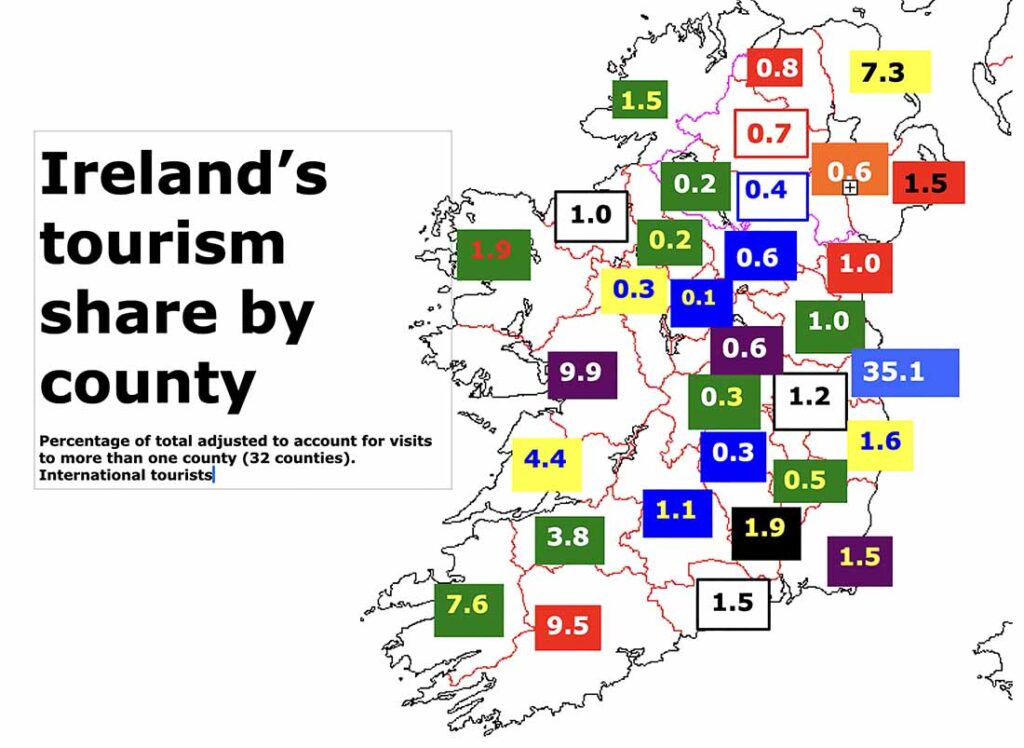
Ireland’s county Galway offers a delightful mix of cultural heritage and coastal beauty, with Galway City’s Latin Quarter showcasing historic streets and traditional music venues. The Connemara National Park provides hiking trails through rugged mountains and bogs, while the Aran Islands offer ancient stone forts like Dún Aonghasa. Other favourite stop is ithe Kylemore Abbey’s Victorian gardens and coastal cliffs. Galway is Ireland’s second largest county by size (5,939 sq km) and fifth largest by population (277,737). Population peaked at 440,198 in 1841 and reached its lowest point, 148,340 in 1966. In terms of hospitality, Galway is Ireland’s third most visited tourist county with around 1,028,000 international visitors per year.
Introduction – Adventure – Anthem – Archaeology – Attractions – Awards – Birdwatching – Camping – Castles – Churches – Contact list – Cycling – Dining – Equestrian – Festivals – Fishing – Folklore – Gardens – Golf – Graveyards – Happening – Haunted – Highest – Hiking – History – Holy Wells – Hotels – Hotels top 8 – Hunting & shooting – Instagrammable – Itineraries – Largest town – Luxury – MICE – Movies – Music – Name – New – Novelists – Off the beaten track – Poets – Pubs – Quotes – Random Facts – Restaurant Awards – Sacred Places – Saints – Songs – Spas – Sports – Sunsets – Sustainable – Things to do – Towns – Video – Villages – Walking – Wanderlist – Weddings – Wild swimming – Writers – 1837 – 1846 – 1852 – 1909 – 1955 – 1980 –