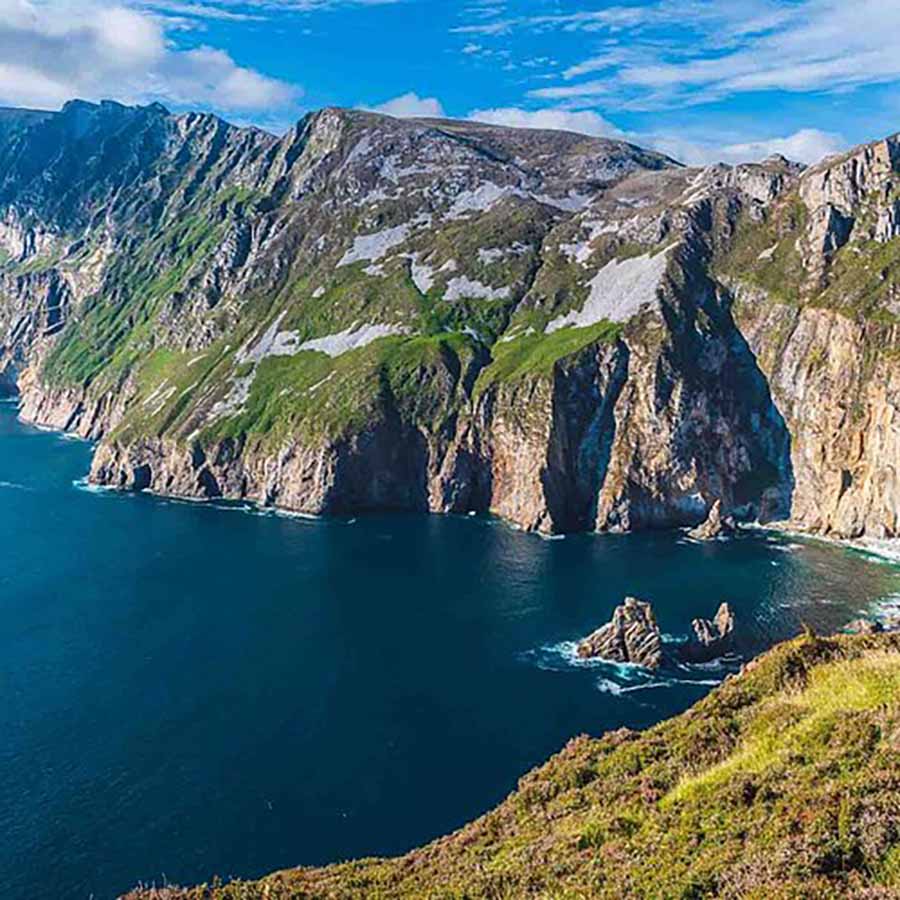
County Donegal, in Ireland’s northwest, offers a rich blend of rugged landscapes, historic sites, and cultural treasures for travellers seeking adventure and tranquillity. With its dramatic coastline, towering mountains, and welcoming towns, this county provides a diverse range of experiences. From windswept cliffs to ancient forts and serene beaches, Donegal invites visitors to discover its unique attractions at their own pace.
Slieve League, among Europe’s highest sea cliffs, rises 596 metres above the Atlantic, offering breathtaking views. Visitors can walk the cliff-top trails, accessible via a scenic drive from Teelin, to enjoy vistas of the ocean and distant mountains. A visitor centre provides insights into the cliffs’ geology, while guided walks cater to those seeking a deeper understanding, making it a rewarding stop for hikers and photographers.
Glenveagh National Park, spanning 16,000 hectares, is a haven of mountains, lakes, and woodlands. The park’s centrepiece, Glenveagh Castle, is a 19th-century baronial mansion surrounded by formal gardens. Visitors can tour the castle’s elegant rooms, stroll through rhododendron-lined paths, and explore trails leading to Lough Veagh, with opportunities to spot red deer and golden eagles in the wild.
Malin Head, Ireland’s northernmost point, offers a wild coastal experience along the Wild Atlantic Way. Visitors can walk windswept paths, view the iconic “Eire” sign from World War II, and gaze across the Atlantic, with chances to spot dolphins or basking sharks. The nearby Banba’s Crown provides a scenic lookout, perfect for those seeking solitude and sea breezes.
Donegal Town, the county’s historic hub, centres around the Diamond, a market square with a relaxed atmosphere. The 15th-century Donegal Castle, restored to its former glory, offers guided tours through its stone halls, revealing tales of the O’Donnell clan. Visitors can wander the town’s streets, browse craft shops, and enjoy a coffee by the River Eske, soaking in the local vibe.
Fanad Head Lighthouse, perched on a rocky peninsula, is a striking landmark with sweeping views of Lough Swilly. Guided tours take visitors up the lighthouse tower, sharing stories of its maritime history, while the surrounding cliffs offer scenic walks. The lighthouse’s remote beauty and nearby beaches make it a peaceful retreat for coastal explorers.
Tory Island, a short ferry ride from Magheroarty, is a rugged outpost with a unique cultural heritage. Visitors can explore its Gaeltacht community, visit the Tau Cross, a 6th-century relic, and walk cliff paths to spot puffins and seals. The island’s art gallery and traditional music sessions in local pubs create a warm, authentic experience for travellers.
Grianan of Aileach, a circular stone fort atop a hill near Burt, dates back to the 8th century. Visitors can climb the fort’s walls for panoramic views of Lough Foyle and the Inishowen Peninsula, with information boards detailing its royal past. The site’s ancient stones and open landscape make it a fascinating stop for history enthusiasts.
Inishowen Peninsula, Ireland’s largest peninsula, offers dramatic scenery and quiet villages. The Inishowen 100, a 160km driving route, winds through coastal cliffs, beaches, and historic sites like Doagh Famine Village, where exhibits recreate 19th-century life. Visitors can hike, cycle, or drive, stopping at spots like Five Finger Strand for a refreshing beach walk.
Glencolmcille Folk Village, overlooking Sliabh Liag, recreates rural Donegal life from the 18th to 20th centuries. Visitors can explore thatched cottages, a schoolhouse, and a craft shop, with guides sharing stories of local traditions. The village’s scenic setting and nearby walking trails make it a delightful stop for those keen on heritage and nature.
Rathmullan, a coastal village on Lough Swilly, offers a mix of history and natural beauty. The Rathmullan Heritage Centre details the 1607 Flight of the Earls, while the beach and coastal paths provide serene walks with views of the lough. Visitors can enjoy fresh seafood at local restaurants or take a ferry to explore nearby islands.
County Donegal’s mix of rugged coastlines, historic landmarks, and cultural experiences creates a rewarding destination. Whether scaling cliffs, touring ancient forts, or relaxing on sandy shores, travellers will find plenty to enjoy in this inviting corner of Ireland.
County Donegal:
Ireland’s county Donegal is a land of wild coastlines and Gaelic heritage, with Slieve League’s towering sea cliffs offering some of Europe’s highest coastal views. Glenveagh National Park features a historic castle and sprawling gardens amidst rugged mountains. The beaches of Bundoran and the traditional tweed workshops of Ardara make Donegal an engaging destination for nature and cultural enthusiasts. The Grianan of Aileach stone fort adds ancient intrigue and splendid views. Donegal is Ireland’s fourth largest county by size (4,830 square km) and 13th largest by population (167,084). Population peaked at 296,448 in 1841 and reached its lowest point, 108,344 in 1971. In terms of hospitality, Donegal is also Ireland’s 13th most visited tourist county with around 199,000 international visitors per year.
Introduction – Adventure – Anthem – Archaeology – Attractions – Awards – Birdwatching – Camping – Castles – Churches – Contact list – Cycling – Dining – Equestrian – Festivals – Fishing – Folklore – Gardens – Golf – Graveyards – Happening – Haunted – Highest – Hiking – History – Holy Wells – Hotels – Hotels8 – Instagrammable – Itineraries – Largest town – Luxury – MICE – Movies – Musicians – New – Name – Novelists – Off the beaten track – Poets – Pubs – Quotes – Random Facts – Restaurant Awards – Sacred Places – Saints – Spas – Sports – Sunsets– Sustainable – Things to do – Towns – Video – Villages – Walking – Wanderlist – Weddings – Wild swimming – Writers – 1837 – 1846 – 1852 – 1909 – 1955 – 1980 –
Things to do
Antrim – Armagh – Carlow – Cavan – Clare – Cork – Derry – Donegal – Down – Dublin – Fermanagh – Galway – Kerry – Kildare – Kilkenny – Laois – Leitrim – Limerick – Longford – Louth – Mayo – Meath – Monaghan – Offaly – Roscommon – Sligo – Tipperary – Tyrone – Waterford – Westmeath – Wexford – Wicklow