- Annemarie Ní Churreáin: A contemporary poet born in County Donegal
- Cathal Ó Searcaigh: Born and lived in Mín a’ Leá, Gortahork, Cloughaneely, County Donegal . (1956-): A leading contemporary Irish-language poet, Ó Searcaigh is known as the “Gúrú na gCnoc” (Guru of the Hills) in his community. His collections, such as Homecoming/An Bealach ’na Bhaile and Ag Tnuth leis an tSolas, explore themes of place, identity, and sexuality with lyrical intensity. His work has been celebrated for revitalizing Irish-language poetry, though he has faced controversy. He remains a central figure in Donegal’s Gaeltacht literary scene.
- Frances Browne (1816–1879): Born in Stranorlar, she was known as the “Blind Poetess of Ulster,” publishing poetry and literature despite losing her sight in infancy.
- Frank McGuinness: Born in Buncrana, County Donegal . (1953-): Primarily a playwright (Observe the Sons of Ulster Marching Towards the Somme), McGuinness has also published four poetry collections, including The Stone Jug. His poetry, often lyrical and introspective, reflects his Inishowen roots and explores themes of history and identity. He is a professor of creative writing at University College Dublin.
- Lughaidh Ó Cléirigh (fl. 1580–1630): A historian and poet, he was born into the hereditary learned family of the O’Clerys in Donegal.
- Matthew Sweeney (1952–2018): Born in Lifford and raised in Ballyliffin (Inishowen), he was a celebrated contemporary poet, recognized for his distinct, often surreal, poetic voice.
- Moya Cannon (b. 1950s): Born in Dunfanaghy, she is a poet and member of Aosdána, whose work is heavily influenced by history, archaeology, and Irish traditional music.
- Neil McBride (1856–1938): Born in Donegal, he was a poet and author known for his work, including “Preab san Ól”.
- Patrick MacGill: Born in Glenties, County Donegal . (1889-1963): Known as the “Navvy Poet,” MacGill wrote poetry and prose about the Irish immigrant experience, particularly in Songs of the Dead End (1912). His poems captured the hardships of Donegal emigrants working as laborers in Britain. The MacGill Summer School in Glenties honors his legacy as a forum for literary and cultural discussion.
- Sarah Leech (1809–1830): Born in Raphoe, she was a 19th-century poet who wrote about her experiences of poverty, often in the Ulster-Scots tradition.
- Seosamh Mac Grianna (1900–1990): Born in Donegal, he was a significant Irish-language author and poet, a key voice of the Gaeltacht in the 20th century.
- Seosamh Mac Grianna: Born in Rann na Feirste, The Rosses, County Donegal . (1900-1990): An Irish-language writer and poet, Mac Grianna is better known for his prose (Mo Bhealach Féin), but his poetry contributed to the Gaelic literary revival in Donegal’s Gaeltacht. His work often reflected the rugged beauty of The Rosses and the struggles of rural life. He was a contemporary of his brother, Séamus Ó Grianna, and both were influential in preserving Donegal’s Irish-language traditions.
- William Allingham: Born in Ballyshannon, County Donegal; lived in Lendrum, County Tyrone. (1824-1889): A key figure in 19th-century Irish poetry, Allingham is best known for his poem “The Faeries” (“Up the airy mountain…”). His work, including Day and Night Songs (1854), blends romanticism with Donegal’s folklore and landscapes. He worked as a customs officer and later lived in England, associating with the Pre-Raphaelites.
Poets
Antrim – Armagh – Carlow – Cavan – Clare – Cork – Derry – Donegal – Down – Dublin – Fermanagh – Galway – Kerry – Kildare – Kilkenny – Laois – Leitrim – Limerick – Longford – Louth – Mayo – Meath – Monaghan – Offaly – Roscommon – Sligo – Tipperary – Tyrone – Waterford – Westmeath – Wexford – Wicklow
County Donegal:
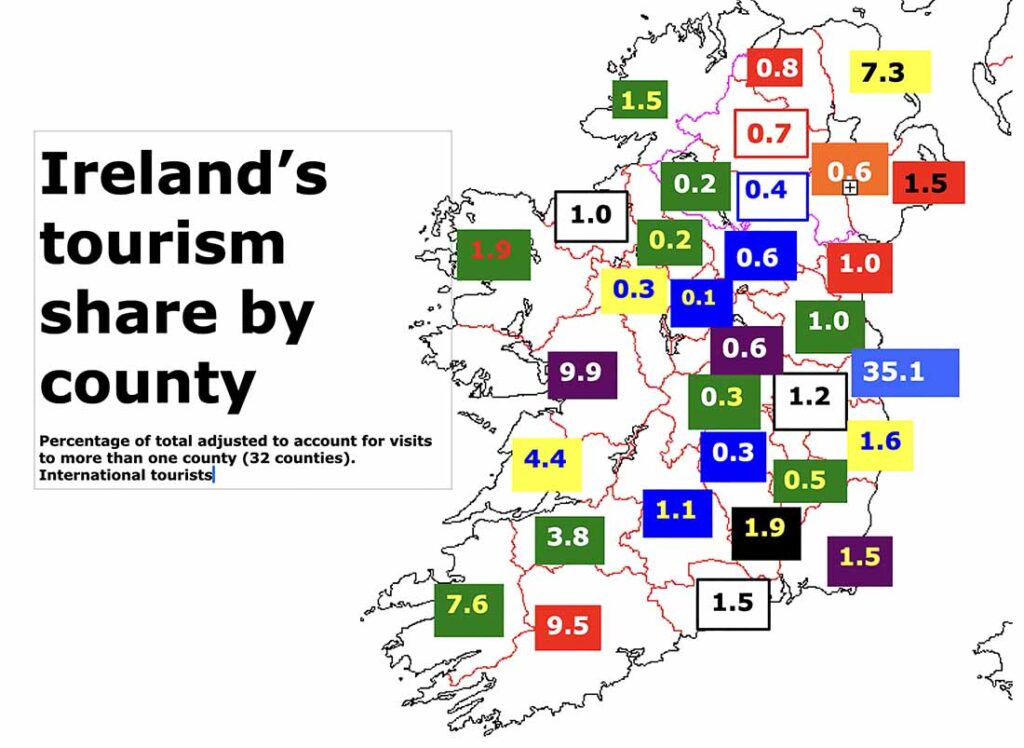
Ireland’s county Donegal is a land of wild coastlines and Gaelic heritage, with Slieve League’s towering sea cliffs offering some of Europe’s highest coastal views. Glenveagh National Park features a historic castle and sprawling gardens amidst rugged mountains. The beaches of Bundoran and the traditional tweed workshops of Ardara make Donegal an engaging destination for nature and cultural enthusiasts. The Grianan of Aileach stone fort adds ancient intrigue and splendid views. Donegal is Ireland’s fourth largest county by size (4,830 square km) and 13th largest by population (167,084). Population peaked at 296,448 in 1841 and reached its lowest point, 108,344 in 1971. In terms of hospitality, Donegal is also Ireland’s 13th most visited tourist county with around 199,000 international visitors per year.
Introduction – Adventure – Anthem – Archaeology – Attractions – Awards – Birdwatching – Camping – Castles – Churches – Contact list – Cycling – Dining – Equestrian – Festivals – Fishing – Folklore – Gardens – Golf – Graveyards – Happening – Haunted – Highest – Hiking – History – Holy Wells – Hotels – Hotels top 8 – Hunting & shooting – Instagrammable – Itineraries – Largest town – Luxury – MICE – Movies – Music – New – Name – Novelists – Off the beaten track – Poets – Pubs – Quotes – Random Facts – Restaurant Awards – Sacred Places – Saints – Songs – Spas – Sports – Sunsets – Sustainable – Things to do – Towns – Video – Villages – Walking – Wanderlist – Weddings – Wild swimming – Writers – 1837 – 1846 – 1852 – 1909 – 1955 – 1980 –