Pre-1000 The Gaelic Nation
County Donegal’s pre-1000 history is rooted in its role within the Cenél Conaill kingdom, part of the Northern branch of the house of Niall confederation. Archaeological sites, such as the Grianán of Aileach (a hillfort near Burt, traditionally linked to the house of Niall dynasty), indicate Iron Age settlement. The region was a stronghold of the Cenél Conaill, with the O’Donnell (Ó Domhnaill) dynasty emerging by the 8th century. Christianity arrived early, with Saint Columba (Colmcille), born in Gartan (c. 521 CE), founding monasteries, including one at Kells (though not the Book of Kells’ origin). The Annals of Ulster (record Viking raids on Donegal’s coast, particularly Tory Island and Inishmurray, from the 9th century, targeting monastic wealth. Donegal’s isolation preserved Gaelic culture, but ecclesiastical sources dominate, potentially exaggerating Christian influence while marginalising pre-Christian traditions.
1000–1100: Gaelic Power and Viking Incursions
In the 11th century, Donegal remained under Cenél Conaill control, with the O’Donnells consolidating power. The region’s coastal location made it vulnerable to Viking raids, though its rugged terrain limited sustained Norse settlement. Monastic centres like Raphoe, founded by Saint Eunan, grew as hubs of learning. The Battle of Clontarf (1014) indirectly weakened Viking influence, but Donegal remained peripheral to major political shifts. The lack of secular records and focus on ecclesiastical or regional conflicts in sources like the Annals require cautious interpretation to reconstruct local history.
1100–1200: Gaelic Resilience and Ecclesiastical Reform
The Norman invasion (1169–1171) had little direct impact on Donegal due to its remote location. The Cenél Conaill, led by figures like Flaithbertach O’Canannáin, maintained autonomy, resisting Norman expansion into Ulster. The Synod of Cashel (1172) aligned Donegal’s monasteries, such as Raphoe, with Roman ecclesiastical reforms, strengthening its diocesan structure. The region’s isolation preserved Gaelic law and culture, with no significant Norman settlements. Norman sources, like the “Song of Dermot and the Earl”, focus on eastern conquests.
1200–1300: O’Donnell Ascendancy and Gaelic Continuity
In the 13th century, Donegal was firmly under O’Donnell control, with their seat at Donegal Castle (built later but symbolic of their power). The county’s boundaries were not yet formalised, encompassing the Tír Conaill region. The O’Donnells resisted Norman influence, maintaining alliances with other Gaelic lords and Scottish clans, particularly the MacDonnells. The establishment of Donegal Abbey (c. 1474, though founded later) reflects growing Franciscan influence. The region’s rugged terrain and coastal trade supported Gaelic autonomy, but Norman records marginalise these achievements, and ecclesiastical sources overemphasise monastic roles.
1300–1400: O’Donnell Power and Scottish Connections
The 14th century saw the O’Donnells, under leaders like Niall Mór O’Donnell (d. 1318), strengthen Tír Conaill’s independence. The Black Death (1348–1350) had a limited impact due to Donegal’s isolation, and the Statute of Kilkenny (1366) was irrelevant, as English authority barely reached the region. The O’Donnells forged strong ties with Scottish clans, particularly through marriages with the MacDonnells of the Isles, enhancing Donegal’s Gaelic-Scots identity. English sources portray Gaelic lords as chaotic, requiring critical interpretation.
1400–1500: O’Donnell Dominance and Cultural Flourishing
The 15th century saw Donegal as a Gaelic stronghold under the O’Donnells, with figures like Niall Garbh O’Donnell (d. 1439) expanding influence. The Wars of the Roses (1460–1485) distracted English authorities, allowing Gaelic autonomy. Donegal Abbey, founded in 1474 by the O’Donnells, became a centre for Gaelic learning, producing the Annals of the Four Masters (later compiled here). The O’Donnells patronised bards, preserving Gaelic poetry and music. Donegal’s isolation preserved its Gaelic culture, but the lack of secular records limits insights into daily life, with ecclesiastical sources dominating.
1500–1600: Tudor Reconquest and O’Donnell Resistance
The 16th century brought Tudor efforts to subdue Ulster, impacting Donegal. The O’Donnells, under leaders like Hugh Roe O’Donnell (d. 1602), resisted during the Nine Years’ War (1594–1603), with Donegal Castle as a base. Hugh Roe’s alliance with Hugh O’Neill and victories, like the Battle of Yellow Ford (1598), challenged English control. The Flight of the Earls (1607), including Hugh Roe’s brother Rory O’Donnell, led to the Ulster Plantation (1609), with Donegal’s lands confiscated for English and Scottish settlers. The annals document Gaelic resistance, while English records portray the O’Donnells as rebels, requiring balance.
1600–1700: Ulster Plantation and Confederate Wars
The 17th century transformed Donegal through the Ulster Plantation. O’Donnell lands were granted to settlers, particularly in east Donegal, with towns like Letterkenny developing. The 1641 Rebellion saw Catholic forces, including Rory O’Donnell’s descendants, attempt to reclaim land, but English forces prevailed. The Cromwellian conquest (1649–1653) led to further confiscations, marginalising Catholic landowners. The Williamite War (1689–1691) saw Donegal loyal to William III, with no major sieges. Cahir O’Doherty’s 1608 rebellion briefly disrupted plantation efforts. The Annals of the Four Masters, compiled in Donegal, document Gaelic losses. English sources vilify Catholic rebels, necessitating critical interpretation.
1700–1800: Protestant Ascendancy and Economic Challenges
The 18th century saw Donegal under the Protestant Ascendancy, with Anglo-Irish and Scottish landlords dominating. The Penal Laws marginalised Catholics, who formed the majority in rural Donegal. The linen industry grew in east Donegal, but the county’s rugged west remained economically marginal. The 1798 Rebellion saw limited United Irishmen activity, with figures like Betsy Gray, a Presbyterian radical, active nearby. The Act of Union (1800) strengthened English control. Donegal’s ports, like Killybegs, supported fishing and trade. English and colonial narratives tend to downplay native Irish or Catholic grievances.
1800–1900: Famine, Emigration, and Nationalist Growth
The 19th century was marked by hardship in Donegal. The Great Famine (1845–1849) devastated the county, reducing its population from 296,000 in 1841 to 255,000 in 1851 due to starvation, disease, and emigration, particularly from west Donegal’s Gaeltacht areas. The county’s reliance on smallholdings exacerbated the crisis. Railways and ports like Derry supported trade, but economic recovery was slow. The Gaelic Revival saw the Gaelic League preserve Irish language in Donegal’s Gaeltacht, with figures like Seosamh Mac Grianna active. The GAA, founded in 1884, established clubs, with Donegal winning football titles. The Home Rule movement gained Catholic support. English famine records tend to understate suffering.
1900–2025: Partition, Gaeltacht Preservation, and Tourism
The 20th and 21st centuries saw Donegal navigate Ireland’s independence and border dynamics. The War of Independence (1919–1921) saw IRA activity in Donegal, with figures like Peadar O’Donnell prominent. Partition (1921) placed Donegal in the Irish Free State, despite its proximity to the border, creating economic challenges. The Civil War (1922–1923) saw fighting in Donegal, with anti-treaty forces active. The Gaeltacht regions preserved Irish language and culture, with Údarás na Gaeltachta supporting development. Donegal’s GAA tradition flourished, with All-Ireland football titles in 1992 and 2012. Tourism grew around sites like Glenveagh National Park and Slieve League. Official narratives tend to overemphasise progress, overlooking rural and border challenges. Donegal is one of 24 Irish counties that still has a smaller population than it had in 1841.
History
Antrim – Armagh – Carlow – Cavan – Clare – Cork – Derry – Donegal – Down – Dublin – Fermanagh – Galway – Kerry – Kildare – Kilkenny – Laois – Leitrim – Limerick – Longford – Louth – Mayo – Meath – Monaghan – Offaly – Roscommon – Sligo – Tipperary – Tyrone – Waterford – Westmeath – Wexford – Wicklow
County Donegal:
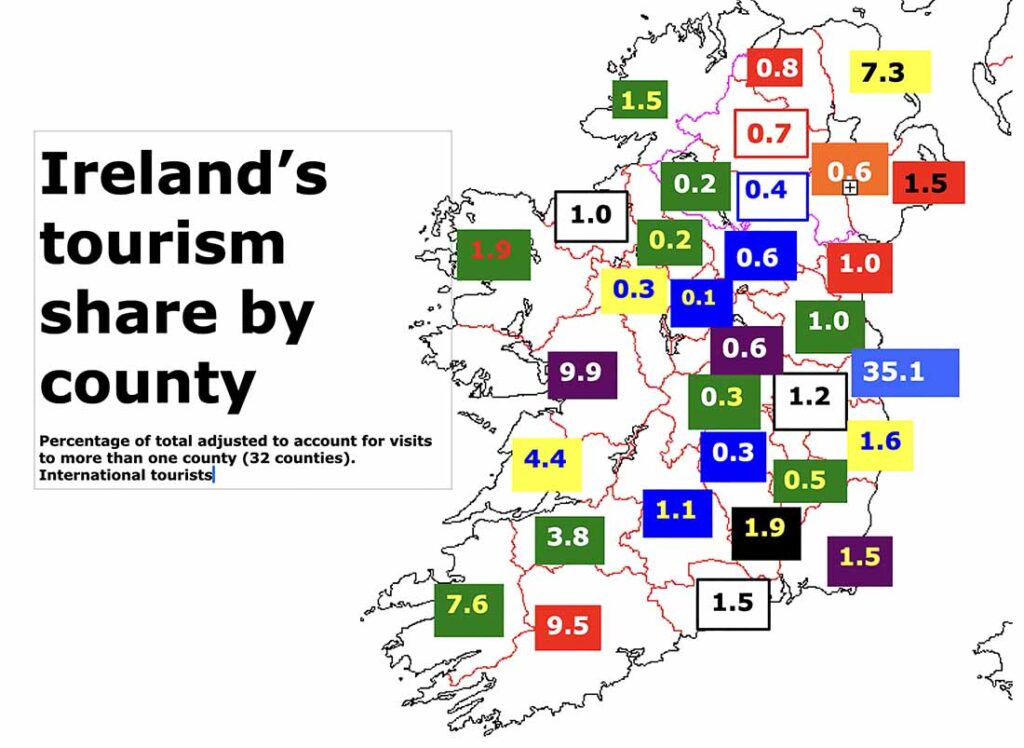
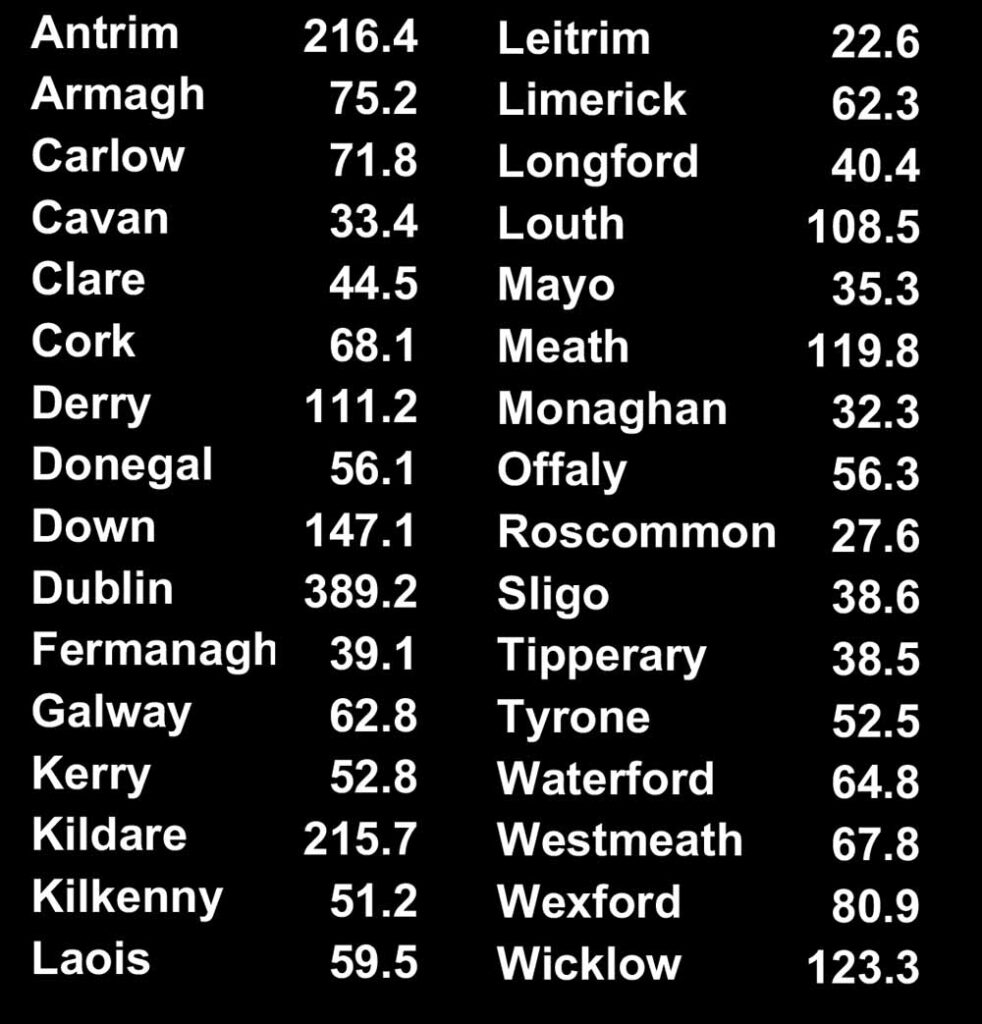
Ireland’s county Donegal is a land of wild coastlines and Gaelic heritage, with Slieve League’s towering sea cliffs offering some of Europe’s highest coastal views. Glenveagh National Park features a historic castle and sprawling gardens amidst rugged mountains. The beaches of Bundoran and the traditional tweed workshops of Ardara make Donegal an engaging destination for nature and cultural enthusiasts. The Grianan of Aileach stone fort adds ancient intrigue and splendid views. Donegal is Ireland’s fourth largest county by size (4,830 square km) and 13th largest by population (167,084). Population peaked at 296,448 in 1841 and reached its lowest point, 108,344 in 1971. In terms of hospitality, Donegal is also Ireland’s 13th most visited tourist county with around 199,000 international visitors per year.
Introduction – Adventure – Anthem – Archaeology – Attractions – Awards – Birdwatching – Camping – Castles – Churches – Contact list – Cycling – Dining – Equestrian – Festivals – Fishing – Folklore – Gardens – Golf – Graveyards – Happening – Haunted – Highest – Hiking – History – Holy Wells – Hotels – Hotels top 8 – Hunting & shooting – Instagrammable – Itineraries – Largest town – Luxury – MICE – Movies – Music – New – Name – Novelists – Off the beaten track – Poets – Pubs – Quotes – Random Facts – Restaurant Awards – Sacred Places – Saints – Songs – Spas – Sports – Sunsets – Sustainable – Things to do – Towns – Video – Villages – Walking – Wanderlist – Weddings – Wild swimming – Writers – 1837 – 1846 – 1852 – 1909 – 1955 – 1980 –