Start your walking tour of Naas in Ireland’s county Kildare at the Moat of Naas the oldest man-made structure in the town. The dun or fort dates from the early Celtic period and served as the seat of the kings of Leinster for over 700 years rivaling the Hill of Tara in importance as a meeting place. The last king to reside there was Cerball who died in 904.
Saint Patrick visited Naas on several occasions notably in 448. The Anglo-Normans arrived in the 1100s and used the mound to construct a motte-and-bailey defensive structure with a keep on top and a fenced bailey below typical of their fortifications. The moat forms an integral part of the town’s ancient and medieval heritage. Walk back down Abbey Road towards the canal to reach the Abbey Graveyard on the site of a former Dominican abbey dating to 1335 built by the Anglo-Norman Waspail family. Ruins of the abbey stood into the 1700s with stones reportedly used to build Abbey Bridge over the canal in 1789. Pass the Moat Theatre at the top of Moat Lane the original residence of the Christian Brothers when they arrived in Naas in 1871.
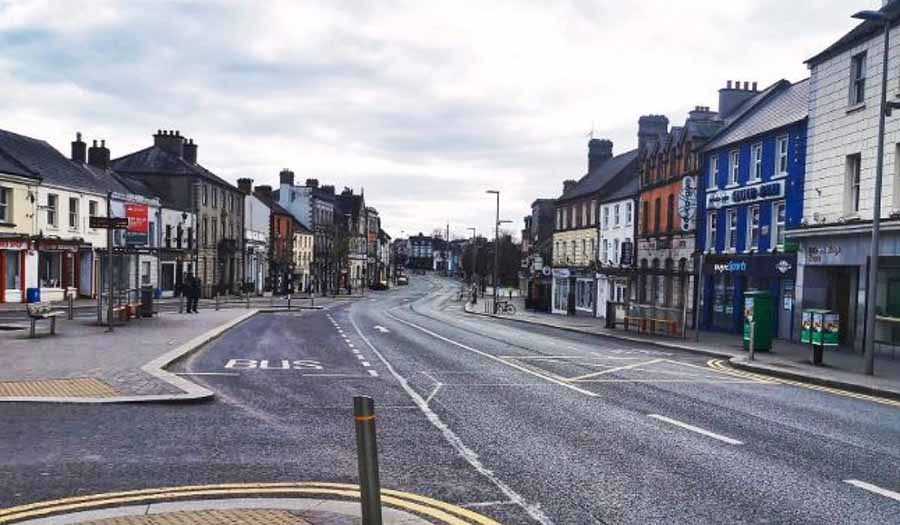
Continue down Moat Lane to South Main Street and Market Square the centre of Naas. Strongbow Richard de Clare granted the barony of Naas in 1170 to Maurice FitzMaurice leading to Norman fortification with town walls including six gates and nine castles or fortified houses around the perimeter from Pembrokeshire in Wales. Little remains of these fortifications except David’s Castle also known as King John’s Castle in Church Lane just off South Main Street built around 1206 visited by England’s King John in 1206 and 1210 when a parliament sat there. It remained a Norman stronghold in the 13th and 14th centuries with an underground tunnel reputedly leading towards the moat.
Nearby Saint David’s Church stands on the site of an earlier Celtic church likely dedicated to Saint Corban a local saint or Saint Patrick. Parts of the original Norman church incorporate into the present building with the first reference in 1212 named after the patron saint of Wales Saint David still used by the local Church of Ireland congregation. On North Main Street the Presbyterian church a fine stone building dates from 1866 to 1868 with foundation stones laid by John T. Usher.
Across stands the Town Hall built in 1792 originally as a jail on the site of White’s Castle one of the medieval castles. It saw fierce fighting in the 1798 Rebellion between crown forces including Armagh militia and rebels led by local farmer Michael Reynolds from the Chippe area with rebels heavily defeated and subjected to brutality.
The building served as local government centre for over 150 years and meeting place for Naas Urban District Council. Walk further along South Main Street turn right down Basin Street to the canal harbour. The Naas Canal a branch from the Grand Canal at Sallins Island features five locks and two stone bridges Abbey Bridge and Tandy’s Bridge finished in 1789. The canal stores building in the harbour restored in the 1980s once bustled with commercial activity with the last commercial barge departing in 1960.
Opposite the stores the Market House built in 1813 by the Earl of Mayo of Palmerstown House associated with canal trade in corn and produce. Return out of Basin Street turn right along North Main Street to the courthouse built in 1807 an impressive stone building with pillars added in 1859 noted for Victorian courtrooms used in several films with one courtroom similar to Poll Street Magistrates’ Court in London.
Next the old Garda barracks originally an RIC barracks built in 1870 retains turrets and loopholes in semi-perpendicular style with local story that plans mixed up intended for India. On the neighbouring Leinster Leader building two plaques commemorate former editors Seamus O’Kelly, poet dramatist journalist nationalist and John Wyse Power founder member of the GAA in 1884. O’Kelly lived in a cottage at the first lock on the canal known as the gentle revolutionary.
Head towards Murder’s Corner turn right onto Newbridge Road to a large rural building on the outskirts passing the Naas Artist to Lara glass building on the site of old military barracks built by the English in 1813 later named Devoy Barracks after Fenian John Devoy born outside Naas at Greenhills home of the Dublin Fusiliers for many years with old arch and clock tower remaining. Further along Newbridge Road ruins of Castle Rag a pale castle from the 1400s on the periphery of the Pale with fortified houses along its defensive line including Woodstock Castle.
Reach the ruins of Jigginstown House arguably the largest brick house ever built in Ireland constructed around 1639 by Thomas Wentworth Earl of Strafford Lord Lieutenant of Ireland as a residence for England’s King Charles I . The visit was never completed after Wentworth fell from favour recalled to London tried for treason and executed in 1641. During construction, red bricks were shipped from Wales to Dublin then handed person to person to Naas.
Cross to the southern side along the Sallins Road to the Catholic Church of Our Lady and Saint David. The site was acquired in the early 1800s as a free gift from the de Burgh estate opened in 1827 with fine steeple added 1851 to 1858.
Further down the Sallins Road Old Town site of the de Burgh family, prominent since William de Burgh arrived with Anglo-Normans in 1172. He was granted lands in Limerick. Thomas de Burgh, born 1670 bought land around Naas in the 1690s . He built Oldtown in 1695 and resided there until deaths of Major de Burgh and wife Clare not many years ago.
A holy well in the elder grove is reputedly where, according to Tírechán’s much mythologies life of the saint, Saint Patrick baptised King Dúnlaing’s children. Travel along the Dublin Road to Naas Racecourse, modern but synonymous with the town recognised throughout the land, taking in the story from the Moat in Celtic times to the racecourse in the 21st century.
Ireland county by county
Antrim – Armagh – Carlow – Cavan – Clare – Cork – Derry – Donegal – Down – Dublin – Fermanagh – Galway – Kerry – Kildare – Kilkenny – Laois – Leitrim – Limerick – Longford – Louth – Mayo – Meath – Monaghan – Offaly – Roscommon – Sligo – Tipperary – Tyrone – Waterford – Westmeath – Wexford – Wicklow
Largest town walking tour
Antrim – Armagh – Carlow – Cavan – Clare – Cork – Derry – Donegal – Down – Dublin – Fermanagh – Galway – Kerry – Kildare – Kilkenny – Laois – Leitrim – Limerick – Longford – Louth – Mayo – Meath – Monaghan – Offaly – Roscommon – Sligo – Tipperary – Tyrone – Waterford – Westmeath – Wexford – Wicklow
Towns
Antrim – Armagh – Carlow – Cavan – Clare – Cork – Derry – Donegal – Down – Dublin – Fermanagh – Galway – Kerry – Kildare – Kilkenny – Laois – Leitrim – Limerick – Longford – Louth – Mayo – Meath – Monaghan – Offaly – Roscommon – Sligo – Tipperary – Tyrone – Waterford – Westmeath – Wexford – Wicklow
Villages
Antrim – Armagh – Carlow – Cavan – Clare – Cork – Derry – Donegal – Down – Dublin – Fermanagh – Galway – Kerry – Kildare – Kilkenny – Laois – Leitrim – Limerick – Longford – Louth – Mayo – Meath – Monaghan – Offaly – Roscommon – Sligo – Tipperary – Tyrone – Waterford – Westmeath – Wexford – Wicklow