- Dalkey: A charming seaside village in South Dublin, Dalkey retains a medieval character with narrow lanes, two Norman castles (Dalkey Castle and Bullock Castle), and stunning coastal views from Dalkey Hill. Its harbor and nearby Dalkey Island offer scenic boat trips and a relaxed vibe, despite attracting high-profile residents like Bono and Enya.
- Howth: A picturesque fishing village on the Howth Peninsula, Howth features a lively harbor, cliff walks with panoramic views of Dublin Bay, and the historic Howth Castle, set in 22 acres of lush grounds. Its seafood restaurants and proximity to Ireland’s Eye island enhance its coastal charm.
- Killiney: A serene coastal village in South Dublin, Killiney is known for its long, stony beach and dramatic views of Bray Head and Dalkey Island. Killiney Hill offers scenic walks with vistas resembling Italy’s Sorrento, making it a favorite for day-trippers.
- Lusk: A quaint village in Fingal, Lusk is surrounded by rolling farmland and features a historic round tower and medieval church. Its rural setting and proximity to the coast at Rush provide scenic countryside and seaside appeal.
- Balrothery: A historic village in Fingal, Balrothery boasts a 12th-century church, castle ruins, and a scenic hilltop setting. Surrounded by green fields, it offers peaceful countryside views and a glimpse into Dublin’s medieval past.
- Brittas: Located near the Dublin Mountains, Brittas is a rural hamlet with scenic views of rolling hills and proximity to the Slade Valley. Its quiet, green surroundings make it ideal for hiking and escaping Dublin’s urban bustle.
- Garristown: A tranquil village in northwest Fingal, Garristown is surrounded by lush farmland and gentle hills. Its historic windmill and church, along with nearby Bog of the Ring, offer scenic rural charm and walking opportunities.
- Oldtown: A small, rural village in Fingal, Oldtown is set amidst green fields and quiet lanes. Its proximity to the River Delvin and historic sites like St. Mary’s Church provide a serene, scenic setting for countryside exploration.
- Ballyboughal: A peaceful village in Fingal, Ballyboughal is surrounded by fertile farmland and the River Ballyboughal. Its rural charm, with open fields and historic farmhouses, offers a scenic retreat from Dublin’s urban core.
- Naul. Located in the northern hills of Fingal, Naul is a picturesque village with views of the Naul Hills and the River Delvin’s gorge. Its historic Seamus Ennis Arts Centre and surrounding countryside provide a scenic, cultural escape.
Villages
Antrim – Armagh – Carlow – Cavan – Clare – Cork – Derry – Donegal – Down – Dublin – Fermanagh – Galway – Kerry – Kildare – Kilkenny – Laois – Leitrim – Limerick – Longford – Louth – Mayo – Meath – Monaghan – Offaly – Roscommon – Sligo – Tipperary – Tyrone – Waterford – Westmeath – Wexford – Wicklow
Towns
Antrim – Armagh – Carlow – Cavan – Clare – Cork – Derry – Donegal – Down – Dublin – Fermanagh – Galway – Kerry – Kildare – Kilkenny – Laois – Leitrim – Limerick – Longford – Louth – Mayo – Meath – Monaghan – Offaly – Roscommon – Sligo – Tipperary – Tyrone – Waterford – Westmeath – Wexford – Wicklow
Awards
Antrim – Armagh – Carlow – Cavan – Clare – Cork – Derry – Donegal – Down – Dublin – Fermanagh – Galway – Kerry – Kildare – Kilkenny – Laois – Leitrim – Limerick – Longford – Louth – Mayo – Meath – Monaghan – Offaly – Roscommon – Sligo – Tipperary – Tyrone – Waterford – Westmeath – Wexford – Wicklow
County Dublin:
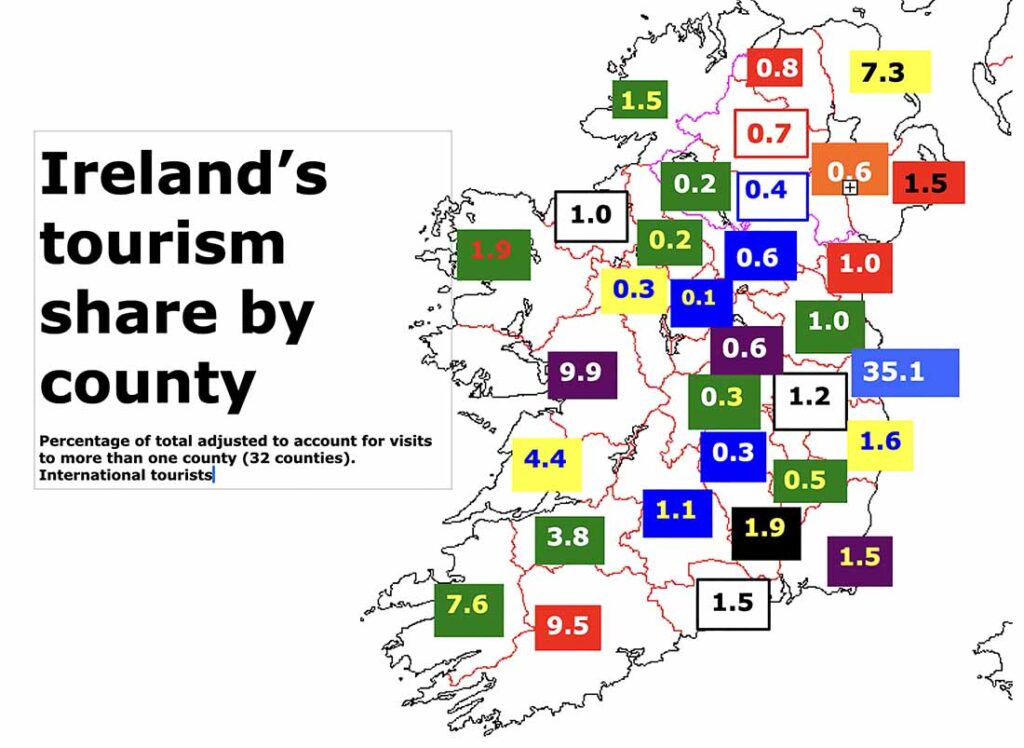
Ireland’s county Dublin combines cultural heritage with urban appeal, with Trinity College’s Book of Kells and Dublin Castle offering historical depth. The Guinness Storehouse provides a journey through Ireland’s iconic stout, while Phoenix Park’s vast green spaces are ideal for cycling. The River Liffey’s scenic walks and Kilmainham Gaol’s historical tours make Dublin a versatile destination for culture and history. Dublin is Ireland’s third smallest county by size (922 square km) and largest by population (1,458,154). Dublin is also Ireland’s most visited tourist county by a margin, with around four million international visitors per year. In terms of hospitality,
Introduction – Adventure – Anthem – Archaeology – Attractions – Awards – Birdwatching – Camping – Castles – Churches – Contact list – Cycling – Dining – Equestrian – Festivals – Fishing – Folklore – Gardens – Golf – Graveyards – Happening – Haunted – Highest – Hiking – History – Holy Wells – Hotels – Hotels top 8 – Hunting & shooting – Instagrammable – Itineraries – Largest town – Luxury – MICE – Movies – Music – New – Name – Novelists – Off the beaten track – Poets – Pubs – Quotes – Random Facts – Restaurant Awards – Sacred Places – Saints – Songs – Spas – Sports – Sunsets – Sustainable – Things to do – Towns – Video – Villages – Walking – Wanderlist – Weddings – Wild swimming – Writers – 1837 – 1846 – 1852 – 1909 – 1955 – 1980 –