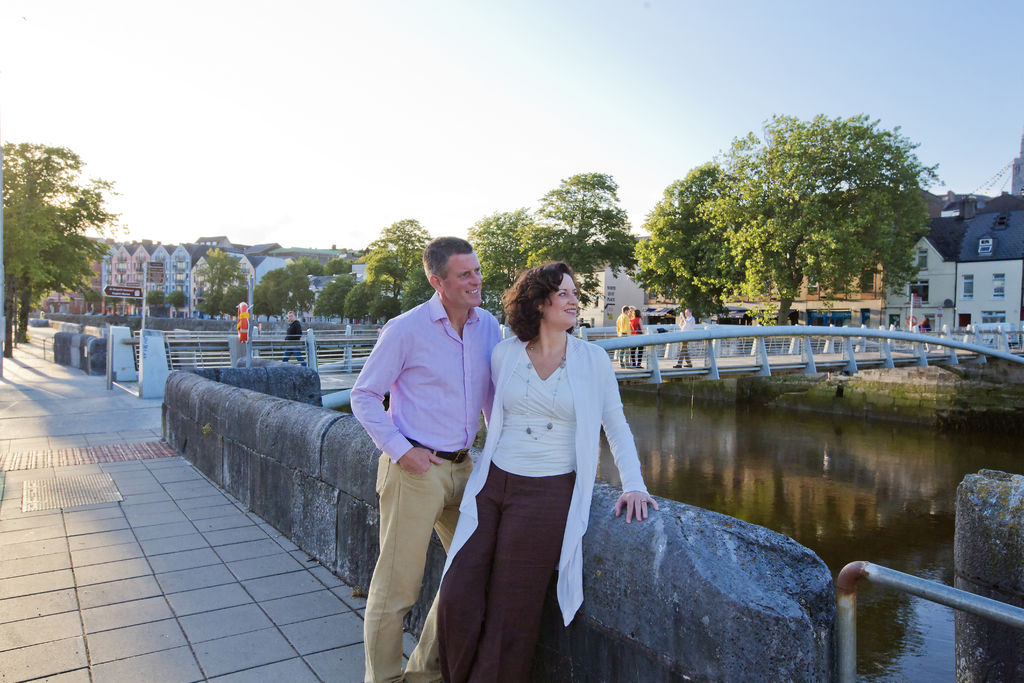
Start at Patrick’s Street (St. Patrick’s Street), Cork’s bustling main thoroughfare, lined with colourful shopfronts and Georgian buildings. Take a moment to soak up the lively atmosphere, often filled with street musicians. From here, it’s a 5-minute walk north to the Crawford Art Gallery (Emmet Place), a cultural gem showcasing Irish and European art. Spend 20 minutes browsing its free exhibitions, including works by Jack B. Yeats.
Head 5 minutes west to the English Market, a historic covered market since 1788, brimming with local produce and artisanal goods. Pop into The Farmgate Café (English Market, Princes St), a beloved no-reservations spot above the stalls, for a quick, affordable lunch of Irish stew or a fresh seafood chowder. Arrive early to secure a table and enjoy the market’s vibrant buzz.
Stroll 10 minutes south across the River Lee to St. Fin Barre’s Cathedral (Bishop St), a stunning Gothic Revival cathedral with intricate stonework. Spend 15 minutes exploring its ornate interior and peaceful grounds (small entry fee). Nearby, wander through Bishop Lucey Park, a small green oasis perfect for a brief pause.
Walk 10 minutes east to South Mall, a Georgian street with elegant architecture, and continue to Elizabeth Fort (Barrack St), a 17th-century star-shaped fort. A quick 15-minute visit (free entry) offers insight into Cork’s military past and views over the city. For a sweet treat, stop at Hassett’s Bakery (12 Princes St, a 5-minute walk), a local favourite for a creamy éclair or a traditional brack, no bookings needed, but be prompt to avoid queues.
Head 15 minutes north to Shandon, Cork’s historic hilltop district. Visit St. Anne’s Church (Church St), home to the famous Shandon Bells, where you can ring the bells yourself (small fee, allow 20 minutes). Climb the tower for panoramic views of Cork’s rooftops and the River Lee.
End your tour at the Cork City Gaol (Convent Ave, a 10-minute walk), a 19th-century prison-turned-museum that vividly recreates life behind bars. Spend 45 minutes exploring its eerie cells and stories (book tickets in advance if possible). For a final treat, grab a coffee or a slice of soda bread at The Bookshelf Coffee House (Sunday’s Well Rd, a 5-minute walk), a cosy spot with a literary vibe.
This four-hour tour weaves through Cork’s historic and cultural highlights, blending heritage, cuisine, and local charm. Wear comfortable shoes, check attraction ticket requirements, and embrace Cork’s friendly, laid-back spirit.
Largest town walking tour
Antrim – Armagh – Carlow – Cavan – Clare – Cork – Derry – Donegal – Down – Dublin – Fermanagh – Galway – Kerry – Kildare – Kilkenny – Laois – Leitrim – Limerick – Longford – Louth – Mayo – Meath – Monaghan – Offaly – Roscommon – Sligo – Tipperary – Tyrone – Waterford – Westmeath – Wexford – Wicklow
Population of towns in county Cork
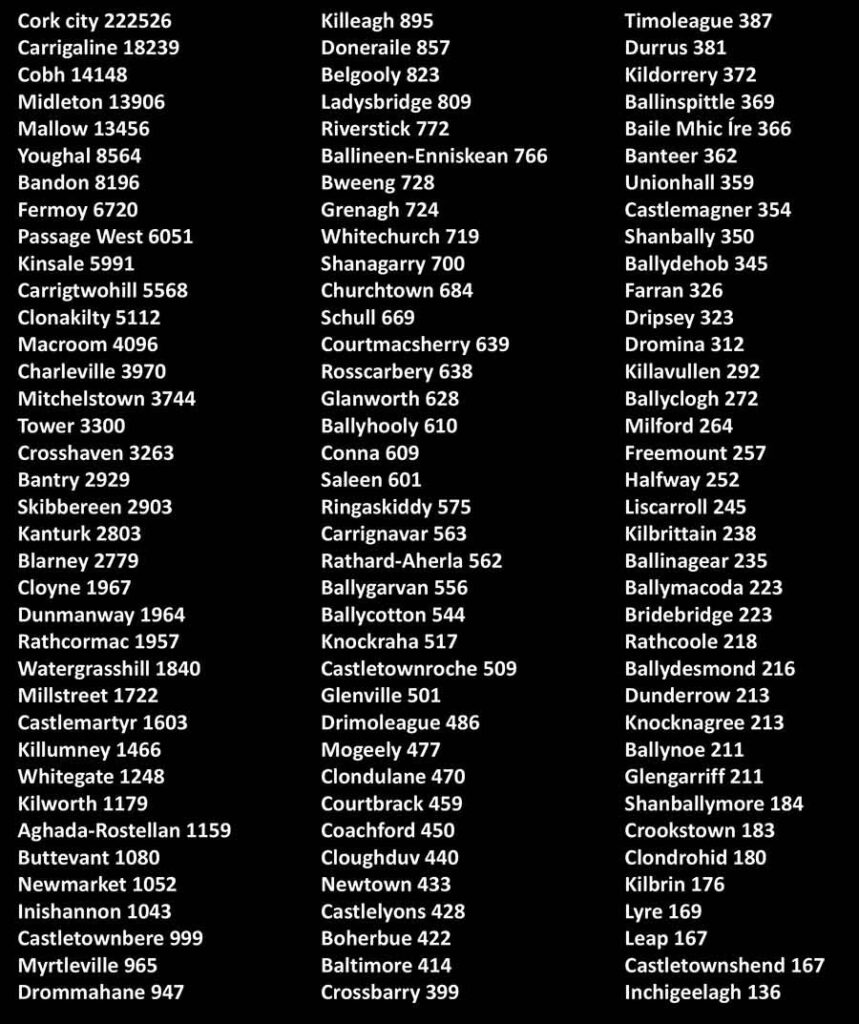
Towns
Antrim – Armagh – Carlow – Cavan – Clare – Cork – Derry – Donegal – Down – Dublin – Fermanagh – Galway – Kerry – Kildare – Kilkenny – Laois – Leitrim – Limerick – Longford – Louth – Mayo – Meath – Monaghan – Offaly – Roscommon – Sligo – Tipperary – Tyrone – Waterford – Westmeath – Wexford – Wicklow
Villages
Antrim – Armagh – Carlow – Cavan – Clare – Cork – Derry – Donegal – Down – Dublin – Fermanagh – Galway – Kerry – Kildare – Kilkenny – Laois – Leitrim – Limerick – Longford – Louth – Mayo – Meath – Monaghan – Offaly – Roscommon – Sligo – Tipperary – Tyrone – Waterford – Westmeath – Wexford – Wicklow
County Cork:
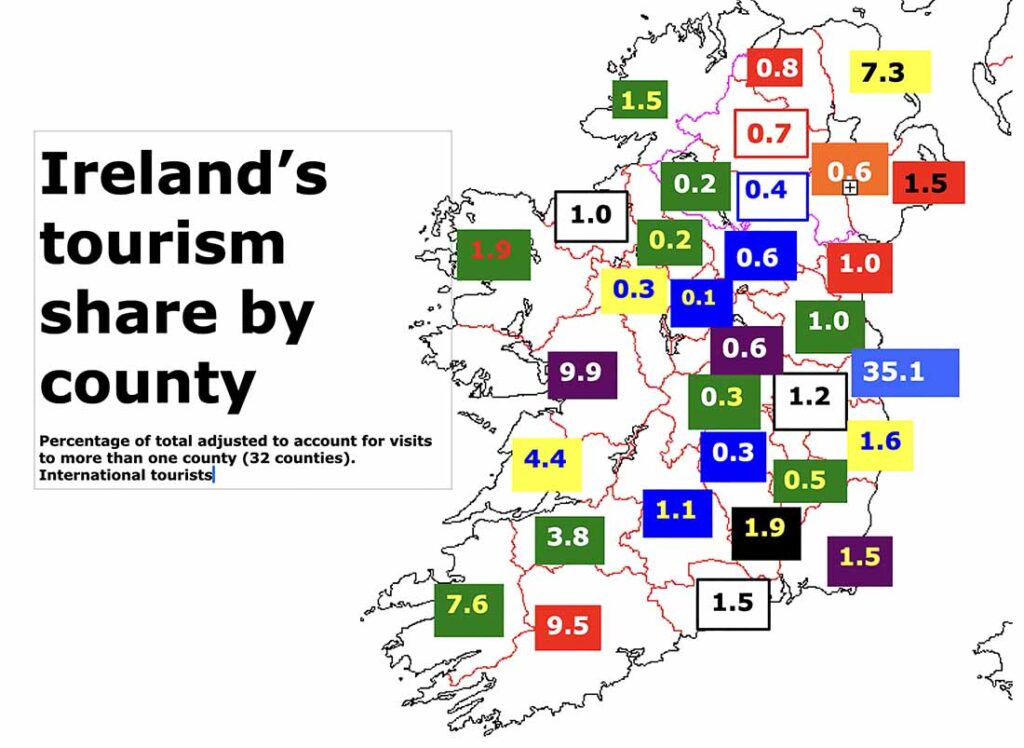
Ireland’s county Cork blends historic sites with scenic beauty, with Cork City’s English Market and St Fin Barre’s Cathedral offering cultural and architectural depth. Blarney Castle, home to the famous Blarney Stone, provides historic allure, while the coastal town of Kinsale offers sailing and seafood. Other attractions include the Beara Peninsula’s rugged trails. Cork is Ireland’s largest county by size (7,460 sq km) and third largest by population (584,156). Population peaked at 854,118 in 1841 (when Cork was Ireland’s most populous county) and reached its lowest point, 330,443 in 1961. In terms of hospitality, Cork is Ireland’s second most visited tourist county with around 1,228,000 international visitors per year.
Introduction – Adventure – Anthem – Archaeology – Attractions – Awards – Birdwatching – Camping – Castles – Churches – Contact list – Cycling – Dining – Equestrian – Festivals – Fishing – Folklore – Gardens – Golf – Graveyards – Happening – Haunted – Highest – Hiking – History – Holy Wells – Hotels – Hotels top 8 – Hunting & shooting – Instagrammable – Itineraries – Largest town – Luxury – MICE – Movies – Music – New – Name – Novelists – Off the beaten track – Poets – Pubs – Quotes – Random Facts – Restaurant Awards – Sacred Places – Saints – Songs – Spas – Sports – Sunsets – Sustainable – Things to do – Towns – Video – Villages – Walking – Wanderlist – Weddings – Wild swimming – Writers – 1837– 1846 – 1852 – 1909 – 1955 – 1980 –