- Hill of Uisneach: Near Killare, County Westmeath, approximately 20 km southwest of Mullingar (Coordinates: 53.485°N, 7.562°W).. The Hill of Uisneach is a sacred royal site, considered the mythological and ceremonial centre of Ireland, dating from the Neolithic to the Iron Age (c. 3000 BC–AD 500). Known as the “navel of Ireland,” it was a meeting place for ancient assemblies and the seat of the High Kings. The site includes a ringfort, a standing stone (Aill na Míreann, or Stone of Divisions), burial mounds, and enclosures. Archaeological surveys reveal ritual structures, with evidence of fires and offerings, linking it to the festival of Bealtaine. Uisneach is tied to the goddess Ériu and the Tuatha Dé Danann in Irish mythology, reflecting its spiritual significance. Located on private land but accessible via guided tours arranged through the Uisneach Visitor Centre, open seasonally (April–October). Admission fees apply; check www.uisneach.ie for details.
- Fore Abbey: Fore, near Castlepollard, County Westmeath, approximately 20 km northeast of Mullingar (Coordinates: 53.682°N, 7.227°W).. Founded in the 7th century by St. Feichin, Fore Abbey became a Benedictine monastery in the 13th century under Anglo-Norman patronage. The site includes a 13th-century church, cloister, and defensive towers, reflecting its adaptation during turbulent times. The “Seven Wonders of Fore,” such as a spring that never runs dry, are part of local folklore. Archaeological evidence includes early Christian grave slabs and medieval structures, indicating its role as a religious and economic hub in the Irish midlands. The abbey was dissolved in 1539 but remains well-preserved. Managed by the Office of Public Works (OPW), open year-round with free entry. Interpretive signage is available; check www.heritageireland.ie for details.
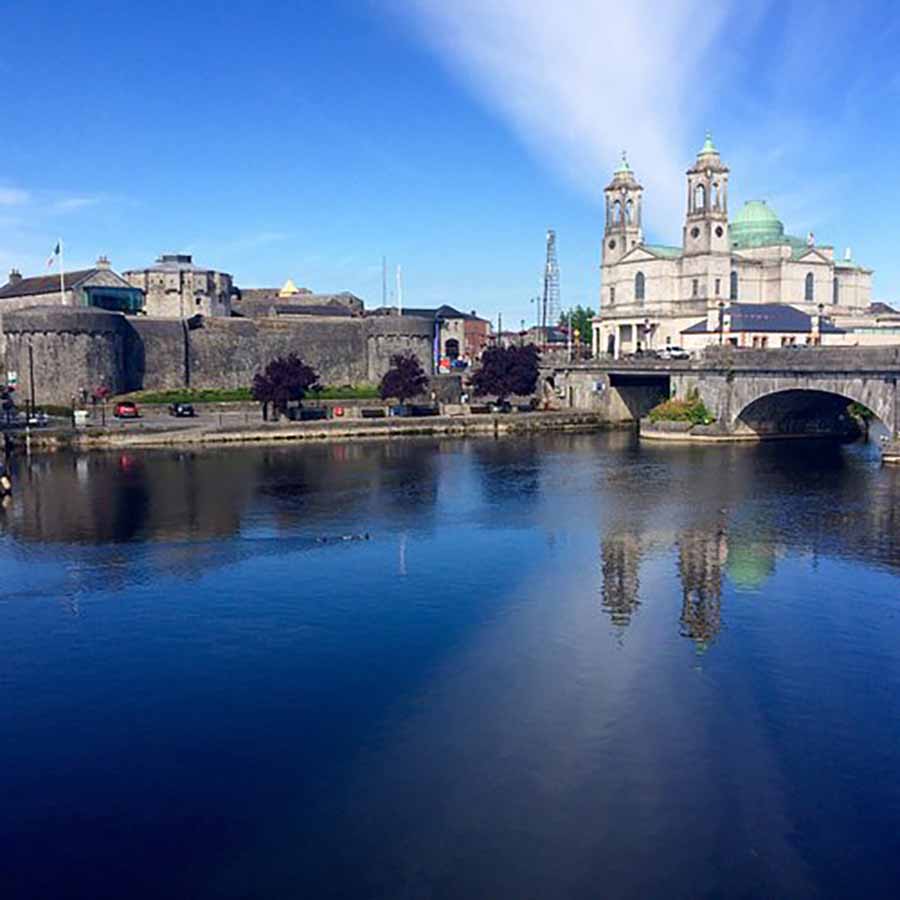
- Athlone Castle: Athlone, County Westmeath, approximately 12 km south of Mullingar (Coordinates: 53.423°N, 7.942°W).. Built in 1210 by John de Gray, Bishop of Norwich, for King John, Athlone Castle is a Norman fortress on the River Shannon, replacing an earlier Gaelic fort. Its strategic location made it a key military site during the Anglo-Norman conquest, the Nine Years’ War, and the Williamite Wars, notably the 1691 Siege of Athlone. The castle features a 13th-century keep and later fortifications. Archaeological excavations in Athlone have uncovered medieval artefacts and Viking-era finds, highlighting the town’s pre-Norman significance as a crossing point. Managed by Westmeath County Council, open year-round with a visitor centre, interactive exhibits, and guided tours. Admission fees apply; check www.athlonecastle.ie or www.heritageireland.ie for hours.
- Kilbeggan Distillery (Locke’s Distillery): Kilbeggan, County Westmeath, approximately 15 km southeast of Mullingar (Coordinates: 53.369°N, 7.502°W).. Established in 1757, Kilbeggan Distillery is one of Ireland’s oldest licensed distilleries, built on a site with earlier archaeological significance. The distillery incorporates a medieval watermill, likely linked to a monastic grange, and archaeological surveys suggest early Christian activity nearby, possibly tied to St. Beccan’s 6th-century monastery. The site includes intact 18th–19th-century structures, such as a mill wheel and copper stills, reflecting Ireland’s industrial heritage. While primarily a historical distillery, its monastic origins add archaeological context. Open year-round as a visitor attraction with guided tours and a museum. Admission fees apply; check www.kilbeggandistillery.com for details.
- Tristernagh Priory: Near Ballynacargy, County Westmeath, approximately 15 km northwest of Mullingar (Coordinates: 53.583°N, 7.458°W).. Founded in the early 13th century (c. 1200) by the Piers family for the Augustinian order, Tristernagh Priory was a significant medieval monastery. The site includes ruins of a church, cloister, and domestic buildings, with evidence of a fortified bawn. Associated with the Nugent family in later centuries, it was dissolved in 1536 during the Dissolution of the Monasteries. Archaeological surveys indicate medieval artefacts and a possible early Christian precursor, reflecting Westmeath’s ecclesiastical history. Located on private land but accessible with landowner permission. Free entry; no formal facilities. Check www.archaeology.ie or www.westmeathcoco.ie for access guidance.
Archaeological sites
Antrim – Armagh – Carlow – Cavan – Clare – Cork – Derry – Donegal – Down – Dublin – Fermanagh – Galway – Kerry – Kildare – Kilkenny – Laois – Leitrim – Limerick – Longford – Louth – Mayo – Meath – Monaghan – Offaly – Roscommon – Sligo – Tipperary – Tyrone – Waterford – Westmeath – Wexford – Wicklow
County Westmeath:
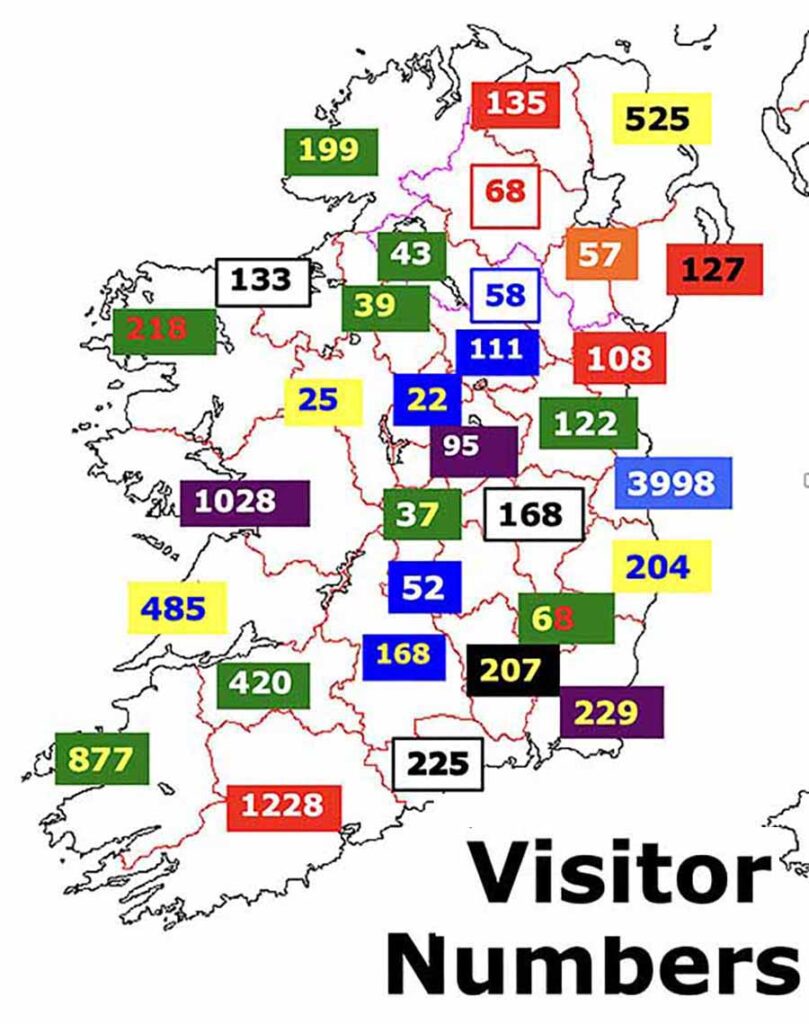
Ireland’s county Westmeath offers a blend of lakes and historic charm, with Athlone Castle providing insights into medieval Ireland along the Shannon River. The Belvedere House and Gardens showcase Georgian elegance, while Lough Ree offers boating and fishing opportunities. Other attractions include the ancient Fore Abbey and its monastic ruins and traditional seven wonders. Westmeath is Ireland’s tenth smallest county by size (1,763 square km) and 11th smallest by population (96,221). Population peaked at 141,300 in 1841 and reached its lowest point, 52,861 in 1961. In terms of hospitality, Westmeath is Ireland’s 22nd most visited tourist county with around 95,000 international visitors per year.
Introduction – Adventure – Anthem – Archaeology – Attractions – Awards – Birdwatching – Camping – Castles – Churches – Contact list – Cycling – Dining – Equestrian – Festivals – Fishing – Folklore – Gardens – Golf – Graveyards – Happening – Haunted – Highest – Hiking – History – Holy Wells – Hotels – Hotels top 8 – Hunting & shooting – Instagrammable – Itineraries – Largest town – Luxury – MICE – Movies – Music – Name – New – Novelists – Off the beaten track – Poets – Pubs – Quotes – Random Facts – Restaurant Awards – Sacred Places – Saints – Songs – Spas – Sports – Sunsets – Sustainable – Things to do – Towns – Video – Villages – Walking – Wanderlist – Weddings – Wild swimming – Writers – 1837 – 1846– 1852 – 1909 – 1955 – 1980 –