The highest point in County Westmeath is Mullaghmeen (also known as Mullaghmeen Hill), standing at 258 meters (846 feet). Located in the northwest of the county near Castlepollard, within the Mullaghmeen Forest Park, it is the lowest county high point in Ireland. Despite its modest elevation, Mullaghmeen offers a gentle hike through a unique beech forest, one of Ireland’s largest planted beech woodlands, and provides a peaceful experience with historical and ecological significance.
- Geological and Cultural Significance: Mullaghmeen is a low hill formed from glacial deposits, typical of Westmeath’s drumlin and bog landscape. The surrounding Mullaghmeen Forest Park, managed by Coillte, spans 400 hectares and is notable for its mature beech trees, planted in the 1930s, a rarity in Ireland where native oak and ash dominate. The hill’s name, possibly derived from Irish Mullach Mín (“smooth summit”), reflects its gentle, rounded profile. The area has historical ties, with nearby Faughalstown linked to early Christian sites and the Fore Abbey, a 7th-century monastic ruin, adding cultural depth. Mullaghmeen’s status as Ireland’s lowest county high point makes it a quirky draw for peak baggers.
- Scenic Beauty: The summit offers modest but pleasant views over Westmeath’s rolling farmlands, drumlins, and Lough Derravaragh, with distant hills like the Slieve Blooms or even Sligo’s Benbulben visible on clear days. The beech forest’s canopy and open clearings create a serene, almost magical atmosphere, especially in autumn when the leaves turn golden.
Approaching Mullaghmeen
- Access Points: The primary access point is the Mullaghmeen Forest Park car park (Grid Ref: N 467 774), off the R394 road near Castlepollard, about 5km from the town. The car park is well-signposted and maintained by Coillte, making it an ideal starting point. An alternative approach is from minor roads near Faughalstown, though this is less common and involves private land. Public transport is limited, with the nearest bus routes (e.g., Bus Éireann to Castlepollard) requiring a short drive or taxi to the trailhead. A car is recommended for access.
Trail Options:
- Mullaghmeen Forest Trail (Main Route): The most popular route is a 3–4km round-trip hike (1–1.5 hours) starting at the Mullaghmeen car park. Hikers follow the White Loop Trail, a well-marked Coillte path through the beech forest, which leads gently to the summit, marked by a small cairn or clearing. The trail is easy, suitable for beginners, families, and all ages, with a gradual incline and well-maintained gravel or forest paths. Some sections may be muddy after rain.
- Faughalstown Route: A less common 4–5km round-trip hike (1.5–2 hours) starts from a lay-by near Faughalstown, following farm tracks or field paths to the summit. This route crosses private land, so permission from landowners may be needed. It’s slightly longer but offers a quieter approach through open countryside.
- Extended Routes: The forest park offers additional trails, like the Red Loop (6km) or Blue Loop (8km), which explore more of the woodland and nearby drumlins but don’t necessarily summit Mullaghmeen. Hikers can combine these for a 5–7km outing, staying within the park’s marked trails.
- Navigation and Preparation: The White Loop Trail is well-marked with Coillte signage, making navigation straightforward. The Faughalstown route requires basic navigation due to faint paths, so a map (Ordnance Survey Ireland, Discovery Series Sheet 41), compass, or GPS is advised. Waterproof boots and rain gear are recommended, as Westmeath’s climate is damp, and forest trails can be muddy. Bring water and snacks, as facilities are limited to the car park. Dogs are allowed but must be leashed to protect wildlife and livestock. Check weather forecasts, as fog or rain can reduce visibility, though the summit’s low elevation minimizes exposure risks.
Hiking Experience:
- The White Loop Trail is a gentle, scenic walk through the beech forest, with sunlight filtering through the canopy creating a tranquil setting. The ascent is minimal, making it one of Ireland’s easiest county high points. The summit is understated, marked by a cairn or clearing, but the forest’s beauty is the main draw.
- The Faughalstown route offers a more rustic approach, crossing fields and offering open views of Westmeath’s countryside. It’s slightly more challenging due to potential boggy patches and private land access.
- The summit is a quiet, forested clearing, lacking dramatic vistas but offering a peaceful retreat. The forest park’s low visitor numbers, compared to Ireland’s busier sites, ensure a serene experience.
- Views and Photography: The summit’s views are modest due to its low height and tree cover, but clearings offer pleasant vistas over Westmeath’s farmlands, Lough Derravaragh, and distant hills. The beech forest is the highlight for photography, with its towering trees and colorful foliage, especially in autumn. The summit cairn adds a subtle historical element to photos.
- Wildlife and Nature: Mullaghmeen Forest Park is a biodiversity gem, with beech trees supporting fungi, mosses, and wildflowers like bluebells in spring. Wildlife includes red squirrels, badgers, and birds such as woodpeckers, jays, and owls. The surrounding farmland hosts hares and kestrels, while grazing cattle reflect the area’s agricultural roots.
- Cultural and Historical Context: Mullaghmeen ties into Westmeath’s heritage as part of Ireland’s ancient Midlands, with nearby Fore Abbey (7km away) showcasing 7th-century monastic ruins. Tullynally Castle near Castlepollard offers Georgian history, while Lough Derravaragh is linked to the myth of the Children of Lir. Local villages like Castlepollard host traditional music, enhancing the cultural experience.
- Amenities: The Mullaghmeen car park has basic facilities (parking, information boards) but no toilets or food services, so hikers must be self-sufficient. Castlepollard (5km) offers pubs (e.g., The Square Bar), small shops, and cafés. Mullingar (20km) provides more dining (e.g., The Old House) and accommodation options. The forest park is free to access and open year-round.
- Seasonal Considerations: Spring (April–May) and autumn (September–October) offer vibrant forest colors and mild weather (8–15°C / 46–59°F), ideal for hiking. Summer (June–August) is warmest (15–20°C / 59–68°F) but wetter, with muddier trails. Winter (November–March) brings damp conditions and occasional frost, though snow is rare. Westmeath’s 1,200–1,400 annual sunshine hours allow for decent visibility, but rain is frequent, so waterproof gear is essential.
- Guided Tours: Guided walks are rare for Mullaghmeen, but Westmeath Community Development or operators via visitwestmeath.ie may include it in local nature tours. These can provide ecological insights or simplify navigation for the Faughalstown route.
- Safety: The White Loop Trail is low-risk, suitable for all hikers, but muddy patches require caution. The Faughalstown route involves private land, so respect property (close gates, avoid livestock). Fog or rain can reduce visibility, so inform someone of your plans. Mobile signal is generally good, but offline maps are recommended.
- Accessibility: Mullaghmeen is Ireland’s easiest county high point, ideal for beginners, families, and casual walkers due to its short, gentle trail. The forest paths are mostly accessible, but the summit is not wheelchair-friendly due to uneven ground.
Mullaghmeen offers a gentle, serene hike in County Westmeath, with its beech forest and subtle summit providing a peaceful escape in Ireland’s Midlands. Its accessibility, ecological richness, and proximity to historical sites like Fore Abbey make it a charming destination for hikers and visitors. While modest in height, Mullaghmeen’s unique woodland and quiet trails ensure a rewarding experience. For more details, visit visitwestmeath.ie or consult Kieron Gibbons’ Ireland’s County High Points – A Walking Guide.
Highest point in county
Antrim – Armagh – Carlow – Cavan – Clare – Cork – Derry – Donegal – Down – Dublin – Fermanagh – Galway] – Kerry – Kildare – Kilkenny – Laois – Leitrim – Limerick – Longford – Louth – Mayo – Meath – Monaghan – Offaly – Roscommon – Sligo – Tipperary – Tyrone – Waterford – Westmeath – Wexford – Wicklow
County Westmeath:
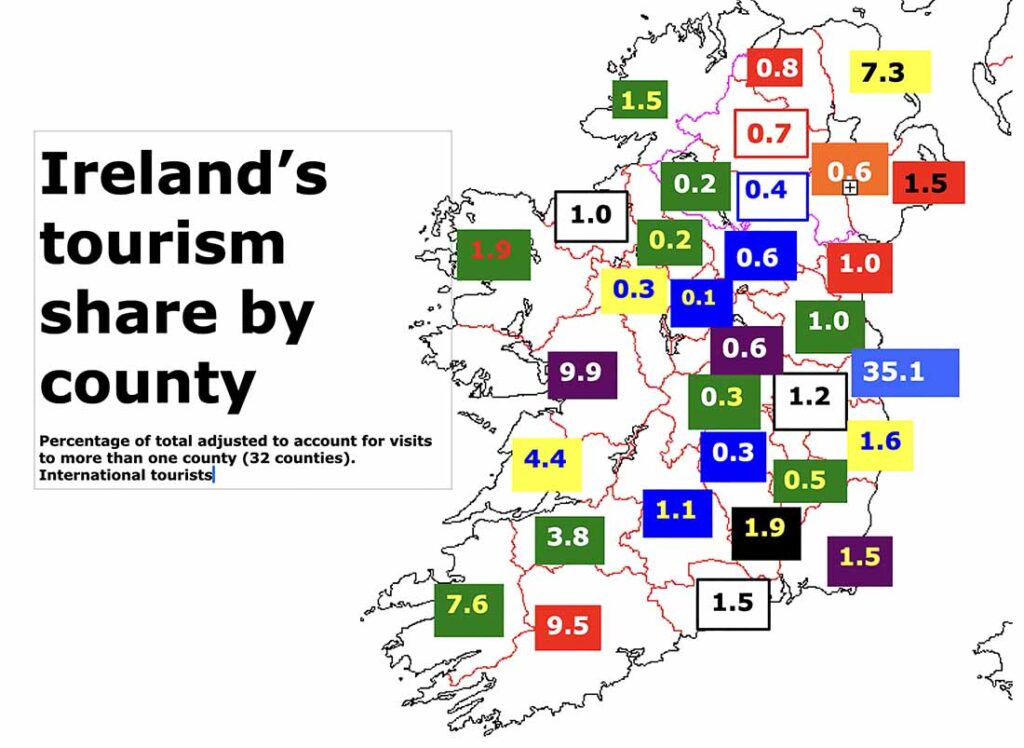
Ireland’s county Westmeath offers a blend of lakes and historic charm, with Athlone Castle providing insights into medieval Ireland along the Shannon River. The Belvedere House and Gardens showcase Georgian elegance, while Lough Ree offers boating and fishing opportunities. Other attractions include the ancient Fore Abbey and its monastic ruins and traditional seven wonders. Westmeath is Ireland’s tenth smallest county by size (1,763 square km) and 11th smallest by population (96,221). Population peaked at 141,300 in 1841 and reached its lowest point, 52,861 in 1961. In terms of hospitality, Westmeath is Ireland’s 22nd most visited tourist county with around 95,000 international visitors per year.
Introduction – Adventure – Anthem – Archaeology – Attractions – Awards – Birdwatching – Camping – Castles – Churches – Contact list – Cycling – Dining – Equestrian – Festivals – Fishing – Folklore – Gardens – Golf – Graveyards – Happening – Haunted – Highest – Hiking – History – Holy Wells – Hotels – Hotels top 8 – Hunting & shooting – Instagrammable – Itineraries – Largest town – Luxury – MICE – Movies – Music – Name – New – Novelists – Off the beaten track – Poets – Pubs – Quotes – Random Facts – Restaurant Awards – Sacred Places – Saints – Songs – Spas – Sports – Sunsets – Sustainable – Things to do – Towns – Video – Villages – Walking – Wanderlist – Weddings – Wild swimming – Writers – 1837 – 1846– 1852 – 1909 – 1955 – 1980 –