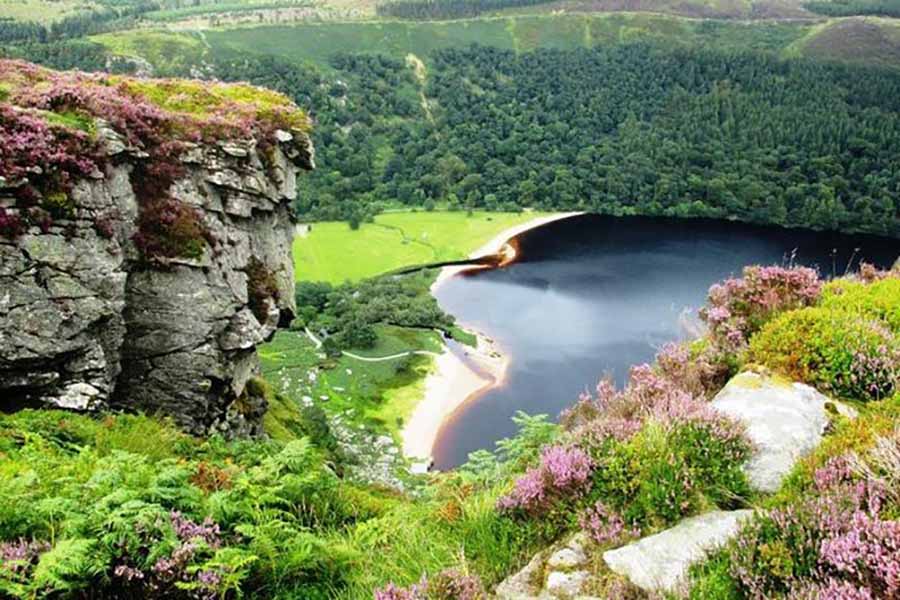
- Glendalough Monastic Site: Glendalough, near Laragh, County Wicklow, approximately 25 km southwest of Bray (Coordinates: 53.010°N, 6.327°W).. Founded in the 6th century by St. Kevin, Glendalough is one of Ireland’s most important early Christian monastic sites, set in a glacial valley. The site includes a 10th-century round tower (30 metres high), St. Kevin’s Church (a stone-roofed oratory), a 12th-century cathedral, several smaller churches, high crosses, and extensive grave slabs. It was a centre of learning and pilgrimage, flourishing until the 13th century despite Viking raids. Archaeological excavations have uncovered artefacts like metalwork and manuscripts, highlighting its cultural significance. The site’s integration with the Wicklow Mountains reflects its spiritual isolation. Managed by Heritage Ireland, open year-round with a visitor centre offering guided tours and exhibits. Free entry to the site; admission fees for the visitor centre. Check www.heritageireland.ie for details.
- Baltinglass Hill: Near Baltinglass, County Wicklow, approximately 20 km southwest of Blessington (Coordinates: 52.937°N, 6.709°W).. Baltinglass Hill is a multi-period archaeological site with a Neolithic passage tomb (c. 3500–3000 BC) and an Iron Age hillfort (c. 500 BC–AD 500). The passage tomb, partially excavated, features a chamber with megalithic art, including spirals and cup marks, similar to Brú na Bóinne. The hillfort, with its ramparts and enclosures, suggests defensive and ceremonial use, possibly linked to the Laigin (Leinster) tribes. Archaeological surveys indicate Bronze Age activity, with cairns and burials. The site’s strategic position overlooking the River Slaney underscores its regional importance. Publicly accessible with free entry via a hiking trail. No formal facilities; check www.archaeology.ie or www.visitwicklow.ie for trail information.
- Rathgall Hillfort: Near Shillelagh, County Wicklow, approximately 15 km southeast of Tullow (Coordinates: 52.781°N, 6.664°W).. Rathgall, also known as Ring of the Rath, is one of Ireland’s largest hillforts, dating to the Late Bronze Age (c. 1000–700 BC) with later Iron Age use. The site comprises four concentric stone walls enclosing 7.5 hectares, with evidence of a central settlement and metalworking, including gold and bronze artefacts. Excavations in the 1970s revealed hearths, tools, and a possible ritual structure, suggesting it was a major centre for trade and ceremonies. Rathgall’s scale and finds indicate a powerful community, possibly linked to the Laigin or Dún Ailinne in Kildare. Located on private land but accessible with landowner permission. Free entry; no formal facilities. Check www.archaeology.ie or www.discoverireland.ie for access guidance.
- Castletimon Ogham Stone: Near Brittas Bay, County Wicklow, approximately 10 km south of Wicklow Town (Coordinates: 52.896°N, 6.068°W).. The Castletimon Ogham Stone, dating to c. 5th–6th century AD, is a rare example of early medieval inscribed stones in Wicklow. Standing 1.5 metres tall, it bears ogham script, likely a memorial marker for a local figure. The stone was originally part of a larger complex, possibly a burial site, and is associated with early Christian or pre-Christian communities in Leinster. Archaeological surveys suggest nearby features, such as a souterrain, indicating a multi-period landscape. The stone provides insight into early literacy and social structure in Wicklow. Publicly accessible with free entry, located in a field near a public road. No formal facilities; check www.archaeology.ie or www.irishmegaliths.org.uk for directions.
- Avoca Handweavers (Mill): Avoca, County Wicklow, approximately 15 km south of Greystones (Coordinates: 52.860°N, 6.173°W).. While primarily known as a historic textile mill established in 1723, the Avoca Handweavers site has archaeological significance due to its medieval origins. The mill is built near the site of a possible early Christian ecclesiastical settlement, with archaeological evidence of a church and graveyard nearby. The area’s mining history, dating back to the Bronze Age (c. 2000 BC), includes ancient copper mines in the Avoca Valley, some of the oldest in Europe. The mill itself preserves 18th–19th-century industrial structures, reflecting Wicklow’s industrial archaeology. Open year-round as a commercial visitor attraction with a shop, café, and mill tours. Free entry to the grounds; fees for guided tours. Check www.avoca.com for details.
Archaeological sites
Antrim – Armagh – Carlow – Cavan – Clare – Cork – Derry – Donegal – Down – Dublin – Fermanagh – Galway – Kerry – Kildare – Kilkenny – Laois – Leitrim – Limerick – Longford – Louth – Mayo – Meath – Monaghan – Offaly – Roscommon – Sligo – Tipperary – Tyrone – Waterford – Westmeath – Wexford – Wicklow
County Wicklow:
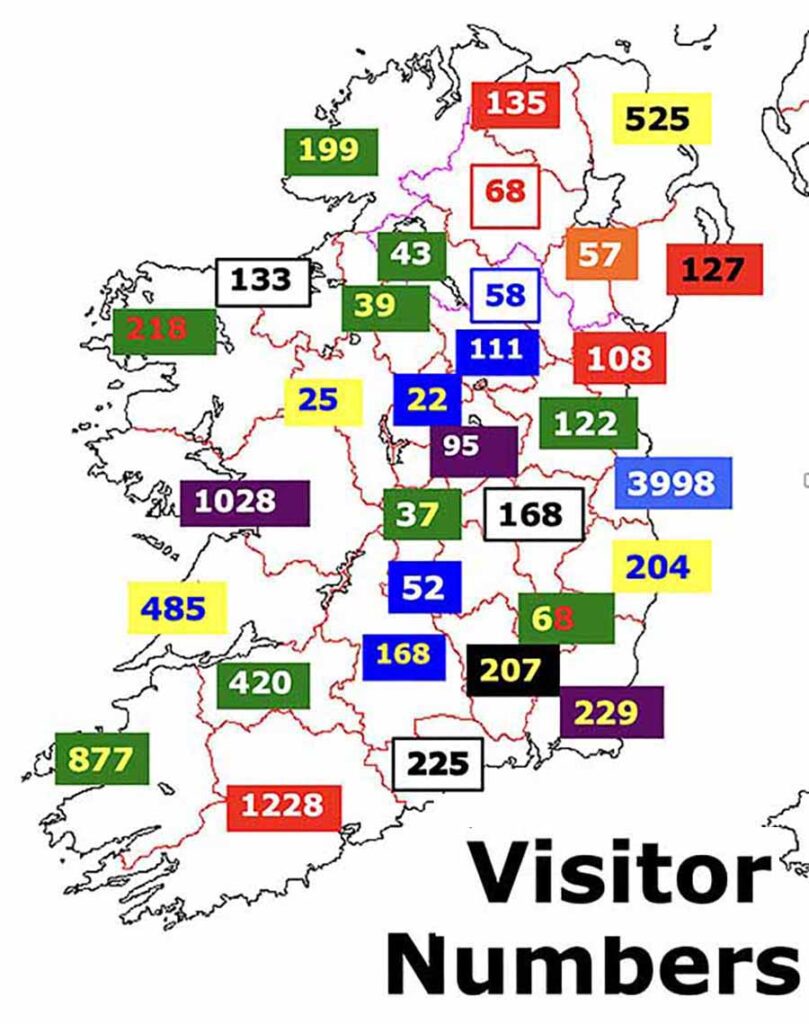
Ireland’s county Wicklow is known as the Garden of Ireland for its lush landscapes, with Glendalough’s monastic ruins and round tower set amidst serene lakes and valleys. The Wicklow Mountains National Park offers hiking trails with stunning views, while Powerscourt Estate’s manicured gardens and waterfall add natural elegance. Other attractions include the coastal paths of Bray. Wicklow is Ireland’s 17th largest county by size (,025 sq km) and 16th largest by population (155,851). Population peaked at 126,143 in 1841 and reached its lowest point, 57,591 in 1926. In terms of hospitality, Wicklow is Ireland’s twelfth most visited tourist county with around 204,000 international visitors per year.
Introduction – Adventure – Anthem – Archaeology – Attractions – Awards – Birdwatching – Camping – Castles – Churches – Contact list – Cycling – Dining – Equestrian – Festivals – Fishing – Folklore – Gardens – Golf – Graveyards – Happening – Haunted – Highest – Hiking – History – Holy Wells – Hotels – Hotels top 8 – Hunting & shooting – Instagrammable – Itineraries – Largest town – Luxury – MICE – Movies – Music – Name – New – Novelists – Off the beaten track – Poets – Pubs – Quotes – Random Facts – Restaurant Awards – Sacred Places – Saints – Songs – Spas – Sports – Sunsets – Sustainable – Things to do – Towns – Video – Villages – Walking – Wanderlist – Weddings – Wild swimming – Writers – 1837 – 1846– 1852 – 1909 – 1955 – 1980 –