- Bellananagh and the Leprechaun’s Curse: Bellananagh is haunted by a leprechaun’s spirit, cursing those who disturb its hidden gold with misfortune. Leprechauns are iconic in Irish folklore, tied to hidden wealth. Dúchas.ie includes tales of supernatural retribution in Bellananagh’s rural lore. Bellananagh, near Cavan town, County Cavan.
- Belturbet and the Ghostly Soldier: Belturbet’s streets are haunted by a ghostly soldier, seen near the old barracks, believed to be a casualty of 17th-century wars. Belturbet was a site of Cromwellian conflicts. Dúchas.ie records tales of spectral soldiers tied to the town’s military past. Belturbet, County Cavan.
- Cabra Castle and the Servant Girl’s Spirit: Cabra Castle is haunted by a servant girl, killed in a forbidden romance, whose ghost weeps in the corridors at night. The 19th-century castle has a history of social tensions. Local lore links the ghost to a tragic love story from the estate’s past. Cabra Castle, near Kingscourt, County Cavan.
- Cloughoughter Castle and the Drowned Woman: Cloughoughter Castle is haunted by a woman’s ghost, possibly an O’Reilly, seen wandering the ruins, mourning her drowning in Lough Oughter. The 13th-century O’Reilly stronghold was a site of 17th-century conflicts. Dúchas.ie records tales of spectral figures tied to the castle’s tragic history. Cloughoughter Castle, near Lough Oughter, County Cavan.
- Cootehill Church and the Phantom Bell: Cootehill Church is haunted by a phantom bell that tolls at midnight, rung by a ghostly parishioner lost in a blizzard. The 18th-century church has tales of rural tragedies. Dúchas.ie records stories of spectral bells linked to lost souls in Cootehill. Cootehill Church, Cootehill, County Cavan.
- Drumlane Abbey and the Monk’s Ghost: Drumlane Abbey is haunted by a spectral monk, seen near the round tower, guarding ancient relics or seeking peace. Founded in the 6th century, the abbey faced Viking raids. Dúchas.ie records tales of ghostly monks tied to Drumlane’s sacred history. Drumlane Abbey, near Milltown, County Cavan.
- Farnham Estate and the Lady in White: Farnham Estate is haunted by a Lady in White, seen in the gardens, believed to be a Farnham family member mourning a lost love. The 18th-century estate has a history of family tragedies. Local tales link the ghost to romantic dramas, per oral tradition. Farnham Estate, near Cavan town, County Cavan.
- Killykeen and the Spectral Fisherman: Killykeen’s woods are haunted by a spectral fisherman, seen near Lough Oughter, believed to have drowned in a storm. The lough’s history of drownings fuels maritime ghost stories. Dúchas.ie mentions ghostly figures tied to Killykeen’s fishing community. Killykeen, near Lough Oughter, County Cavan.
- Lough Gowna and the Spectral Boatman: Lough Gowna is haunted by a spectral boatman, seen rowing a ghostly boat, believed to be a fisherman lost in a storm. The lough’s history of drownings inspires maritime ghost stories. Dúchas.ie mentions ghostly figures tied to Gowna’s fishing communities. Lough Gowna, near Arvagh, County Cavan.
- Saint Mogue’s Well in Bawnboy: Saint Mogue’s Well is believed to cure ailments, particularly skin diseases, when pilgrims perform rituals involving its water and nearby rag trees. Saint Mogue (Aidan), a 6th-century saint, is linked to early Christian sites in Cavan. Dúchas.ie notes the well’s healing reputation, blending pagan and Christian traditions. Bawnboy, near Ballyconnell, County Cavan.
- The Banshee of Lough Oughter: A banshee haunts Lough Oughter, her wail along the lake’s shores foretells death for local families, especially those of O’Reilly descent. Banshees are female spirits tied to Gaelic clans in Irish folklore. Dúchas.ie collection cites banshee cries near the lake, reflecting rural omens of death. Lough Oughter, near Killeshandra, County Cavan.
- The Cursed Stone of Drumavaddy: A standing stone in Drumavaddy is cursed, causing misfortune to those who touch or move it, as it marks a druidic site protected by ancient spells. Megalithic stones are linked to druids or fairies in Irish lore. Dúchas.ie notes local fears of disturbing stones in Cavan, tied to pre-Christian reverence. Drumavaddy, near Cootehill, County Cavan.
- The Fairy Fort of Lismore: A ring fort in Lismore is a fairy fort, home to the aos sí (fairy folk), who punish those who disturb it with illness or bad luck. Ring forts, Iron Age settlements, are seen as Otherworld portals in Celtic folklore. Dúchas.ie records tales of farmers in Lismore avoiding the fort to appease fairies. Lismore, near Crossdoney, County Cavan.
- The Fairy Hawthorn of Virginia: A lone hawthorn tree in Virginia is a fairy tree, sacred to the aos sí, and cutting it invites curses like illness or livestock death. Fairy trees are rooted in Celtic beliefs about the Otherworld. Dúchas.ie documents farmers in Virginia avoiding such trees to prevent fairy retribution. Virginia, near Lough Ramor, County Cavan.
- The Fairy Music of Cuilcagh Mountain: Cuilcagh Mountain echoes with fairy music at dusk, luring travellers into the Otherworld if they follow the sound. Fairy music is a common motif in Irish folklore, linked to enchanted landscapes. Dúchas.ie mentions supernatural sounds on Cuilcagh, enhancing its mystical reputation. Cuilcagh Mountain, near Dowra, County Cavan.
- The Ghost of Cloughoughter Castle: Cloughoughter Castle is haunted by the ghost of a woman, possibly an O’Reilly, who drowned in Lough Oughter, her spirit seen wandering the castle ruins. The castle, a stronghold of the O’Riley clan, was a site of conflict in the 17th century. Dúchas.ie records ghost stories tied to its tragic history. Cloughoughter Castle, near Lough Oughter, County Cavan.
- The Leprechaun of Bellananagh: Bellananagh is known for leprechaun sightings, small fairy shoemakers who hide pots of gold but trick those who pursue them. Leprechauns are iconic in Irish folklore, symbolising elusive wealth. Dúchas.ie includes tales of leprechaun encounters in Cavan’s rural areas, reflecting local storytelling. Bellananagh, near Cavan town, County Cavan.
- The Phantom Horseman of Killykeen: A ghostly horseman rides the roads near Killykeen, believed to be an O’Reilly warrior killed in battle, seeking his lost home. Cavan’s history of clan conflicts fosters ghost stories. Dúchas.ie records tales of spectral riders in Killykeen, tied to the area’s turbulent past. Killykeen, near Lough Oughter, County Cavan.
- The Púca of Slieve Glah: Slieve Glah is home to a púca, a shape-shifting creature appearing as a black horse or goat, tricking travellers or offering cryptic warnings. The púca is a mischievous figure in Irish mythology, tied to wild landscapes. Dúchas.ie includes tales of púca sightings on Slieve Glah, linked to its rugged terrain. Slieve Glah, near Cavan, County Cavan.
- Virginia and the Phantom Horseman: A ghostly horseman rides near Virginia, believed to be an O’Reilly warrior killed in battle, seeking his lost home. Cavan’s history of clan conflicts fosters ghost stories. Dúchas.ie records tales of spectral riders tied to Virginia’s turbulent past. Virginia, near Lough Ramor, County Cavan.
Haunted
Antrim – Armagh – Carlow – Cavan – Clare – Cork – Derry – Donegal – Down – Dublin – Fermanagh – Galway – Kerry – Kildare – Kilkenny – Laois – Leitrim – Limerick – Longford – Louth – Mayo – Meath – Monaghan – Offaly – Roscommon – Sligo – Tipperary – Tyrone – Waterford – Westmeath – Wexford – Wicklow
County Cavan:
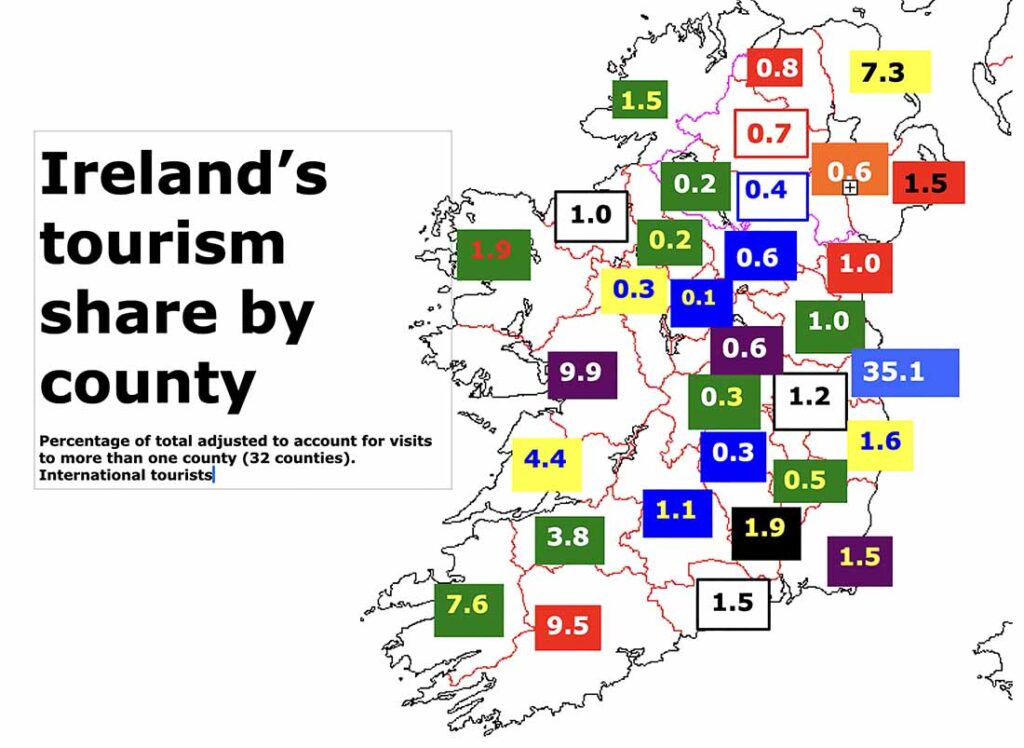
Ireland’s county Cavan is a haven of lakes and rolling hills, with the Shannon-Erne Waterway offering tranquil boating and fishing opportunities. The Cavan County Museum in Ballyjamesduff explores local history, while the Marble Arch Caves, part of a UNESCO Geopark, showcase stunning underground formations. Other attractions include the Killykeen Forest Park’s walking trails. Cavan is Ireland’s 19th largest county by size (1,891 sq km) and eighth smallest by population (81,704). Population peaked at 243,158 in 1841 and reached its lowest point, 52,618 in 1971. In terms of hospitality, Cavan is Ireland’s 20th most visited tourist county with around 111,000 international visitors per year.
IIntroduction – Adventure – Anthem – Archaeology – Attractions – Awards – Birdwatching – Camping – Castles – Churches – Contact list – Cycling – Dining – Equestrian – Festivals – Fishing – Folklore – Gardens – Golf – Graveyards – Happening – Haunted – Highest – Hiking – History – Holy Wells – Hotels – Hotels top 8 – Hunting & shooting – Instagrammable – Itineraries – Largest town – Luxury – MICE – Movies – Music – New – Name – Novelists – Off the beaten track – Poets – Pubs – Quotes – Random Facts – Restaurant Awards – Sacred Places – Saints – Songs – Spas – Sports – Sunsets – Sustainable – Things to do – Towns – Video – Villages – Walking – Wanderlist – Weddings – Wild swimming – Writers – 1837– 1846 – 1852 – 1909 – 1955 – 1980 –