- Old Leighlin Cathedral (St Laserian’s Cathedral) marks the site of a major early medieval monastery founded by St Laserian (Molaise), a 7th-century bishop and scholar who helped shape Ireland’s ecclesiastical landscape. The impressive medieval structure, with its Romanesque elements, overlooks fertile plains and serves as a place of quiet pilgrimage honouring the saint’s legacy in learning and sanctity.
- Rathgall Hillfort: A large multivallate hillfort with Bronze Age and Iron Age features, including ritual deposits and possible ceremonial use. While primarily a defended settlement, such sites in ancient Ireland often held inauguration, assembly, or sacred functions tied to kingship and the land. It offers visitors insight into pre-Christian reverence for elevated places in Carlow’s landscape.
- Shankill (Seanchill): An ancient ecclesiastical site with church ruins, a high cross base, and a graveyard, linked to early Christian settlement in north Carlow. The name “Shankill” (old church) suggests deep antiquity, and the location may overlay earlier pre-Christian reverence for the hilltop. It attracts those exploring Ireland’s layered sacred geography in a peaceful, understated setting.
- St Brigid’s Well, Ballon: Dedicated to St Brigid, Ireland’s patroness, this holy well reflects her widespread veneration across Leinster, with possible pre-Christian roots in goddess traditions of fertility, healing, and protection. Set in a rural spot near the village, it draws pilgrims for blessings, especially around Imbolc (1 February), with offerings often left on a nearby bush or tree.
- St Laserian’s Holy Well near Old Leighlin attracts pilgrims seeking blessings and cures, continuing ancient water-veneration customs adapted to Christian practice. Linked to the saint’s foundation, it invites reflection in a peaceful rural setting.
- St Moling’s Holy Well, St Mullins: Situated within the monastic enclosure, this renowned holy well is dedicated to St Moling and famed for its curative powers, especially for eye ailments and skin conditions. Pilgrims traditionally circle the well, drink the water, and leave offerings, continuing a pattern of devotion that echoes pre-Christian reverence for sacred springs in the Barrow valley.
- St Mullins (Tigh Moling) stands as one of the county’s foremost pilgrimage centres, founded by the 7th-century saint Moling, renowned as one of Ireland’s four great prophets for his wisdom and ascetic life. The monastic site beside the River Barrow includes ancient church ruins, a round tower base, and a prominent holy well dedicated to St Moling, long venerated for healing powers. Pilgrims perform rituals of circumambulation and prayer here, with traditions stretching back centuries amid scenic river views and historic graveslabs.
- St Patrick’s Well at Rathvilly (Patrickswell) honours Ireland’s patron saint, who tradition holds baptised converts and possibly local rulers in this region. This holy well, tied to St Patrick’s missionary work, remains a site for prayer and healing rituals, blending early Christian evangelisation with older sacred spring lore.
- St Patrick’s Well, near Bagenalstown (or local Patrician traditions): A holy well associated with St Patrick, reflecting traditions of the patron saint’s journeys through Leinster. Such wells in Carlow are places of local devotion for healing and prayer, symbolising the Christianisation of earlier sacred springs and continuing as quiet pilgrimage spots in the county’s countryside.
- St Patrick’s Well at Tobar Phádraig near Slieve Glah or similar sites draws on traditions of the patron saint passing through the region during his missionary journeys. Hagiographer of the 800s Tírechán recounts that St Patrick halting here en route from Meath to further north, blessing the spring and leaving marks such as reddish stones or impressions attributed to his foot or toe. Pilgrims visit for healing rituals, echoing ancient veneration of sacred springs predating Christianity.
- St Kilian’s Well and Church at Fenagh honour St Kilian (Cilian), a 7th-century missionary saint who founded monasteries and spread Christianity in the area before his martyrdom in Würzburg. The site, with its ancient church ruins and associated holy well, serves as a place of quiet pilgrimage, blending early medieval monastic heritage with pre-Christian water cults adapted to saintly devotion.
- St Mogue’s Island (Inishmogue) on Lough Ennell or related sites in the Drumlane area commemorate St Mogue (Mochua), a 6th-century saint renowned for his ascetic life and founding of churches. The island monastic settlement, accessible by boat, invites reflection amid serene lake waters, with traditions of pilgrimage honouring the saint’s legacy in this tranquil, ancient landscape.
- St Dympna’s Well in Lavey (or nearby) is dedicated to St Dympna, the 7th-century patron saint of mental health and neurological disorders, who fled persecution and met martyrdom. This holy well attracts pilgrims seeking solace, healing, and intercession for mental well-being, with rituals rooted in longstanding beliefs in the curative powers of sacred waters.
- Drumacoon Holy Well (or similar local wells) near saints’ foundations often features rag trees—typically hawthorns—adorned with cloth offerings left by visitors. These trees preserve pre-Christian nature worship, where lone specimens near wells were seen as protective or healing, with folklore cautioning against harm and pilgrims tying rags to transfer ailments as the cloth decays.
County Carlow:
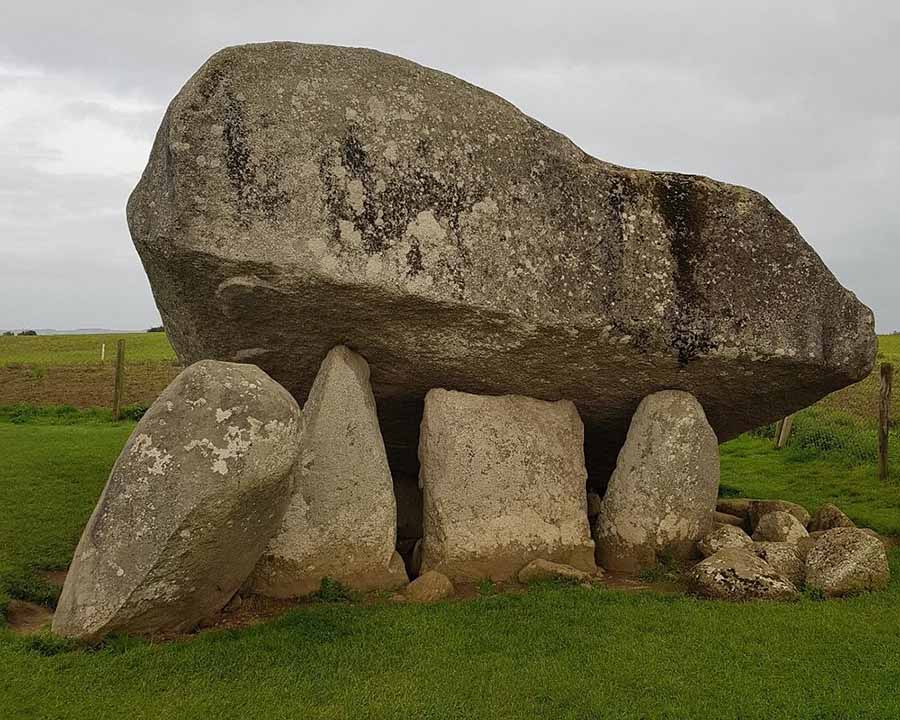
Ireland’s County Carlow combines historic landmarks with serene landscapes, with the Carlow Castle ruins and the nearby Altamont Gardens offering a mix of medieval and botanical appeal. The Barrow Way provides scenic riverside walks, while the Brownshill Dolmen, a prehistoric portal tomb, adds ancient history. Carlow is Ireland’s second smallest county by size (896 square km) and third smallest by population (61,968). Population peaked at 86,228 in 1841 and reached its lowest point, 33,342 in 1961.In terms of hospitality, Carlow is Ireland’s 23rd most visited tourist county with around 68,000 international visitors per year.
Introduction – Adventure – Anthem – Archaeology – Attractions – Awards – Birdwatching – Camping – Castles – Churches – Contact list – Cycling – Dining – Equestrian – Festivals – Fishing – Folklore – Gardens – Golf – Graveyards – Happening – Haunted – Highest – Hiking – History – Holy Wells – Hotels – Hotels8 – Instagrammable – Itineraries – Largest town – Luxury – MICE – Movies – Musicians – Name – New – Novelists – Off the beaten track – Poets – Pubs – Quotes – Random Facts – Restaurant Awards – Sacred Places – Saints – Spas – Sports – Sunsets– Sustainable – Things to do – Towns – Video – Villages – Walking – Wanderlist – Weddings – Wild swimming – Writers – 1837– 1846 – 1852 – 1909 – 1955 – 1980 –
Sacred Places
Antrim – Armagh – Carlow – Cavan – Clare – Cork – Derry – Donegal – Down – Dublin – Fermanagh – Galway – Kerry – Kildare – Kilkenny – Laois – Leitrim – Limerick – Longford – Louth – Mayo – Meath – Monaghan – Offaly – Roscommon – Sligo – Tipperary – Tyrone – Waterford – Westmeath – Wexford – Wicklow