- Carlow Castle and the Knight’s Ghost: Carlow Castle is haunted by a knight, killed during a 13th-century siege, seen wandering the ruins at night, searching for his comrades. Built in 1210, the castle endured multiple sieges, fostering ghost stories. Dúchas.ie records spectral figures tied to its violent past. Carlow Castle, Carlow town, County Carlow.
- Duckett’s Grove and the Phantom Coach: Duckett’s Grove is haunted by a ghostly horse-drawn coach, driven by a spectral figure, believed to be a cursed Duckett family member. The 19th-century mansion, destroyed by fire in 1933, has a history of family tragedies. Dúchas.ie includes accounts of supernatural activity linked to its decline. Duckett’s Grove, near Carlow town, County Carlow.
- Huntington Castle and the Monk’s Spirit: Huntington Castle is haunted by a ghostly monk, seen in the gardens, believed to be a victim of 17th-century religious conflicts. The castle, built in 1625, was a site of Cromwellian sieges. Local lore ties the monk to suppressed monastic communities, per Dúchas.ie. Huntington Castle, Clonegal, County Carlow.
- Bagenalstown and the Banshee’s Wail: The River Barrow near Bagenalstown is haunted by a banshee, her cry foretelling death for local Gaelic families. Banshees are female spirits tied to clans. Dúchas.ie documents banshee cries along Carlow’s rivers, reflecting rural death omens. Bagenalstown (Muine Bheag), County Carlow.
- Tullow Church and the Phantom Bell: Tullow Church is haunted by a phantom bell that tolls at midnight, rung by a ghostly parishioner lost in a storm. The 19th-century church has tales of rural tragedies. Dúchas.ie records stories of spectral bells tied to lost souls in Tullow. Tullow Church, Tullow, County Carlow.
- Rathvilly House and the Lady in Grey: Rathvilly House is haunted by a Lady in Grey, seen in the hallways, believed to be a former resident mourning a lost child. The 18th-century house was home to landed families. Oral traditions link the ghost to domestic tragedies, per local accounts. Rathvilly House, Rathvilly, County Carlow.
- St. Mullins and the Spectral Monk: St. Mullins’ monastic ruins are haunted by a spectral monk, seen near the graveyard, guarding ancient relics. Founded by St. Moling in the 7th century, the site faced Viking raids. Dúchas.ie mentions ghostly monks tied to its sacred history. St. Mullins, near New Ross, County Carlow.
- Myshall Church and the Ghostly Piper: Myshall Church is haunted by a ghostly piper, whose music echoes at night, believed to be a musician killed in a feud. The church, linked to St. Finnian, has a history of local disputes. Dúchas.ie includes tales of spectral music in Myshall’s folklore. Myshall Church, Myshall, County Carlow.
- Borris House and the Soldier’s Ghost: Borris House is haunted by a spectral soldier, seen in the grounds, believed to be a casualty of 18th-century conflicts. The Kavanagh family’s ancestral home saw military activity. Local lore ties the ghost to battles near Borris, per oral tradition. Borris House, Borris, County Carlow.
- Ballymoon Castle and the Headless Warrior: Ballymoon Castle is haunted by a headless warrior, believed to be a knight beheaded during a 14th-century siege, roaming the ruins. The castle, abandoned since the 1300s, has a violent past. Dúchas.ie records tales of headless spirits tied to its medieval conflicts. Ballymoon Castle, near Muine Bheag, County Carlow.
- $$$Carlow original
- St. Finnian’s Footprint at Cranavane: A stone at Cranavane holy well bears the footprint of St. Finnian, said to have been left when he founded a church at Barragh. Pilgrims visit the well for cures, believing the stone holds sacred power. St. Finnian, born in nearby Myshall, is a 6th-century saint linked to early Christian sites in Carlow. The footprint stone reflects local veneration of saints’ physical traces, common in Irish pilgrimage traditions. Cranavane, Barragh, near Myshall, County Carlow.
- The Fairy Fort of Rathvilly: A ring fort near Rathvilly is a fairy fort, home to the aos sí (fairy folk). Disturbing it risks misfortune, such as illness or crop failure, as the fairies guard their domain fiercely. Ring forts, Iron Age structures, are often seen as portals to the Otherworld in Celtic folklore. The Dúchas.ie collection notes local tales of fairy activity around Rathvilly, with farmers avoiding these sites. Rathvilly, near Tullow, County Carlow.
- The Banshee of Bagenalstown: A banshee haunts the River Barrow near Bagenalstown, her wail foretelling death for local families, particularly those of old Gaelic descent. Banshees are female spirits in Irish folklore, tied to specific clans. The Dúchas.ie collection records tales of banshee cries along Carlow’s rivers, reflecting fears of death omens in rural communities. Bagenalstown (Muine Bheag), County Carlow.
- The Cloch-a-Phouca of Mount Leinster: A boulder on Mount Leinster, called Cloch-a-Phouca, is said to be a púca’s lair. This shape-shifting creature appears as a black horse or goat, leading travellers astray or granting cryptic warnings. The púca is a mischievous figure in Irish mythology, often tied to wild landscapes. Local lore, as noted in Dúchas.ie, links Mount Leinster’s rugged terrain to supernatural encounters. Mount Leinster, near Borris, County Carlow.
- The Holy Well of St. Moling: St. Moling’s Well in St. Mullins is believed to cure ailments, especially eye diseases, when pilgrims perform rituals involving its water and nearby rag trees. St. Moling, a 7th-century monk, founded a monastery in St. Mullins. Holy wells are central to Irish Christian folklore, blending pagan and Christian traditions, as documented in Dúchas.ie. St. Mullins, near New Ross, County Carlow.
- The Ghost of Carlow Castle: Carlow Castle is haunted by the ghost of a knight killed during a 13th-century siege, seen wandering the ruins at night, searching for his lost comrades. Built in 1210, Carlow Castle has a history of conflict, fostering ghost stories. Dúchas.ie includes local accounts of spectral figures tied to the castle’s violent past. Carlow Castle, Carlow town, County Carlow.
- The Fairy Hawthorn of Ballon: A lone hawthorn tree near Ballon is a fairy tree, sacred to the aos sí. Cutting it invites curses, such as livestock death or personal misfortune. Fairy trees are rooted in Celtic beliefs about the Otherworld. Dúchas.ie records stories of farmers in Ballon avoiding hawthorns to appease fairies, preserving rural superstitions. Ballon, near Tullow, County Carlow.
- The Stoat’s Curse of Tullow: In Tullow, insulting or harming a stoat invites revenge from its kin, who attack livestock or haunt the offender’s home. Polite greetings, such as tipping a hat, appease them. Stoats are seen as intelligent and vengeful in Irish folklore, as noted in Dúchas.ie, which cites Carlow tales of their supernatural wrath, reflecting animistic beliefs. Tullow, County Carlow.
- The Cursed Stone of Killerig: A standing stone in Killerig is cursed, causing illness or bad luck to those who touch or move it, as it marks a druidic site protected by ancient spells. Megalithic stones are often linked to druids or fairies in Irish lore. Dúchas.ie documents local fears of disturbing such stones in Carlow, tied to pre-Christian reverence. Killerig, near Hacketstown, County Carlow.
- The Phantom Coach of Duckett’s Grove: A ghostly horse-drawn coach roams the grounds of Duckett’s Grove, driven by a spectral figure, believed to be a cursed member of the Duckett family. Duckett’s Grove, a ruined 19th-century mansion, is a focal point for ghost stories. Dúchas.ie includes accounts of supernatural activity here, linked to the estate’s tragic history. Duckett’s Grove, near Carlow town, County Carlow.
Haunted
Antrim – Armagh – Carlow – Cavan – Clare – Cork – Derry – Donegal – Down – Dublin – Fermanagh – Galway – Kerry – Kildare – Kilkenny – Laois – Leitrim – Limerick – Longford – Louth – Mayo – Meath – Monaghan – Offaly – Roscommon – Sligo – Tipperary – Tyrone – Waterford – Westmeath – Wexford – Wicklow
County Carlow:
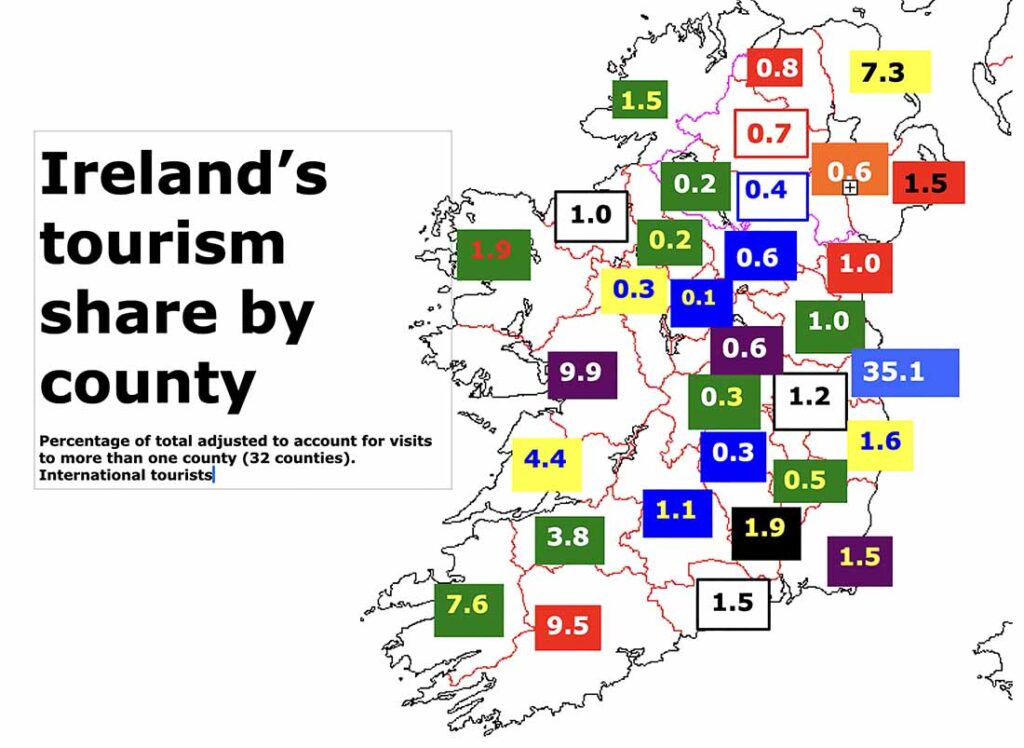
Ireland’s County Carlow combines historic landmarks with serene landscapes, with the Carlow Castle ruins and the nearby Altamont Gardens offering a mix of medieval and botanical appeal. The Barrow Way provides scenic riverside walks, while the Brownshill Dolmen, a prehistoric portal tomb, adds ancient history. Carlow is Ireland’s second smallest county by size (896 square km) and third smallest by population (61,968). Population peaked at 86,228 in 1841 and reached its lowest point, 33,342 in 1961.In terms of hospitality, Carlow is Ireland’s 23rd most visited tourist county with around 68,000 international visitors per year.
Introduction – Adventure – Anthem – Archaeology – Attractions – Awards – Birdwatching – Camping – Castles – Churches – Contact list – Cycling – Dining – Equestrian – Festivals – Fishing – Folklore – Gardens – Golf – Graveyards – Happening – Haunted – Highest – Hiking – History – Holy Wells – Hotels – Hotels top 8 – Hunting & shooting – Instagrammable – Itineraries – Largest town – Luxury – MICE – Movies – Music – Name – New – Novelists – Off the beaten track – Poets – Pubs – Quotes – Random Facts – Restaurant Awards – Sacred Places – Saints – Songs – Spas – Sports – Sunsets – Sustainable – Things to do – Towns – Video – Villages – Walking – Wanderlist – Weddings – Wild swimming – Writers – 1837– 1846 – 1852 – 1909 – 1955 – 1980 –