County Carlow, in Ireland’s southeast, is steeped in spiritual heritage, with holy wells that reflect a blend of pre-Christian and early Christian traditions. These wells, often linked to local saints and healing rituals, were historically central to community devotion, especially on pattern days (feast days of patron saints). While some wells remain active pilgrimage sites, others are obscure or neglected, and pattern days may no longer be widely observed due to historical disruptions like the Famine, Penal Laws, and church reforms.
- Cranavane Holy Well, Kildavin: Pattern day: May 3, historically, though banned after 1798 and again in the 1870s due to faction fighting; revived in the 20th century with Mass held on May Sundays. Known as Crann a Bhán (“white tree”), this well near Kildavin is likely dedicated to Saint Finian, born in nearby Myshall. Two wells exist: the main one is housed in a rectangular dry-stone structure, with a second well nearby. A stone bears Saint Finian’s footprint, and the well was famed for curing sore eyes and limbs. Pilgrims visited each Sunday in May, reciting the Rosary, until the tradition waned. The site was restored in the 1990s by the local community. Near Kildavin, Co. Carlow.
- Saint Moling’s Well, Saint Mullins: Pattern day: Traditionally July 25 (feast of Saint James, patron saint of pilgrims), with a smaller pattern on June 17 (Saint Moling’s Day). The main pilgrimage occurs on the Sunday nearest July 25. Located beside the millrace at Saint Mullins’ monastic site, this well is fed by nine springs within a low-walled reservoir, flowing into a roofless stone structure (possibly a 12th-century baptismal chapel). Pilgrims perform rounds, circumambulating the well and nearby river, reciting prayers, and drink the water for healing, especially toothaches (using clay from Fr. Daniel Kavanagh’s grave). Historically significant since at least 1348, it remains a vibrant pilgrimage site. Saint Mullins, Co. Carlow.
- Saint Brigid’s Well, Myshall: Pattern day: September 14 (Feast of the Exultation of the Holy Cross), historically tied to the Myshall Sheep Fair, though traditional rituals faded by the 1930s. Located 18 meters outside Myshall’s historic graveyard, this now-dry well is incorporated into a modern grotto dedicated to Saint Brigid. Its water, sourced from a spring in the graveyard, was accessed via three stone steps and used for healing. A nearby bullaun stone, Saint Brigid’s Stone, is linked to local folklore about the “Witch Slide” on the Blackstairs Mountains. The well’s rituals have largely been forgotten. Myshall, Co. Carlow.
- Saint Patrick’s Well, Rathvilly: Pattern day: March 17 (Saint Patrick’s Day), though specific pattern records are scarce. Situated in Rathvilly, this well is one of several in Ireland dedicated to Saint Patrick, who is said to have baptized converts here, endowing the water with curative powers. Historically used for general healing, its rituals included drinking or applying the water. Its prominence has diminished, but it remains a local landmark of spiritual significance. Rathvilly, Co. Carlow.
- Saint Patrick’s Well, Ballymurphy Road, Tullow: Pattern day: March 17 (Saint Patrick’s Day), likely a historical focus, though active observance is unclear. Located along Ballymurphy Road near Tullow, this well is associated with Saint Patrick and was used for baptisms and healing, particularly for eye ailments. Pilgrims would perform rounds and leave offerings like rags or coins. Its rural setting keeps it less visited than more prominent wells, preserving its quiet sanctity. Tullow, Co. Carlow.
- Saint Laserian’s Well, Old Leighlin: Pattern day: April 18 (Saint Laserian’s Day), though specific pattern traditions are poorly documented. Near the ruins of Old Leighlin’s cathedral, this well is linked to Saint Laserian, a 7th-century bishop who founded a monastery here. The well was used for healing and spiritual blessings, with pilgrims performing rounds and reciting prayers. Its proximity to the monastic site underscores its historical importance, though it’s now less frequented. Old Leighlin, Co. Carlow.
- Tobar na Súl, Near Bagenalstown: Pattern day: Unknown, possibly tied to summer festivals like Lughnasa (August 1). Known as the “Eye Well,” this well near Bagenalstown was renowned for curing eye ailments, a common attribute of holy wells. Pilgrims would bathe their eyes with the water and leave clooties (rags) on nearby trees, believing ailments would fade as the rags decayed. Its obscure location keeps it off the main tourist trail. Near Bagenalstown, Co. Carlow.
- Tobar na nGealt, Near Carlow Town: Pattern day: Unknown, possibly linked to local saint’s days or summer gatherings. The “Well of the Insane,” located near Carlow town, was believed to cure mental illnesses. Pilgrims performed sunwise rounds (deiseal) and left offerings, reflecting ancient beliefs in the well’s Otherworldly powers. Its rural setting and specialized healing focus make it a hidden gem, though it’s now largely forgotten. Near Carlow Town, Co. Carlow.
- Saint Finian’s Well, Near Myshall: Pattern day: December 11 (Saint Finian’s Day), though traditional patterns may have lapsed. Distinct from Cranavane, this well near Myshall is also tied to Saint Finian, with local lore suggesting he drank from it. Used for general healing, pilgrims would recite prayers and leave tokens like coins. Its proximity to Barragh’s medieval church enhances its historical context, but it’s less visited today. Near Myshall, Co. Carlow.
- Holy Well, Wells Graveyard, Bagenalstown: Pattern day: Unknown, possibly linked to local traditions or the Exultation of the Holy Cross (September 14). Near the ruins of an old parish church in Wells Graveyard, this well is associated with a granite holy-water stoup built into the church’s chancel wall. Used for spiritual blessings, it was part of a sacred landscape now neglected, with the graveyard partially cultivated. Its historical significance persists despite its disrepair. Bagenalstown, Co. Carlow.
- Saint Brigid’s Well, Near Clonegal: Pattern day: February 1 (Saint Brigid’s Day), though active observance is uncertain. Located near Clonegal, this well is dedicated to Saint Brigid, known for healing headaches and fertility issues. Pilgrims tied ribbons to nearby trees and drank the water during rounds. Its quiet, rural setting and association with Brigid’s nurturing qualities make it a subtle but sacred site. Near Clonegal, Co. Carlow.
- Tobar na Baiste, Near Hacketstown: Pattern day: June 24 (Saint John the Baptist’s Day), likely a historical focus. Known as the “Well of Baptism,” this well near Hacketstown was used for early Christian baptisms and believed to aid children’s ailments. Pilgrims performed rounds and used the water for purification. Its remote location and lack of modern recognition keep it a hidden treasure of Carlow’s spiritual heritage.
Holy Wells
Antrim – Armagh – Carlow – Cavan – Clare – Cork – Derry – Donegal – Down – Dublin – Fermanagh – Galway – Kerry – Kildare – Kilkenny – Laois – Leitrim – Limerick – Longford – Louth – Mayo – Meath – Monaghan – Offaly – Roscommon – Sligo – Tipperary – Tyrone – Waterford – Westmeath – Wexford – Wicklow
Sacred Places
Antrim – Armagh – Carlow – Cavan – Clare – Cork – Derry – Donegal – Down – Dublin – Fermanagh – Galway – Kerry – Kildare – Kilkenny – Laois – Leitrim – Limerick – Longford – Louth – Mayo – Meath – Monaghan – Offaly – Roscommon – Sligo – Tipperary – Tyrone – Waterford – Westmeath – Wexford – Wicklow
County Carlow:
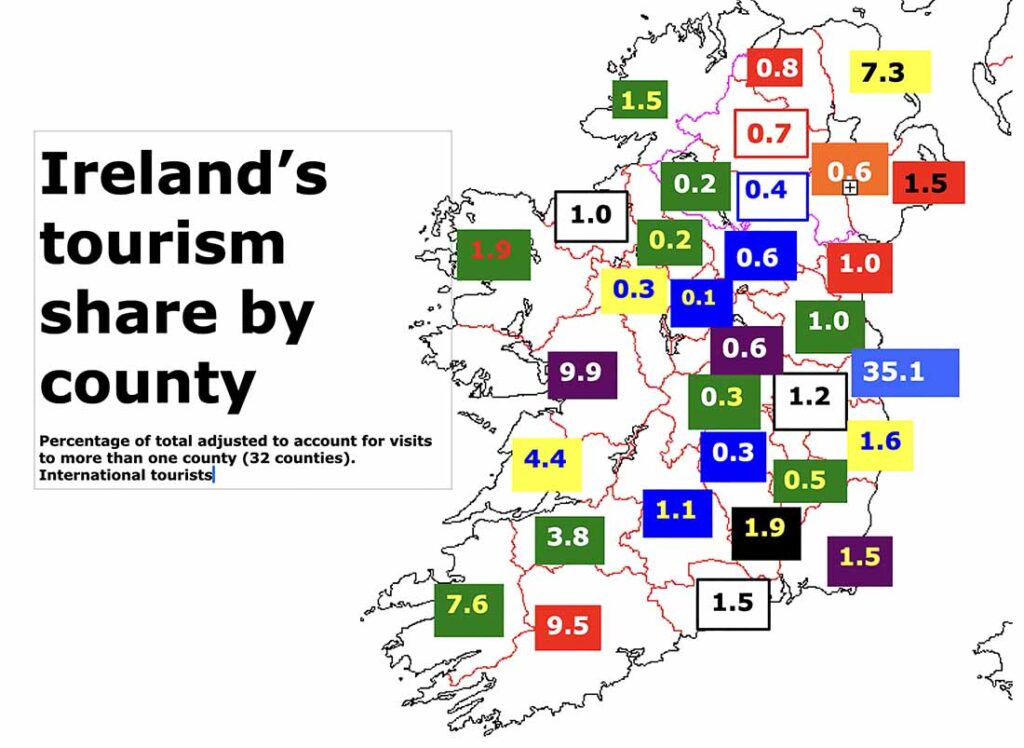
Ireland’s County Carlow combines historic landmarks with serene landscapes, with the Carlow Castle ruins and the nearby Altamont Gardens offering a mix of medieval and botanical appeal. The Barrow Way provides scenic riverside walks, while the Brownshill Dolmen, a prehistoric portal tomb, adds ancient history. Carlow is Ireland’s second smallest county by size (896 square km) and third smallest by population (61,968). Population peaked at 86,228 in 1841 and reached its lowest point, 33,342 in 1961.In terms of hospitality, Carlow is Ireland’s 23rd most visited tourist county with around 68,000 international visitors per year.
Introduction – Adventure – Anthem – Archaeology – Attractions – Awards – Birdwatching – Camping – Castles – Churches – Contact list – Cycling – Dining – Equestrian – Festivals – Fishing – Folklore – Gardens – Golf – Graveyards – Happening – Haunted – Highest – Hiking – History – Holy Wells – Hotels – Hotels top 8 – Hunting & shooting – Instagrammable – Itineraries – Largest town – Luxury – MICE – Movies – Music – Name – New – Novelists – Off the beaten track – Poets – Pubs – Quotes – Random Facts – Restaurant Awards – Sacred Places – Saints – Songs – Spas – Sports – Sunsets – Sustainable – Things to do – Towns – Video – Villages – Walking – Wanderlist – Weddings – Wild swimming – Writers – 1837– 1846 – 1852 – 1909 – 1955 – 1980 –