- Grianán of Aileach: Greenan Mountain, Burt, Co. Donegal, F93 VY76. An Iron Age stone fort, dating to c. 600-1000 AD, and a royal seat of the Northern Uí Néill dynasty. Its 4.5m-thick circular walls, possibly restored in the 19th century, enclose a hilltop with panoramic views. Linked to Celtic mythology and the god Dagda, it reflects early medieval power. Managed by the Office of Public Works (OPW), it’s freely accessible with parking and trails.
- Donegal Castle: Castle Street, Donegal Town, Co. Donegal, F94 P996. A 15th-century tower house built by the O’Donnell clan, expanded in the 17th century by Sir Basil Brooke with Jacobean additions. It served as a Gaelic stronghold until its forfeiture after the 1601 Flight of the Earls. Restored by the OPW, it offers guided tours and exhibits, showcasing Donegal’s medieval and Plantation history.
- Kilclooney More Dolmen: Near Ardara, Co. Donegal, F94 X2C6. A Neolithic portal tomb, dating to c. 3500-3000 BC, with a massive capstone supported by upright stones. Part of a complex with a smaller dolmen nearby, it was used for communal burials. Set in a scenic coastal landscape, it’s accessible via public paths on private land, reflecting Donegal’s megalithic heritage.
- Beltany Stone Circle: Tops, near Raphoe, Co. Donegal, F93 A2P6. A Bronze Age stone circle, dating to c. 2000-1500 BC, with 64 standing stones, possibly aligned with Beltane sunrise. One of Ireland’s largest circles, it likely served ritual purposes. Excavations suggest a central cairn. Accessible via public paths, it’s a state-care monument, offering insight into prehistoric astronomy.
- Malinmore Court Tomb: Malinmore, Glencolmcille, Co. Donegal, F94 C8W4. A Neolithic court tomb, dating to c. 4000-3000 BC, one of Ireland’s largest, with six burial chambers and a central court. Known as the “Tomb of the Giant,” it reflects early farming communities’ funerary practices. Part of Glencolmcille’s archaeological landscape, it’s accessible via public trails, managed by local heritage groups.
- Doagh Famine Village (Archaeological Context): Doagh Island, Inishowen, Co. Donegal, F93 Y7X9. While primarily a 19th-century open-air museum, the site includes prehistoric remains like shell middens and a promontory fort (c. 500 BC-400 AD). It contextualises Donegal’s long history, from prehistory to the Great Famine. Privately managed, it offers guided tours, blending archaeology with social history.
- Carrickabraghy Castle: Isle of Doagh, Inishowen, Co. Donegal, F93 V8Y3. A 16th-century O’Doherty clan castle, built on a rocky promontory for coastal defence. It was besieged during the 1601 rebellion and later abandoned. Its ruins reflect Gaelic maritime power. Accessible via public paths, it’s a state-care monument, offering dramatic views of the Inishowen coast.
- Cloghanmore Court Tomb: Near Malin, Co. Donegal, F93 X7K2. A Neolithic court tomb, dating to c. 4000-3000 BC, with two galleries and a central court, used for communal burials. Known as the “Malin Tomb,” it’s one of Donegal’s finest megalithic monuments. Accessible on private land with permission, it showcases early agricultural communities’ rituals.
- Ballyshannon (Inis Saimer) Ecclesiastical Site: Ballyshannon, Co. Donegal, F94 YN60. An early Christian site, possibly founded in the 6th century, linked to St. Patrick’s landing on Inis Saimer island. It includes church ruins and a high cross fragment (c. 8th-10th century). The site reflects Donegal’s early monastic tradition. Accessible via public paths, it’s a state-care monument near the River Erne.
- Glencolmcille Folk Village (Archaeological Sites): Glencolmcille, Co. Donegal, F94 H6K7. While a reconstructed 18th-19th century village, the surrounding area includes Neolithic and Bronze Age sites like court tombs, portal tombs, and standing stones (c. 4000-1500 BC). Guided tours highlight these monuments, managed by the local community, offering a blend of prehistoric and historical Donegal.
Archaeological sites
Antrim – Armagh – Carlow – Cavan – Clare – Cork – Derry – Donegal – Down – Dublin – Fermanagh – Galway – Kerry – Kildare – Kilkenny – Laois – Leitrim – Limerick – Longford – Louth – Mayo – Meath – Monaghan – Offaly – Roscommon – Sligo – Tipperary – Tyrone – Waterford – Westmeath – Wexford – Wicklow
County Donegal:
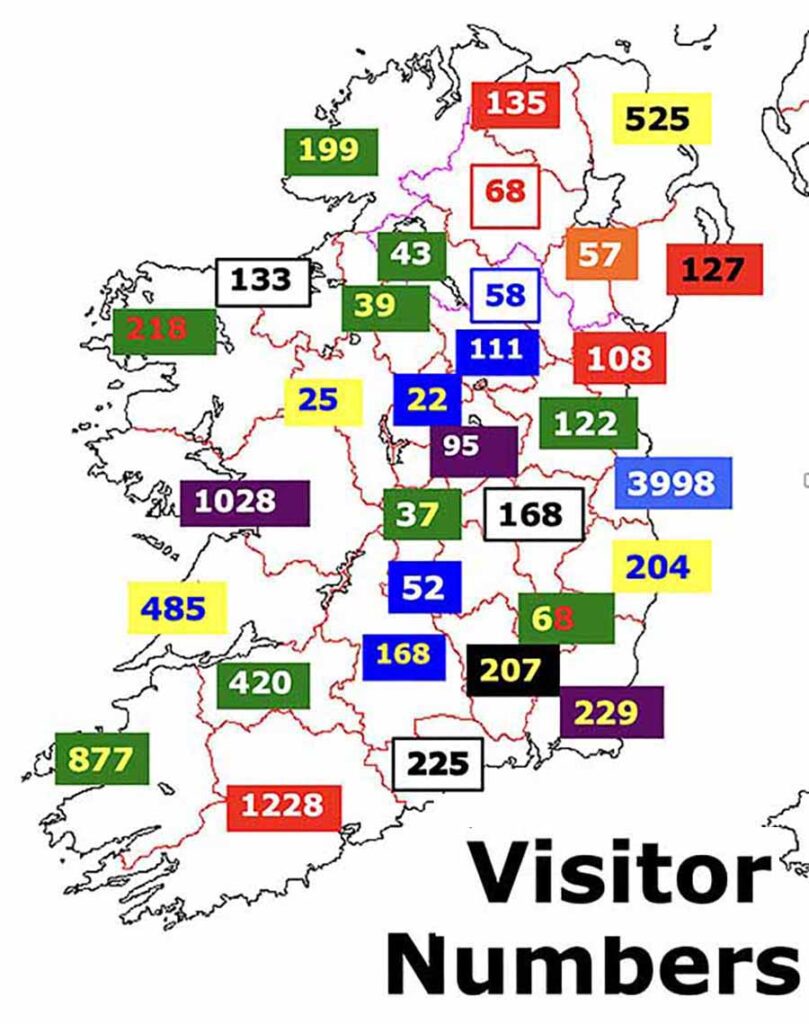
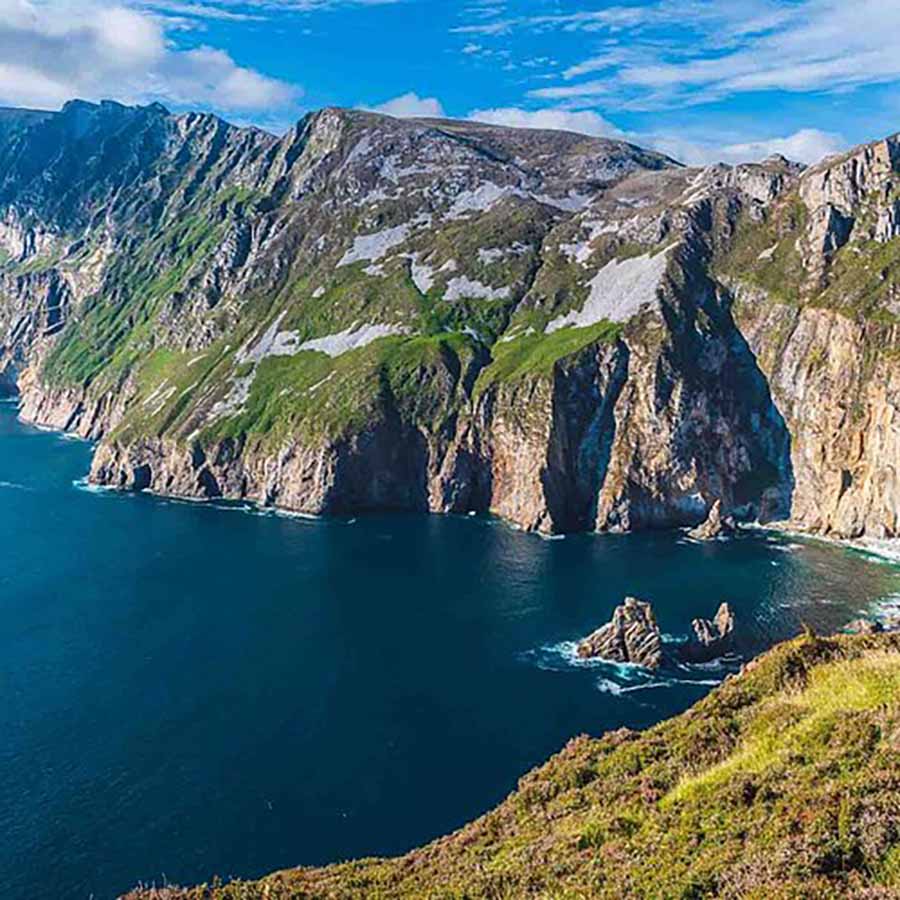
Ireland’s county Donegal is a land of wild coastlines and Gaelic heritage, with Slieve League’s towering sea cliffs offering some of Europe’s highest coastal views. Glenveagh National Park features a historic castle and sprawling gardens amidst rugged mountains. The beaches of Bundoran and the traditional tweed workshops of Ardara make Donegal an engaging destination for nature and cultural enthusiasts. The Grianan of Aileach stone fort adds ancient intrigue and splendid views. Donegal is Ireland’s fourth largest county by size (4,830 square km) and 13th largest by population (167,084). Population peaked at 296,448 in 1841 and reached its lowest point, 108,344 in 1971. In terms of hospitality, Donegal is also Ireland’s 13th most visited tourist county with around 199,000 international visitors per year.
Introduction – Adventure – Anthem – Archaeology – Attractions – Awards – Birdwatching – Camping – Castles – Churches – Contact list – Cycling – Dining – Equestrian – Festivals – Fishing – Folklore – Gardens – Golf – Graveyards – Happening – Haunted – Highest – Hiking – History – Holy Wells – Hotels – Hotels top 8 – Hunting & shooting – Instagrammable – Itineraries – Largest town – Luxury – MICE – Movies – Music – New – Name – Novelists – Off the beaten track – Poets – Pubs – Quotes – Random Facts – Restaurant Awards – Sacred Places – Saints – Songs – Spas – Sports – Sunsets – Sustainable – Things to do – Towns – Video – Villages – Walking – Wanderlist – Weddings – Wild swimming – Writers – 1837 – 1846 – 1852 – 1909 – 1955 – 1980 –