- Hill of Allen: Near Kilmeage, Co. Kildare, W91 YX93. An Iron Age hillfort, c. 200 BC, associated with Fionn mac Cumhaill in Irish mythology. The site features earthworks and a 19th-century folly tower. Likely a ceremonial or defensive site, it offers panoramic views of the Bog of Allen. Accessible via public paths, it’s on private land but open to visitors, reflecting Kildare’s legendary past.
- Castletown House (Archaeological Context): Celbridge, Co. Kildare, W23 V9H3. While primarily an 18th-century Palladian mansion, the estate includes prehistoric features like a possible Bronze Age ring barrow and medieval field systems. Built by William Conolly in 1722, it’s near the Liffey, a historically significant waterway. Managed by the OPW, the grounds are accessible with guided tours, blending prehistoric and Georgian heritage.
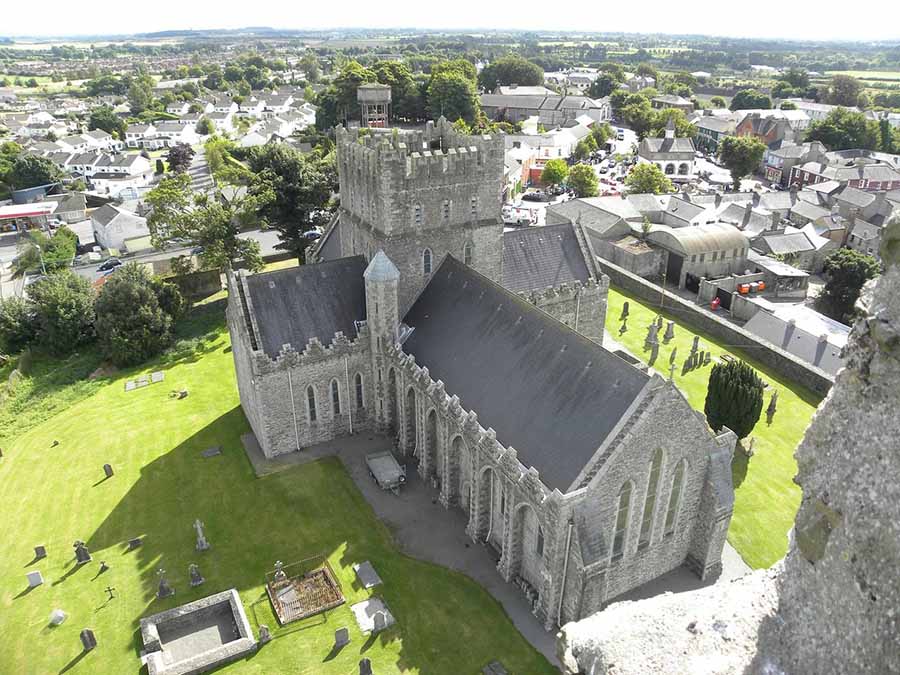
- St. Brigid’s Cathedral and Round Tower: Market Square, Kildare Town, Co. Kildare, R51 KX25. Founded by St. Brigid in the 5th century, this site includes a 12th-century cathedral and a 10th-century round tower, one of Ireland’s tallest at 32m, climbable for views. A pre-Christian sacred site, it transitioned to a major monastic centre. Managed by the Church of Ireland, it’s accessible with a small fee for tower access, showcasing Kildare’s early Christian heritage.
- Moone High Cross: Moone, Co. Kildare, R14 XA97. A 9th-century granite high cross, one of Ireland’s finest, featuring biblical carvings like the Twelve Apostles and Daniel in the Lions’ Den. Part of an early Christian monastery, it’s housed in a ruined medieval church. Managed by the OPW, it’s freely accessible, reflecting Kildare’s ecclesiastical art and history.
- Donnelly’s Hollow (Dunfierth): Near Kilcock, Co. Kildare, W91 X8Y7. A possible Iron Age or early medieval enclosure, linked to the 1815 boxing match of Dan Donnelly, Ireland’s first heavyweight champion. The site may have been a defensive or ceremonial mound. Accessible via public paths, it’s a state-care monument, blending folklore with potential prehistoric significance.
- Kilkea Castle (Archaeological Context): Castledermot, Co. Kildare, R14 XE97. A 12th-century Norman castle, rebuilt in the 15th century by the Fitzgeralds, with a motte and medieval church nearby. The site likely overlies earlier Gaelic fortifications. Now a hotel, it offers limited public access to grounds, reflecting Kildare’s Norman and Gaelic heritage.
- Rathangan Motte and Bailey: Rathangan, Co. Kildare, R51 YK88. A 12th-century Norman motte-and-bailey, built during the Anglo-Norman invasion to control the River Slate. The earthen mound and ditch reflect early feudal defence. A state-care monument, it’s accessible via public paths, though minimally developed, showcasing Kildare’s Norman military history.
- Oughaval Church and Cross: Stradbally, Co. Kildare (near Co. Laois border), R32 XN22. An early Christian site, c. 7th-10th century, with a ruined church and a 9th-century high cross fragment featuring interlace designs. Likely part of a monastic settlement, it’s tied to St. Colman. A state-care monument, it’s accessible on private land with permission, reflecting Kildare’s monastic tradition.
- Cloncurry Church and Enclosure: Near Enfield, Co. Kildare, A83 XK80. A medieval church, c. 13th century, within an earlier ecclesiastical enclosure, possibly founded in the 6th century. The site includes a holy well and graveyard, suggesting continuous sacred use. A state-care monument, it’s accessible via public paths, offering insight into Kildare’s medieval religious landscape.
- Leixlip Castle (Archaeological Context): Leixlip, Co. Kildare, W23 N8X6. A 12th-century Norman castle, built c. 1172 by Adam de Hereford, overlooking the River Liffey. It may overlie a Viking or Gaelic site, given Leixlip’s Norse origins. Privately owned but open for limited tours, it reflects Kildare’s Norman and potentially earlier history.
Archaeological sites
Antrim – Armagh – Carlow – Cavan – Clare – Cork – Derry – Donegal – Down – Dublin – Fermanagh – Galway – Kerry – Kildare – Kilkenny – Laois – Leitrim – Limerick – Longford – Louth – Mayo – Meath – Monaghan – Offaly – Roscommon – Sligo – Tipperary – Tyrone – Waterford – Westmeath – Wexford – Wicklow
County Kildare:
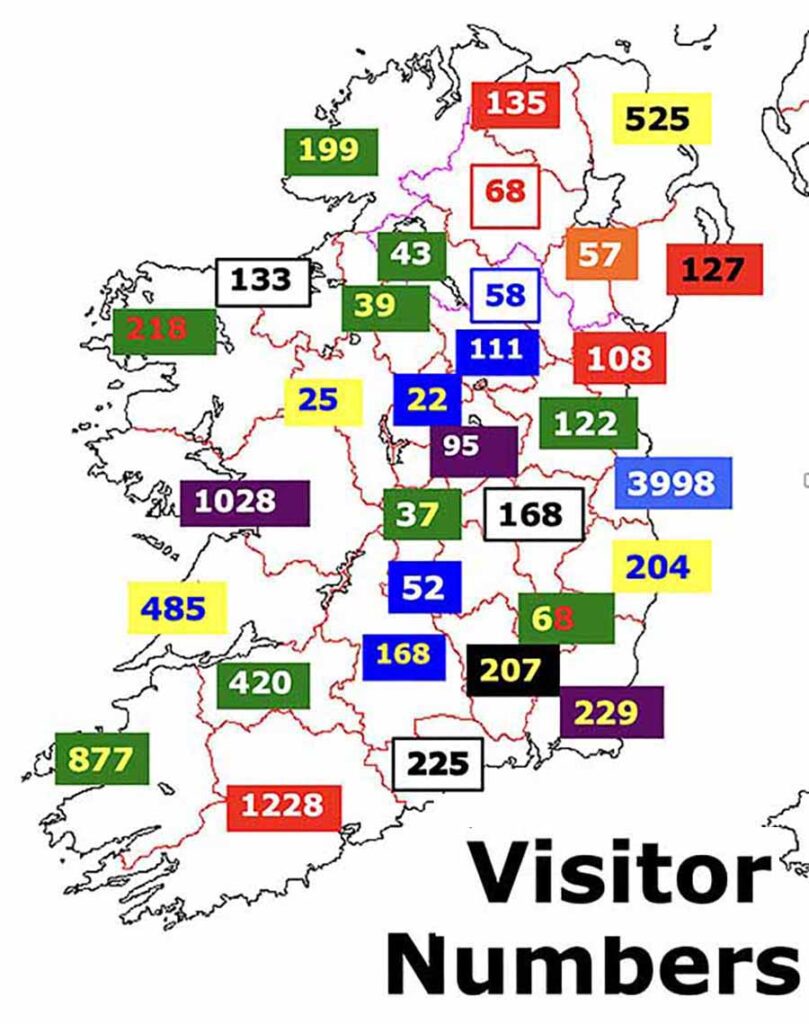
Ireland’s county Kildare blends historic sites with lush countryside, with the National Stud and Japanese Gardens offering a unique mix of equine heritage and serene landscapes. Castletown House, a grand Palladian mansion, provides historical insights, while the Curragh’s open plains are ideal for walking. The ancient Hill of Allen adds archaeological depth, making Kildare an engaging stop for culture and nature. The new Shackleton Experience has opened in Athy. Kildare is Ireland’s eighth smallest county by size (1,694 square km) and seventh largest by population (247,774). Population reached its lowest point, 57,892 in 1936. In terms of hospitality, Kildare is Ireland’s 15th most visited tourist county with around 168,000 international visitors per year.
Introduction – Adventure – Anthem – Archaeology – Attractions – Awards – Birdwatching – Camping – Castles– Churches – Contact list – Cycling – Dining – Equestrian – Festivals – Fishing – Folklore – Gardens – Golf – Graveyards – Happening – Haunted – Highest – Hiking – History – Holy Wells – Hotels – Hotels top 8 – Hunting & shooting – Instagrammable – Itineraries – Largest town – Luxury – MICE – Movies – Music – Name – New – Novelists – Off the beaten track – Poets – Pubs – Quotes – Random Facts – Restaurant Awards – Sacred Places – Saints – Songs – Spas – Sports – Sunsets – Sustainable – Things to do – Towns – Video – Villages – Walking – Wanderlist – Weddings – Wild swimming – Writers – 1837 – 1846 – 1852 – 1909 – 1955 – 1980 –