Pre-1000 The Gaelic Nation
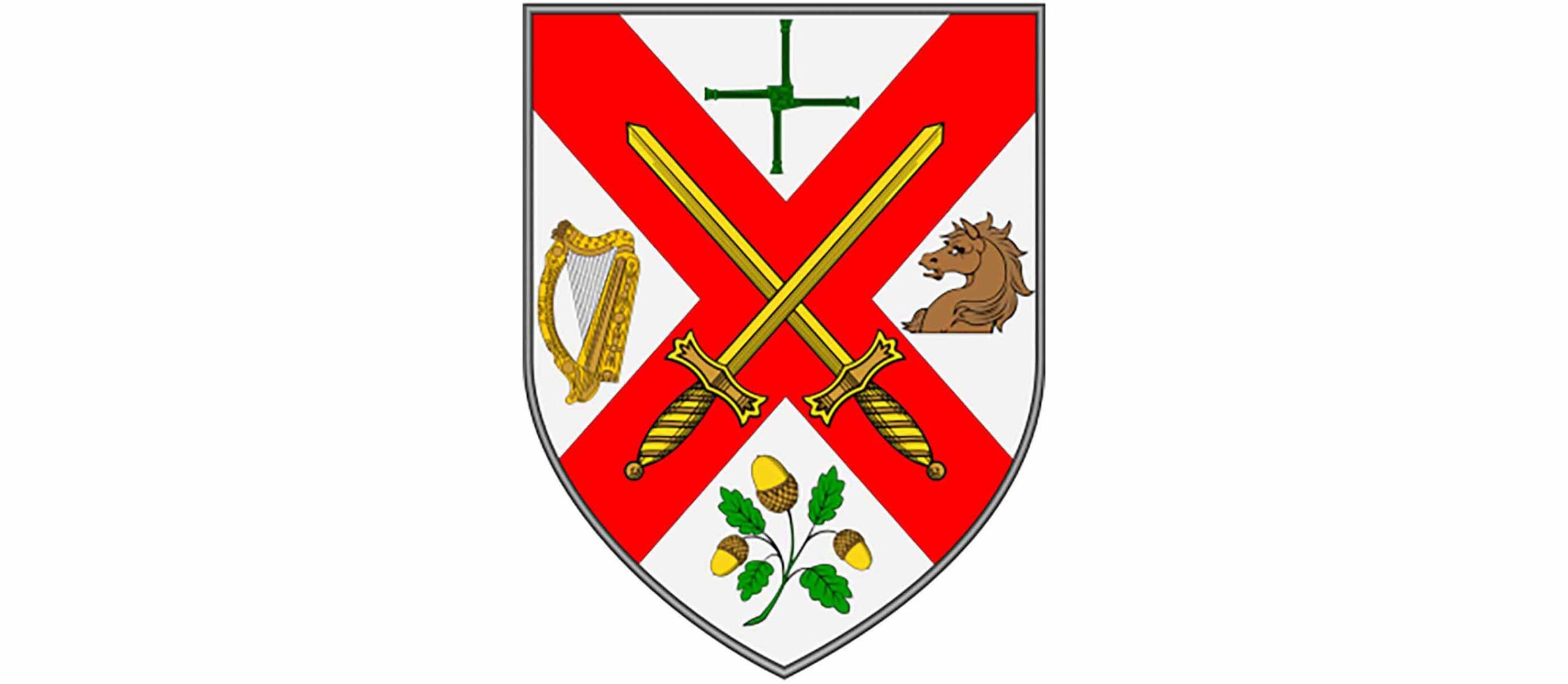
County Kildare’s history before 1000 CE is rooted in its mythological and early Christian significance. The area was a sacred site, notably Dún Ailinne (Knockaulin), a major ceremonial centre for the Leinster kings, abandoned around 400 CE. Ptolemy’s 2nd-century map of Ireland tend to reference Rheban on the River Barrow, indicating early settlement. The founding of the monastery at Cill Dara (Kildare, meaning “church of the oak”) by Saint Brigid around 490 CE marked a pivotal moment, establishing Kildare as one of Ireland’s most important early Christian centres. Brigid, a key figure in Irish hagiography, is credited with founding a dual monastery for monks and nuns, possibly under the guidance of Bishop Conlaed (d. c. 520 CE). Cogitosus, a 7th-century monk, described Kildare as a “vast metropolitan city,” suggesting early urban characteristics, though this tend to be an embellishment to elevate its status. The monastery became a hub for learning, art, and religion, with the Book of Kildare, a now-lost illuminated manuscript, compared to the Book of Kells.
1000–1100: Viking Influence and Ecclesiastical Power
During this period, Kildare remained a significant religious centre under the influence of its monastery. The Annals of Ulster (record Viking raids affecting Leinster, with wealthy Kildare a frequent target and a rare inland settlement established by the Vikings at Leixlip, the salmon leap. The monastery’s wealth and prominence made it a potential target, but its inland location offered some protection. The period saw the consolidation of Irish kingdoms, with Kildare under the House of Dúnlaing, who held the kingship of Leinster for 300 years, operating from three sacred inauguration sites at Lyons Hill (Ardclough), Mullaghmast and Naas (Nás na Rí, Naas of the kings). The absence of detailed secular records limits our understanding, as most surviving sources focus on ecclesiastical matters or major battles.
1100–1200: Norman Arrival and Monastic Developments
The Norman invasion of Ireland (1169–1171) transformed Kildare’s landscape. In 1111, Kildare was defined as a diocese, reflecting its ecclesiastical importance. The Normans, under Strongbow, established control in Leinster, and Kildare’s fertile lands attracted settlers. The establishment of a Cistercian abbey at Monasterevin by the O’Dempsey family in 1189 and an Augustinian priory in Naas around 1200 introduced new monastic traditions, complementing the older Celtic foundation of St. Brigid. The Normans also introduced feudal structures, with Kildare becoming a key lordship. The “Song of Dermot and the Earl” (c. 1200–1225), a Norman-French text, mentions Kildare, indicating its integration into Anglo-Norman narratives. The county’s strategic location on routes from Dublin to the south and west made it a valuable possession.
1200–1300: Anglo-Norman Consolidation and Kildare’s Definition
County Kildare was formally shired in 1297, though its boundaries initially included parts of modern Offaly and Laois. The “Kildare Poems,” written in medieval English around 1300, reflect the cultural output of the Anglo-Norman settlers in the region, blending English and Irish influences. The county’s fertile plains supported agriculture, and the Normans built castles, such as those at Naas and Athy, to secure their hold. Kildare’s monastery continued to thrive, though its influence was challenged by new monastic orders. The period saw tensions between Gaelic Irish and Anglo-Norman lords, with the latter gradually adopting Irish customs, a process later termed “Gaelicisation.”
1300–1400: Gaelic Revival and Fitzgerald Ascendancy
The 14th century saw a Gaelic revival in Kildare, as Anglo-Norman control weakened. The creation of the ear Gospel of Kildare in 1318, granted to the Fitzgeralds of Leinster, marked their rise as a dominant Anglo-Irish family. However, Gaelic lords regained ground in parts of Leinster, including Kildare, as English authority waned due to the Black Death and internal conflicts in England. The Statute of Kilkenny (1366), passed under Lionel, Duke of Clarence, aimed to curb Gaelicisation by forbidding intermarriage and alliances with the Irish, listing Kildare among the “obedient” English-controlled lands. In practice, these laws were unenforceable, and the Fitzgeralds increasingly adopted Irish customs. The period also saw cultural flourishing, with Irish language and law resurgent among both Gaelic and Anglo-Irish communities.
1400–1500: Fitzgerald Dominance and English Decline
The 15th century was dominated by the Fitzgerald earls of Kildare, who became de facto rulers of Ireland. Kildare, under Gerald Fitzgerald, the 8th Earl (d. 1513), wielded significant influence, controlling the Dublin government through alliances with Gaelic lords. The county was a stronghold for the Fitzgeralds, with their seat at Maynooth Castle. The Wars of the Roses (1460–1485) distracted England, allowing the Fitzgeralds to act with near autonomy. The execution of Thomas, 7th Earl of Desmond, in 1468 highlighted English attempts to curb Anglo-Irish power, but Kildare’s earls remained largely unchecked. Poynings’ Law (1494) subordinated the Irish Parliament to Westminster, reflecting English efforts to reassert control, though its impact in Kildare was limited due to Fitzgerald dominance.
1500–1600: Tudor Reconquest and Fitzgerald Rebellion
The 16th century brought the Tudor reconquest, fundamentally altering Kildare’s trajectory. The Fitzgeralds’ power peaked under Gerald, 9th Earl of Kildare, but their rebellion under Silken Thomas Fitzgerald in 1534, sparked by fears of Tudor centralisation, led to their downfall. Thomas and his uncles were executed in 1537, ending the Kildare Fitzgeralds’ dominance. Henry VIII’s declaration of Ireland as a kingdom in 1542 and his plantation policies introduced Colonial/protestan settlers, though Kildare, with its Catholic majority, resisted religious reforms. The county saw the establishment of early plantations, but Gaelic and Old English (Anglo-Norman) communities maintained strong Catholic and cultural ties.
1600–1700: Plantations and Confederate Wars
The 17th century was marked by further English colonisation and conflict. The Ulster Plantation (1609) had less direct impact on Kildare, but the county was affected by the Confederate Wars (1641–1653). Kildare’s Catholic landowners, including remnants of the Fitzgeralds, joined the Catholic Confederacy, opposing English rule. The Cromwellian conquest (1649–1653) led to land confiscations, with Kildare’s fertile lands redistributed to English settlers. The county’s Catholic majority faced increasing marginalisation, though some Anglo-Irish families retained influence. The establishment of the Curragh as a military training ground began in this period, foreshadowing its later significance.
1700–1800: Protestant Ascendancy and Rebellion
The 18th century saw Kildare under the Colonial/Protestant Ascendancy, with Anglo-Irish landlords dominating land ownership. The Penal Laws excluded Catholics from power, though Kildare’s landlords were noted for living locally and reinvesting rents, unlike absentee landlords elsewhere. A new generation of kleptocolonials constructed large Palladian mansions, some of the most lavish in Europe, at Castletown (Celbridge), Carton (Maynooth), Lyons and Bishopscourt (Ardclough), Palmerstown (Kill). and Castlemartin and Harristown (Kilcullen). Turnpike roads and the Grand and Royal Canals (constructed from the 1730s) enhanced Kildare’s connectivity, boosting trade. The county’s association with horse racing grew, with the Curragh becoming a racing centre. The 1798 Rebellion saw significant activity in Kildare, with battles at Naas and Gibbet Rath, led by figures like Lord Edward Fitzgerald (d. 1798). The rebellion’s failure led to repression and the Act of Union (1800), abolishing the Irish Parliament. The 1803 rising, linked to Robert Emmet, had a smaller impact in Kildare but reinforced English control.
1800–1900: Famine, Infrastructure, and Gaelic Revival
The 19th century transformed Kildare through infrastructure and cultural shifts. The Great Famine (1845–1849) impacted Kildare less severely than western counties due to its low population density and proximity to Dublin, but the population still fell from 114,488 in 1841 to 95,723 in 1851. The construction of railways and military barracks, notably at the Curragh, solidified Kildare’s strategic importance. The Irish National Stud, established in 1900, cemented Kildare’s equine reputation. The Gaelic Revival, gaining momentum late in the century, saw the Gaelic League promote Irish language and culture in Kildare, with local branches organising classes and events. The Gaelic Athletic Association (GAA) also grew, with Kildare winning All-Ireland football titles in 1905 and later.
1900–2025: Independence, Modernisation, and Heritage
The 20th and 21st centuries saw Kildare navigate Ireland’s independence and modernisation. The county played a minor role in the 1916 Easter Rising but was active in the War of Independence (1919–1921) and Civil War (1922–1923), with local IRA activity. Kildare’s GAA successes (All-Ireland titles in 1905, 1919, 1927, and 1928) boosted local pride. The Irish National Stud and Curragh Racecourse solidified Kildare’s equine industry, while industrial growth, such as mills in Celbridge, diversified the economy. Post-1922, Kildare became a commuter hub for Dublin, with towns like Naas and Kildare expanding. The Brigid 1500 celebrations in 2024 highlighted the county’s heritage, though urban development threatens historic sites. Recent decades have seen investment in infrastructure and high-tech industries, balancing growth with preservation. The largest employers in the county are chip manufacturers Intel, the Kerry group and pharmaceutical company Pfizer. Kildare is one of just EIGHT Irish counties that has a larger population than it did in 1841.
History
Antrim – Armagh – Carlow – Cavan – Clare – Cork – Derry – Donegal – Down – Dublin – Fermanagh – Galway – Kerry – Kildare – Kilkenny – Laois – Leitrim – Limerick – Longford – Louth – Mayo – Meath – Monaghan – Offaly – Roscommon – Sligo – Tipperary – Tyrone – Waterford – Westmeath – Wexford – Wicklow
County Kildare:
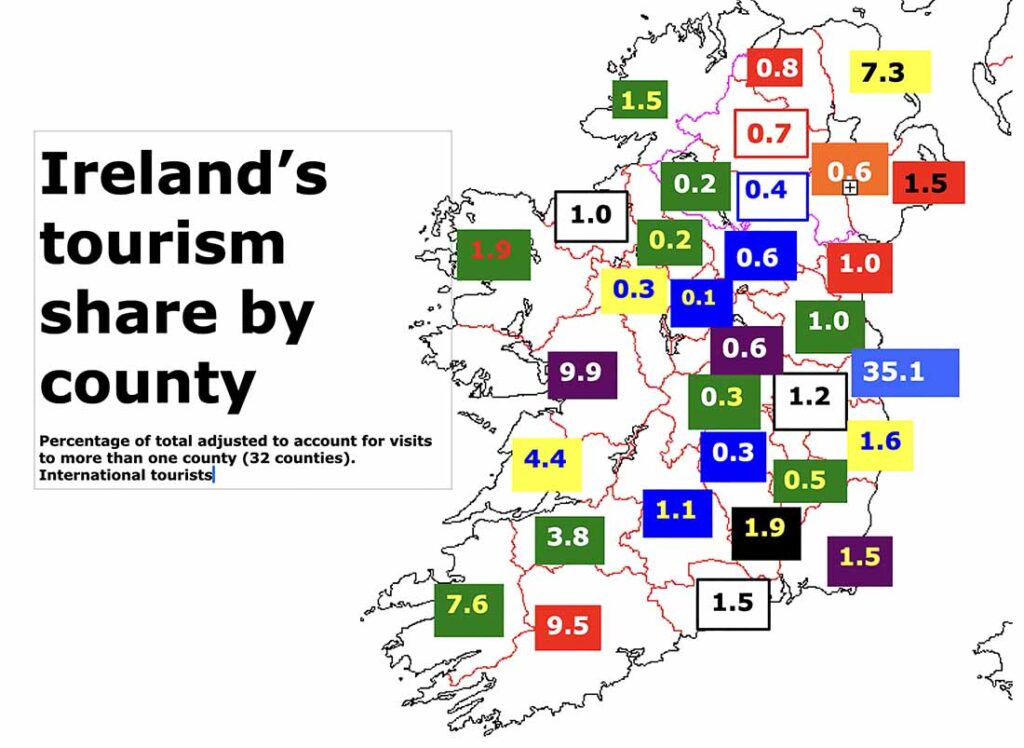
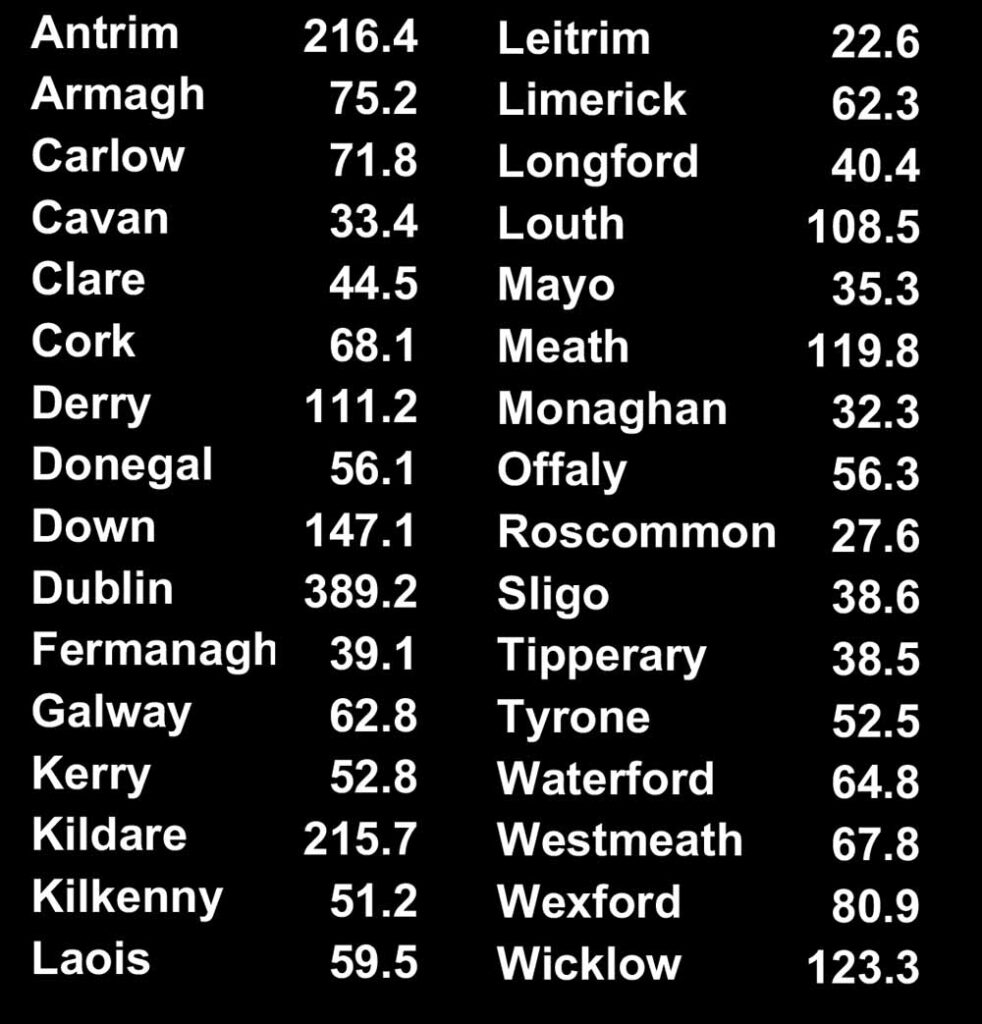
Ireland’s county Kildare blends historic sites with lush countryside, with the National Stud and Japanese Gardens offering a unique mix of equine heritage and serene landscapes. Castletown House, a grand Palladian mansion, provides historical insights, while the Curragh’s open plains are ideal for walking. The ancient Hill of Allen adds archaeological depth, making Kildare an engaging stop for culture and nature. The new Shackleton Experience has opened in Athy. Kildare is Ireland’s eighth smallest county by size (1,694 square km) and seventh largest by population (247,774). Population reached its lowest point, 57,892 in 1936. In terms of hospitality, Kildare is Ireland’s 15th most visited tourist county with around 168,000 international visitors per year.
Introduction – Adventure – Anthem – Archaeology – Attractions – Awards – Birdwatching – Camping – Castles– Churches – Contact list – Cycling – Dining – Equestrian – Festivals – Fishing – Folklore – Gardens – Golf – Graveyards – Happening – Haunted – Highest – Hiking – History – Holy Wells – Hotels – Hotels top 8 – Hunting & shooting – Instagrammable – Itineraries – Largest town – Luxury – MICE – Movies – Music – Name – New – Novelists – Off the beaten track – Poets – Pubs – Quotes – Random Facts – Restaurant Awards – Sacred Places – Saints – Songs – Spas – Sports – Sunsets – Sustainable – Things to do – Towns – Video – Villages – Walking – Wanderlist – Weddings – Wild swimming – Writers – 1837 – 1846 – 1852 – 1909 – 1955 – 1980 –