County Kildare, in Ireland’s east, is rich in spiritual heritage, with holy wells tied to early Christian saints and pre-Christian traditions. These wells, often linked to figures like Saint Brigid, were historically significant for healing and devotion, particularly on pattern days (feast days of patron saints). While some remain active pilgrimage sites, others are neglected or lost to urban development, with pattern days rarely observed due to the Famine, Penal Laws, and modern changes.
- Saint Brigid’s Well (Tobar Bríde), Kildare Town: Pattern day: February 1 (Saint Brigid’s Day), with active pilgrimage and Mass. Near Kildare Cathedral, this well is dedicated to Saint Brigid, Ireland’s patroness and Kildare’s founder. Pilgrims perform rounds, reciting prayers, and leave clooties or crosses on nearby bushes for healing, especially fertility and headaches. A stone arch and garden setting make it a focal point of Brigid’s legacy, drawing visitors year-round. Kildare Town, Co. Kildare.
- Toberara Well (Saint Brigid’s Well), Tully: Pattern day: February 1 (Saint Brigid’s Day), historically significant but less active now. In Tully, near Kildare Town, this second well linked to Saint Brigid is known for healing eye ailments and general wellness. Pilgrims performed sunwise rounds (deiseal) and left offerings like coins or rags. Now maintained by the community, it’s less prominent but valued for its proximity to Brigid’s monastic site. Tully, near Kildare Town, Co. Kildare.
- Saint Patrick’s Well, Celbridge: Pattern day: March 17 (Saint Patrick’s Day), though patterns are rare. Near Celbridge, this well is associated with Saint Patrick, who reputedly baptized converts here. Used for spiritual blessings and healing, pilgrims left clooties on nearby trees. Now in a suburban area, the well is less visited but retains historical significance, tied to early Christian missionary work. Celbridge, Co. Kildare.
- Saint Mochua’s Well, Clane: Pattern day: August 3 (Saint Mochua’s Day), though no longer actively observed. In Clane, this well is dedicated to Saint Mochua, a 6th-century monk. Known for curing joint pain, pilgrims performed rounds and applied water to afflicted areas, leaving offerings like medals. Surrounded by modern development, the well is maintained but sees little devotional activity. Clane, Co. Kildare.
- Tobar na Súl, Near Naas: Pattern day: Unknown, possibly tied to Lughnasa (August 1). Known as the “Eye Well,” this well near Naas was famed for curing eye ailments. Pilgrims bathed their eyes with the water and tied clooties to nearby bushes, believing ailments would fade as the rags decayed. Its rural setting is now near urban sprawl, reducing its prominence. Near Naas, Co. Kildare.
- Our Lady’s Well, Athy: Pattern day: August 15 (Feast of the Assumption), with past local devotions. Dedicated to the Blessed Virgin Mary, this well in Athy was used for spiritual blessings and women’s health. Pilgrims performed rounds, recited the Rosary, and left candles or ribbons. Now in a quiet corner of the town, it’s maintained but sees minimal pilgrimage due to urban growth. Athy, Co. Kildare.
- Saint Colman’s Well, Near Maynooth: Pattern day: November 24 (Saint Colman’s Day), though patterns are scarce. Linked to Saint Colman, this well near Maynooth was used for healing stomach ailments. Pilgrims performed rounds and left offerings like rosaries or rags on a nearby tree. Its proximity to Maynooth’s historic college adds context, but it’s now largely forgotten amidst suburban expansion. Near Maynooth, Co. Kildare.
- Tobar na nGealt, Near Leixlip: Pattern day: Unknown, possibly summer festivals. The “Well of the Insane” near Leixlip was believed to cure mental illnesses, reflecting pre-Christian Otherworldly beliefs. Pilgrims performed rounds, recited prayers, and left clooties. Its location near the River Liffey keeps it obscure, with no modern use but lingering folklore significance. Near Leixlip, Co. Kildare.
- Saint John’s Well, Near Kilcock: Pattern day: June 24 (Saint John the Baptist’s Day), historically observed. Dedicated to Saint John the Baptist, this well near Kilcock was used for healing children’s ailments and baptisms. Pilgrims performed rounds, used the water for purification, and left coins or small tokens. Now in a rural area, it’s neglected but retains historical ties to early Christianity. Near Kilcock, Co. Kildare.
- Saint Conleth’s Well, Newbridge: Pattern day: May 3 (Saint Conleth’s Day), though patterns have lapsed. Linked to Saint Conleth, Kildare’s first bishop and Brigid’s ally, this well in Newbridge was used for general healing. Pilgrims performed rounds and left offerings like coins or cloths. Now near urban development, it’s maintained as a heritage site but sees little devotional activity. Newbridge, Co. Kildare.
- Tobar na Plaighe, Near Monasterevin: Pattern day: Unknown, possibly linked to plague-related rituals. The “Well of the Plague” near Monasterevin was visited during disease outbreaks for protection or healing. Pilgrims performed rounds and left clooties, believing the water held curative powers. Its historical role makes it significant, though it’s now overgrown and rarely visited. Near Monasterevin, Co. Kildare.
- Saint Fiachra’s Well, Near Caragh: Pattern day: August 8 (Saint Fiachra’s Day), though patterns are not recorded. Dedicated to Saint Fiachra, a 7th-century hermit, this well near Caragh was used for healing, particularly rheumatism. Pilgrims performed rounds and left offerings like rosaries or rags. Its rural setting preserves its tranquility, but suburban growth has reduced its prominence. Near Caragh, Co. Kildare.
Practical Notes:
- Access and Condition: Many Kildare wells are on private land or near urban areas; seek permission where needed (check www.kildare.ie or local heritage groups). Saint Brigid’s Well is well-maintained, while others, like Tobar na Plaighe, are neglected or overgrown.
- Visiting Tips: Use a map or GPS (www.ihwcbc.omeka.net) (www.ihwcbc.omeka.net), as signage is often minimal. Wear waterproof boots for rural sites, and respect offerings like clooties or candles. For Saint Brigid’s Well, expect crowds on February 1.
- Pattern Days: Where unknown, visits likely peaked in summer (May-August), tied to saints’ feast days or Lughnasa. Most patterns ceased due to 19th-century reforms, Famine, and urbanization, but Saint Brigid’s remains active.
- Cultural Context: Kildare’s wells were Mass sites during Penal Times, with sunwise rounds, Rosary prayers, and clooties to transfer ailments. Specialized cures (e.g., eyes, mental health) reflect ancient Otherworldly beliefs, often enhanced by sacred trees or stones.
Holy Wells
Antrim – Armagh – Carlow – Cavan – Clare – Cork – Derry – Donegal – Down – Dublin – Fermanagh – Galway – Kerry – Kildare – Kilkenny – Laois – Leitrim – Limerick – Longford – Louth – Mayo – Meath – Monaghan – Offaly – Roscommon – Sligo – Tipperary – Tyrone – Waterford – Westmeath – Wexford – Wicklow
Sacred Places
Antrim – Armagh – Carlow – Cavan – Clare – Cork – Derry – Donegal – Down – Dublin – Fermanagh – Galway – Kerry – Kildare – Kilkenny – Laois – Leitrim – Limerick – Longford – Louth – Mayo – Meath – Monaghan – Offaly – Roscommon – Sligo – Tipperary – Tyrone – Waterford – Westmeath – Wexford – Wicklow
County Kildare:
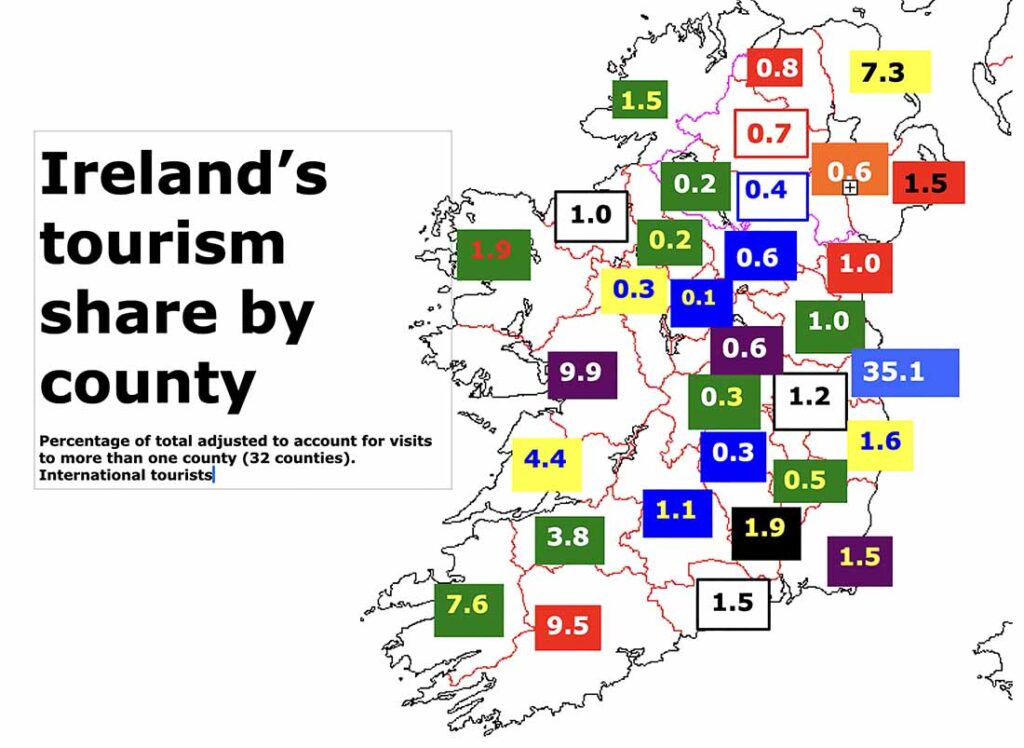
Ireland’s county Kildare blends historic sites with lush countryside, with the National Stud and Japanese Gardens offering a unique mix of equine heritage and serene landscapes. Castletown House, a grand Palladian mansion, provides historical insights, while the Curragh’s open plains are ideal for walking. The ancient Hill of Allen adds archaeological depth, making Kildare an engaging stop for culture and nature. The new Shackleton Experience has opened in Athy. Kildare is Ireland’s eighth smallest county by size (1,694 square km) and seventh largest by population (247,774). Population reached its lowest point, 57,892 in 1936. In terms of hospitality, Kildare is Ireland’s 15th most visited tourist county with around 168,000 international visitors per year.
Introduction – Adventure – Anthem – Archaeology – Attractions – Awards – Birdwatching – Camping – Castles– Churches – Contact list – Cycling – Dining – Equestrian – Festivals – Fishing – Folklore – Gardens – Golf – Graveyards – Happening – Haunted – Highest – Hiking – History – Holy Wells – Hotels – Hotels top 8 – Hunting & shooting – Instagrammable – Itineraries – Largest town – Luxury – MICE – Movies – Music – Name – New – Novelists – Off the beaten track – Poets – Pubs – Quotes – Random Facts – Restaurant Awards – Sacred Places – Saints – Songs – Spas – Sports – Sunsets – Sustainable – Things to do – Towns – Video – Villages – Walking – Wanderlist – Weddings – Wild swimming – Writers – 1837 – 1846 – 1852 – 1909 – 1955 – 1980 –