- Brownshill Dolmen: Near Hacketstown Road, Carlow Town, Co. Carlow, R93 VY96. This Neolithic portal tomb, dating to 4000-3000 BC, is one of Ireland’s most iconic megalithic monuments. Its massive capstone, estimated at over 150 tonnes, is among Europe’s heaviest. Likely used for burial or ceremonial purposes, it reflects early farming communities’ engineering prowess. The site is accessible via a short path, with parking nearby, and is maintained by the Office of Public Works (OPW).
- Haroldstown Portal Tomb: Near Tobinstown, Tullow, Co. Carlow, R93 YX52. Dating to around 3500 BC, this Neolithic portal tomb features a large capstone supported by upright stones, typical of early burial structures. Set in a scenic field, it reflects the ritual practices of Carlow’s early inhabitants. The tomb is on private land but publicly accessible with landowner permission, offering a glimpse into Neolithic spirituality.
- Rathgall Hillfort: Near Shillelagh, Co. Carlow, close to the Wicklow border, R93 KX83. This multi-period hillfort, primarily from the Late Bronze Age to Iron Age (c. 1000 BC-400 AD), is one of Ireland’s most significant. Excavations revealed a high-status settlement with evidence of metalworking, including gold and bronze artefacts. Its four concentric ramparts suggest defensive and ceremonial functions. Accessible via public paths, it’s a state-protected site, offering insights into prehistoric social structures.
- Ballymoon Castle: Near Muine Bheag (Bagenalstown), Co. Carlow, R21 CY63. A 13th-century Norman castle, likely built by the Bigod or Carew family, this uncompleted fortress features a large rectangular courtyard with thick walls but no internal buildings. Its strategic location near the River Barrow suggests defensive and administrative roles. Managed by the OPW, it’s open to visitors, showcasing medieval architecture and Norman influence in Carlow.
- St. Mullins Ecclesiastical Site: St. Mullins, Co. Carlow, R95 K5W8. This early Christian monastic site, founded in the 7th century by St. Moling, includes a high cross, round tower remains, and medieval church ruins. Located along the River Barrow, it was a significant religious and pilgrimage centre. The site, accessible via St. Mullins village, also features a Norman motte, reflecting multi-period use. It’s maintained by the OPW and offers a serene historical experience.
- Ballon Hill: Near Ballon village, Co. Carlow, R93 FX62. A Bronze Age hillfort with evidence of prehistoric activity, this site yielded artefacts like a bronze razor and polished pebbles, now displayed in Carlow County Museum. Likely used for ceremonial or defensive purposes, it offers panoramic views of the Carlow countryside. The site is accessible via public paths but requires care due to its elevated terrain.
- Clogrennane Castle: Near Clogrennane, Co. Carlow, R93 T2K7. A 15th-century tower house built by the Kavanagh family, a prominent Gaelic clan, this castle reflects medieval Gaelic architecture and power dynamics. Situated near the River Barrow, it served as a defensive residence. Though partially ruined, it’s accessible on private land with permission, offering insights into Carlow’s Gaelic heritage.
- Rathvilly Moat: Near Rathvilly village, Co. Carlow, R93 XW98. A medieval motte-and-bailey structure, likely constructed by Norman settlers in the 12th-13th century, this site served as a defensive and administrative centre. The earthen mound and surrounding ditch are typical of early Norman fortifications. Public access is possible via local paths, though the site is less developed for tourism, reflecting Carlow’s Norman history.
- Ballyloughan Castle: Near Bagenalstown, Co. Carlow, R21 YR13. A 13th-century Anglo-Norman castle, likely built by the de Vallibus family, featuring a large gatehouse and remnants of curtain walls. It served as a stronghold during the Norman conquest of Leinster. Managed by the OPW, it’s accessible to visitors, showcasing medieval military architecture in a rural setting.
- Kernanstown Cromlech (Ballykealy Portal Tomb): Near Bennekerry, Carlow Town, Co. Carlow, R93 C9V6. A Neolithic portal tomb from c. 3500 BC, also known as Ballykealy, this site features a capstone supported by upright stones, similar to Brownshill. Likely used for burial rituals, it reflects early agricultural communities’ beliefs. The tomb is on private land but accessible with permission, offering a quieter alternative to Brownshill for exploring Neolithic Carlow.
Archaeological sites
Antrim – Armagh – Carlow – Cavan – Clare – Cork – Derry – Donegal – Down – Dublin – Fermanagh – Galway – Kerry – Kildare – Kilkenny – Laois – Leitrim – Limerick – Longford – Louth – Mayo – Meath – Monaghan – Offaly – Roscommon – Sligo – Tipperary – Tyrone – Waterford – Westmeath – Wexford – Wicklow
County Carlow:
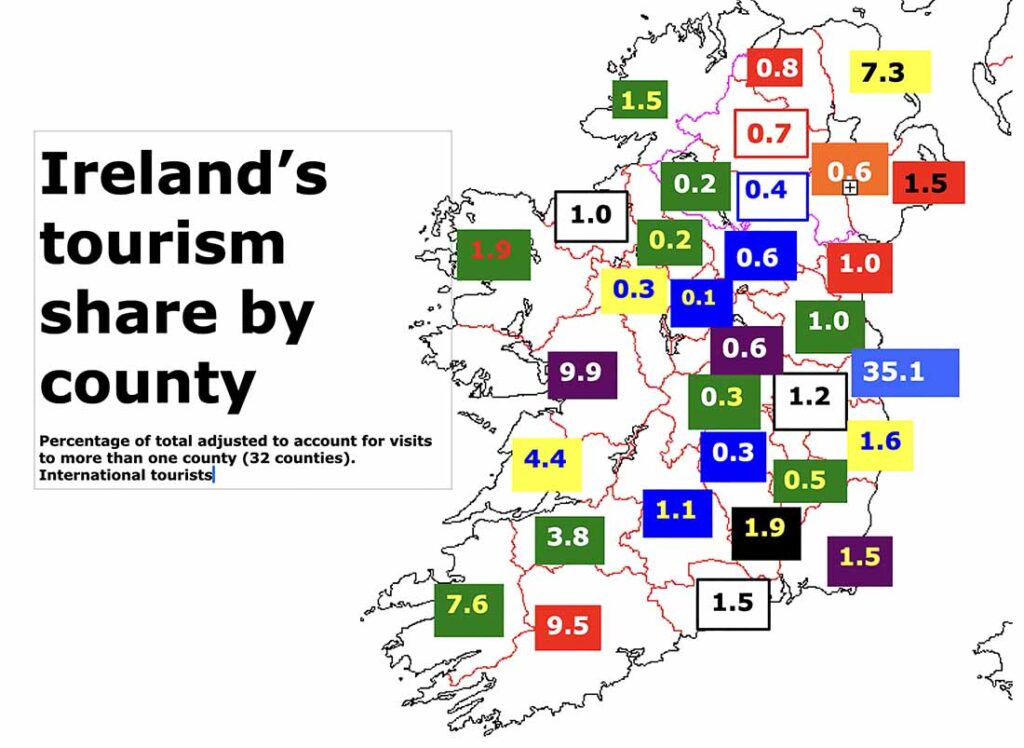
Ireland’s County Carlow combines historic landmarks with serene landscapes, with the Carlow Castle ruins and the nearby Altamont Gardens offering a mix of medieval and botanical appeal. The Barrow Way provides scenic riverside walks, while the Brownshill Dolmen, a prehistoric portal tomb, adds ancient history. Carlow is Ireland’s second smallest county by size (896 square km) and third smallest by population (61,968). Population peaked at 86,228 in 1841 and reached its lowest point, 33,342 in 1961.In terms of hospitality, Carlow is Ireland’s 23rd most visited tourist county with around 68,000 international visitors per year.
Introduction – Adventure – Anthem – Archaeology – Attractions – Awards – Birdwatching – Camping – Castles – Churches – Contact list – Cycling – Dining – Equestrian – Festivals – Fishing – Folklore – Gardens – Golf – Graveyards – Happening – Haunted – Highest – Hiking – History – Holy Wells – Hotels – Hotels top 8 – Hunting & shooting – Instagrammable – Itineraries – Largest town – Luxury – MICE – Movies – Music – Name – New – Novelists – Off the beaten track – Poets – Pubs – Quotes – Random Facts – Restaurant Awards – Sacred Places – Saints – Songs – Spas – Sports – Sunsets – Sustainable – Things to do – Towns – Video – Villages – Walking – Wanderlist – Weddings – Wild swimming – Writers – 1837– 1846 – 1852 – 1909 – 1955 – 1980 –