- Staigue Fort: Castlecove, Co. Kerry, V93 YX50. An Iron Age ringfort, dating to c. 500 BC-400 AD, with massive dry-stone walls up to 5.5m high and 4m thick. Likely a defensive or high-status residence, it reflects advanced engineering. Set in a scenic valley, it’s managed by the Office of Public Works (OPW) and freely accessible, showcasing Kerry’s prehistoric architecture.
- Gallarus Oratory: Dingle Peninsula, near Ballydavid, Co. Kerry, V92 Y026. An early Christian oratory, c. 7th-9th century, built with corbelled stone in a boat-like shape, demonstrating waterproof construction. Likely used by monks for prayer, it’s part of the Dingle Peninsula’s monastic landscape. Managed by the OPW, it’s accessible with a visitor centre, reflecting Kerry’s early Christian heritage.
- Caherdaniel Stone Fort (Cahergall): Caherdaniel, Ring of Kerry, Co. Kerry, V93 YK11. An early medieval ringfort, c. 600-900 AD, with thick stone walls and internal structures, possibly a chieftain’s residence. Nearby Leacanabuaile Fort complements it. Excavations revealed artefacts like iron tools. Managed by the OPW, it’s accessible via public paths, offering insight into Kerry’s early medieval life.
- Leacanabuaile Stone Fort: Near Caherdaniel, Ring of Kerry, Co. Kerry, V93 X2F7. An early medieval ringfort, c. 6th-9th century, with a circular stone wall and souterrains for storage or refuge. Excavations uncovered hearths and jewellery, indicating domestic life. Paired with Cahergall, it’s managed by the OPW and accessible, showcasing Kerry’s fortified settlements.
- Kilmalkedar Ecclesiastical Site: Dingle Peninsula, near Ballydavid, Co. Kerry, V92 A8W7. A 7th-century monastic site, possibly founded by St. Maolcethair, featuring a Romanesque church, ogham stone, sundial, and high cross. A key stop on the pilgrimage route to Mount Brandon, it reflects early Christian scholarship. Managed by the OPW, it’s freely accessible, highlighting Kerry’s monastic tradition.
- Ballinskelligs Priory: Ballinskelligs, Co. Kerry, V23 YX53. A 12th-century Augustinian priory, built by monks from Skellig Michael, with church ruins and a graveyard overlooking the bay. It replaced the remote Skellig monastery due to harsh conditions. Managed by the OPW, it’s accessible, offering a link to Kerry’s maritime monastic history.
- Ardfert Cathedral and Monastic Site: Ardfert, near Tralee, Co. Kerry, V92 F8K2. A 12th-century cathedral and monastic site, founded c. 6th century by St. Brendan. Features include two medieval churches, a round tower fragment, and Romanesque carvings. A diocesan centre until the 17th century, it’s managed by the OPW with a visitor centre, showcasing Kerry’s ecclesiastical heritage.
- Rattoo Round Tower and Church: Ballyduff, near Ballybunion, Co. Kerry, V31 XN22. A 10th-11th century round tower, one of Ireland’s best-preserved, alongside a medieval church with a Sheela-na-gig carving. Part of an early Christian monastery, it served as a bell tower and refuge. A state-care monument, it’s accessible via public paths, reflecting Kerry’s monastic landscape.
- Loher Stone Fort: Waterville, Ring of Kerry, Co. Kerry, V23 KX83. An early medieval ringfort, c. 9th century, with a circular stone wall and souterrains. Likely a defensive homestead, it offers views of Ballinskelligs Bay. Excavations suggest domestic use. Managed by the OPW, it’s accessible, providing insight into Kerry’s coastal fortifications.
- Ballycarbery Castle: Cahersiveen, Ring of Kerry, Co. Kerry, V23 YX62. A 16th-century castle built by the MacCarthy Mór clan, with imposing ruins overlooking the Fertha River. Nearby ringforts suggest earlier occupation. Damaged during the Cromwellian wars, it’s accessible via public paths on private land, reflecting Kerry’s Gaelic and medieval history.
Archaeological sites
Antrim – Armagh – Carlow – Cavan – Clare – Cork – Derry – Donegal – Down – Dublin – Fermanagh – Galway – Kerry – Kildare – Kilkenny – Laois – Leitrim – Limerick – Longford – Louth – Mayo – Meath – Monaghan – Offaly – Roscommon – Sligo – Tipperary – Tyrone – Waterford – Westmeath – Wexford – Wicklow
County Kerry:
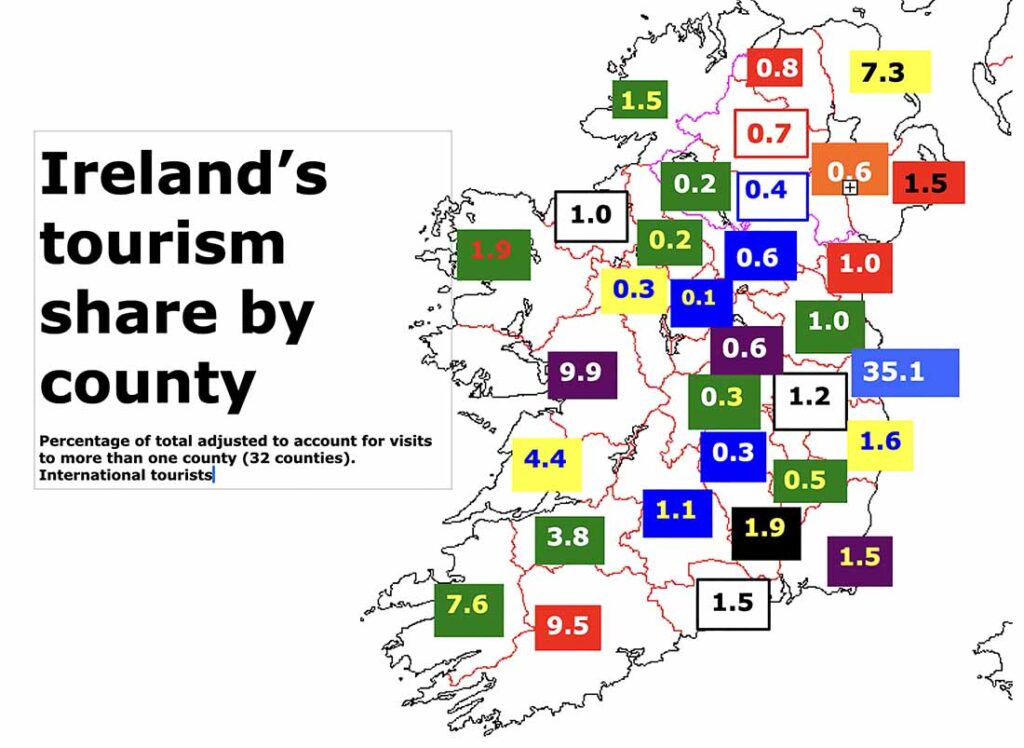
Ireland’s county Kerry is renowned for its dramatic landscapes, with the Ring of Kerry offering scenic drives past lakes and coastal cliffs. Killarney National Park features the serene Lakes of Killarney and historic Muckross House, while Dingle’s coastal trails and dolphin-watching opportunities add natural allure. Accessible by seasonal ferry, the Skellig Islands’ ancient monastic ruins make Kerry a compelling choice for outdoor adventure and history. Kerry is Ireland’s fifth largest county by size (4,701 square km) and 15th largest by population (156,458). Population peaked at 293,880 in 1841 and reached its lowest point, 112,785 in 1966. In terms of hospitality, Kerry is Ireland’s fourth most visited tourist county with around 877,000 international visitors per year.
Introduction – Adventure – Anthem – Archaeology – Attractions – Awards – Birdwatching – Camping – Castles – Churches – Contact list – Cycling – Dining – Equestrian – Festivals – Fishing – Folklore – Gardens – Golf – Graveyards – Happening – Haunted – Highest – Hiking – History – Holy Wells – Hotels – Hotels top 8 – Hunting & shooting – Instagrammable – Itineraries – Largest town – Luxury – MICE – Movies – Music – Name – New – Novelists – Off the beaten track – Poets – Pubs – Quotes – Random Facts – Restaurant Awards – Sacred Places – Saints – Songs – Spas – Sports – Sunsets – Sustainable – Things to do – Towns – Video – Villages – Walking – Wanderlist – Weddings – Wild swimming – Writers – 1837 – 1846 – 1852 – 1909 – 1955 – 1980 –