- John B. Keane (1928-2002) Born in Listowel, Keane was a playwright, novelist, and essayist whose works captured rural Irish life and human struggles. His play The Field (1965) was adapted into a film, and Sive (1959) won the All-Ireland Amateur Drama Festival, cementing his reputation. He co-founded Listowel Writers’ Week, a premier literary festival, and received the Irish PEN Award in 1999. His works often explored emigration and Kerry’s social fabric.
- Brendan Kennelly (1936-2021) Born in Ballylongford, Kennelly was a poet, novelist, and academic whose works include The Crooked Cross (1963), inspired by his Kerry village, and poetry collections like Cromwell (1983). A professor at Trinity College Dublin, he was known for his lyrical and accessible style, often reflecting Kerry’s landscapes and his father’s influence. He was a member of Aosdána and a beloved figure in Irish poetry.
- George Fitzmaurice (1877-1963) Born near Listowel, Fitzmaurice was a playwright whose works, such as The Country Dressmaker (1907) and The Pie-Dish (1908), blended realism and fantasy, often set in rural Kerry. His plays were staged at the Abbey Theatre, and he published early writings in Dublin weeklies. Despite personal struggles, his unique voice contributed to the Irish Literary Revival.
- Bryan MacMahon (1909-1998) Born in Listowel, MacMahon was a playwright, novelist, and short story writer known for works like The Buggy’s Lantern (1961) and the play The Honey Spike (1961). A schoolteacher, his stories often depicted Kerry’s rural life and folklore, earning him acclaim as a “master storyteller.” He also contributed scripts to General Electric Theater and was a member of Aosdána.
- Peig Sayers (1873-1958) Born in Dún Chaoin, Dingle Peninsula, Sayers was a seanchaí (traditional storyteller) whose autobiography Peig and dictated folk tales, including 350 legends and ghost stories, were recorded by the Irish Folklore Commission. Her vivid storytelling preserved Kerry’s Irish oral tradition, making her a cultural icon of the Gaeltacht.
- Maurice Walsh (1879-1964) Born in Ballydonoghue, near Listowel, Walsh was a novelist whose The Quiet Man (1933) inspired the iconic John Ford film. His adventure novels, like The Key Above the Door (1926), often drew on Kerry’s landscapes and romanticized rural life. A customs officer, he wrote 11 novels and numerous short stories, blending humor and drama.
- Thomas MacGreevy (1893-1967) Born in Tarbert, MacGreevy was a poet, critic, and art historian whose modernist poetry, including Poems (1934), reflected his Kerry upbringing and experiences in World War I. As director of the National Gallery of Ireland, he wrote influential art criticism, bridging Irish and European literary traditions.
- Máirín Cregan (1891-1975) Born in Killorglin, Cregan was a children’s writer and playwright whose novel Old John (1936) was published in the U.S. and illustrated by Jack B. Yeats for its Irish edition. Her plays and radio scripts, often set in Kerry, explored Irish folklore and family life. Her husband’s political career connected her to Ireland’s cultural elite.
- Malachi Martin (1921-1999) Born in Ballylongford, Martin was a Jesuit priest, theologian, and writer known for controversial works like Hostage to the Devil (1976) and The Jesuits (1987). His writings on exorcism and Vatican intrigue blended theology and narrative, gaining a wide readership. He later lived in New York, where he died.
- Con Houlihan (1925-2012) Born in Castleisland, Houlihan was a journalist and sports writer whose columns in the Evening Press, Sunday World, and Magill Magazine were celebrated for their lyrical prose and cultural insights. Covering sports like Gaelic football and rugby, his work often reflected Kerry’s rural ethos and his keen observation of Irish life.
Writers
Antrim – Armagh – Carlow – Cavan – Clare – Cork – Derry – Donegal – Down – Dublin – Fermanagh – Galway – Kerry – Kildare – Kilkenny – Laois – Leitrim – Limerick – Longford – Louth – Mayo – Meath – Monaghan – Offaly – Roscommon – Sligo – Tipperary – Tyrone – Waterford – Westmeath – Wexford – Wicklow
County Kerry:
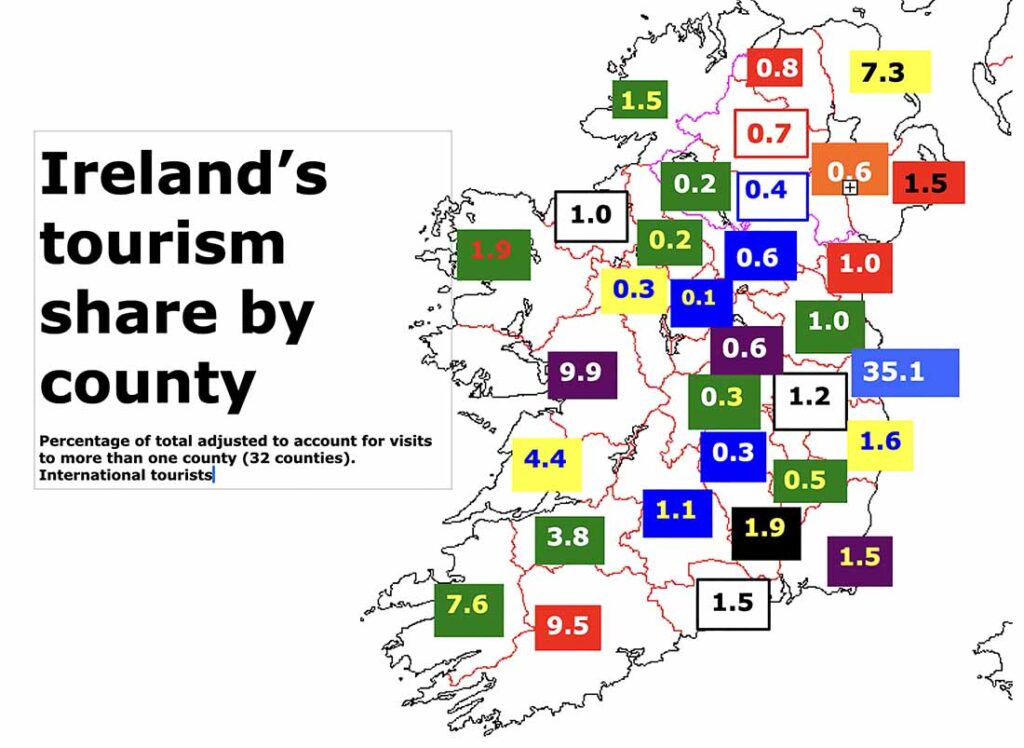
Ireland’s county Kerry is renowned for its dramatic landscapes, with the Ring of Kerry offering scenic drives past lakes and coastal cliffs. Killarney National Park features the serene Lakes of Killarney and historic Muckross House, while Dingle’s coastal trails and dolphin-watching opportunities add natural allure. Accessible by seasonal ferry, the Skellig Islands’ ancient monastic ruins make Kerry a compelling choice for outdoor adventure and history. Kerry is Ireland’s fifth largest county by size (4,701 square km) and 15th largest by population (156,458). Population peaked at 293,880 in 1841 and reached its lowest point, 112,785 in 1966. In terms of hospitality, Kerry is Ireland’s fourth most visited tourist county with around 877,000 international visitors per year.
Introduction – Adventure – Anthem – Archaeology – Attractions – Awards – Birdwatching – Camping – Castles – Churches – Contact list – Cycling – Dining – Equestrian – Festivals – Fishing – Folklore – Gardens – Golf – Graveyards – Happening – Haunted – Highest – Hiking – History – Holy Wells – Hotels – Hotels top 8 – Hunting & shooting – Instagrammable – Itineraries – Largest town – Luxury – MICE – Movies – Music – Name – New – Novelists – Off the beaten track – Poets – Pubs – Quotes – Random Facts – Restaurant Awards – Sacred Places – Saints – Songs – Spas – Sports – Sunsets – Sustainable – Things to do – Towns – Video – Villages – Walking – Wanderlist – Weddings – Wild swimming – Writers – 1837 – 1846 – 1852 – 1909 – 1955 – 1980 –