- John Johnston: Born in Ballycassidy, near Enniskillen, County Fermanagh . (1855-1913): Johnston was a farmer, grocer, and poet known for his Ulster-Scots dialect poetry, published in collections like Poems and Songs (1896). His work captured rural Fermanagh life, blending humor and local color. While not as widely recognized as poets like Seamus Heaney, he was a significant voice in Ulster-Scots literature, reflecting the cultural identity of Fermanagh’s farming communities.
- Shan F. Bullock: Born in Crom, near Newtownbutler, County Fermanagh . (1865-1935): Primarily a novelist, Bullock also wrote poetry that evoked the pastoral landscapes of Fermanagh, as seen in works like By Thrasna River. His poetry, though less prominent than his novels, reflected the rural life and natural beauty of County Fermanagh, particularly around Lough Erne. He later moved to England but remained connected to his Fermanagh roots.
- John Kelly: Born in Enniskillen, a poet, novelist, and broadcaster.
- Francis Harvey: Born in Enniskillen, an award-winning poet and playwright.
- Maria McManus: Born in Enniskillen, a poet and playwright.
- Peter Magennis (1817–1910): Born in Fermanagh, known as the “bard of Knockmore”.
- John Macken (1784/5–1823): Born in Brookeborough, a poet and newspaper editor.
- Matt Duggan: Born in Maguiresbridge, a poet and writer.
- Frank Ormsby: Grew up in rural Enniskillen, recognized as a poet and editor.
- Eochaidh Ó hEódhasa (1560–1612): Hereditary court poet (ollamh) to the Maguire chieftains.
- Cú Chonnacht Ó Fialáin: 15th-century Gaelic poet
Poets
Antrim – Armagh – Carlow – Cavan – Clare – Cork – Derry – Donegal – Down – Dublin – Fermanagh – Galway – Kerry – Kildare – Kilkenny – Laois – Leitrim – Limerick – Longford – Louth – Mayo – Meath – Monaghan – Offaly – Roscommon – Sligo – Tipperary – Tyrone – Waterford – Westmeath – Wexford – Wicklow
County Fermanagh:
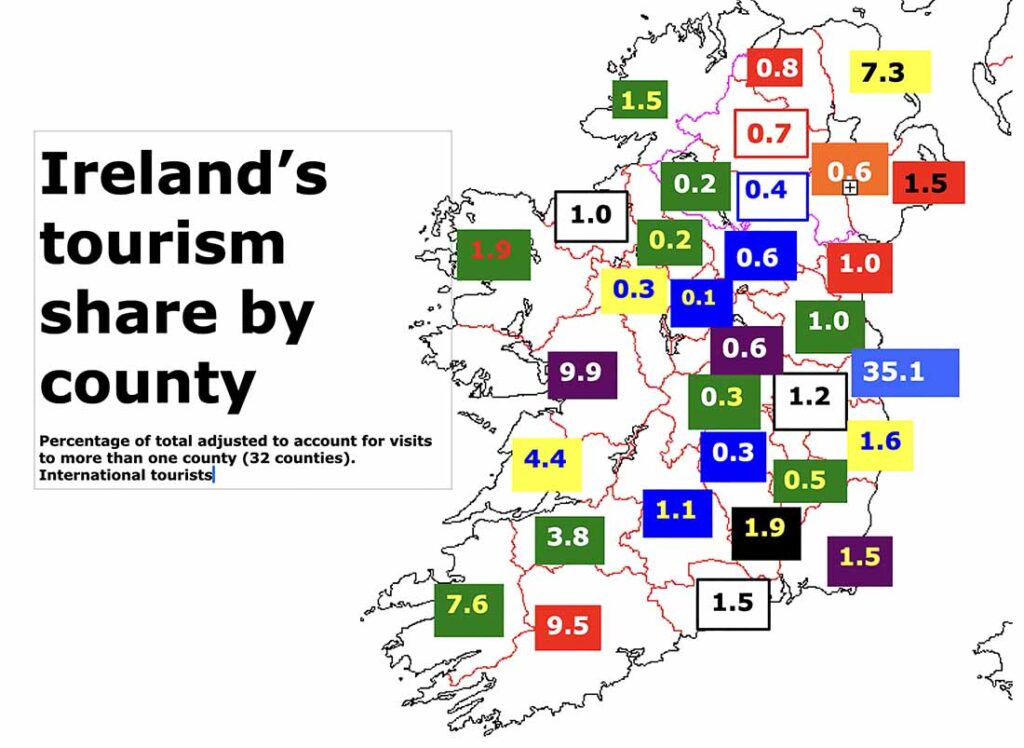
Ireland’s county Fermanagh is a county of lakes and historic charm, with Lough Erne’s waterways offering boating and fishing amidst serene islands. Enniskillen Castle and its museums explore local history, while the Marble Arch Caves, part of a UNESCO Geopark, showcase stunning underground caverns. Other attractions include the historic Florence Court estate and its gardens. Fermanagh is Ireland’s 20th largest county by size (1,876 square km) and fourth smallest by population (63,585). Population peaked at 156,481 in 1841 and reached its lowest point, 49,886 in 1966. In terms of hospitality, Fermanagh is Ireland’s 28th most visited tourist county with around 43,000 international visitors per year.
Introduction – Adventure – Anthem – Archaeology – Attractions – Awards – Birdwatching – Camping – Castles – Churches – Contact list – Cycling – Dining – Equestrian – Festivals – Fishing – Folklore – Gardens – Golf – Graveyards – Happening – Haunted – Highest – Hiking – History – Holy Wells – Hotels – Hotels top 8 – Hunting & shooting – Instagrammable – Itineraries – Largest town – Luxury – MICE – Movies – Music – Name – New – Novelists – Off the beaten track – Poets – Pubs – Quotes – Random Facts – Restaurant Awards – Sacred Places – Saints – Songs – Spas – Sports – Sunsets – Sustainable – Things to do – Towns – Video – Villages – Walking – Wanderlist – Weddings – Wild swimming – Writers – 1837 – 1846 – 1852 – 1909 – 1955 – 1980 –