- Aindrias Mac Craith (Andrew MacGrath, “An Mangaire Súgach”): Lived in Croom, County Limerick . (c.1710–c.1790): A schoolteacher and Irish-language poet, Mac Craith was a prominent Maigue Poet known for his sharp, humorous limericks and aisling poetry. His poetic retorts to Seán Ó Tuama, critiquing the quality of his ale and poetry, are among the earliest examples of the limerick form. His work blended satire with themes of love and wine, preserving Limerick’s Gaelic poetic tradition.
- Aubrey Thomas de Vere (1814–1902): A poet and author born at Curragh Chase.
- Dáibhí Ó Bruadair (David O’Bruadair): Lived in Springfield Castle, near Dromcollogher, County Limerick . (c.1625-1698): One of Ireland’s greatest Irish-language poets, Ó Bruadair was a professional bard whose work chronicled the decline of Gaelic society during the 17th century. His technically sophisticated poetry, including elegies and satires, was composed in the Dán Díreach style. He lived in various parts of Limerick, including Springfield Castle, where he held court as a Gaelic bard.
- Desmond O’Grady: Born in Limerick City, County Limerick . (1935–2014): A prolific poet and translator, O’Grady published over 20 collections, including The Dark Edge of Europe (1961) and Trawling Tradition (1994). His work blended classical influences with Irish themes, often reflecting his Limerick roots. He lived abroad in Italy and Greece but maintained a strong connection to Limerick’s literary scene.
- Edward O’Dwyer: A contemporary poet, fiction writer, and 2021 Poet Laureate for Adare.
- Filí na Máighe (The Poets of the Maigue): An 18th-century group including Séan Ó Tuama and Aindrias Mac Craith.
- Gearóid Iarla (4th Earl of Desmond): An early poet, also associated with the area.
- John Liddy: Born in Limerick City, County Limerick . (1954-): A poet and co-founder of The Limerick Writers’ Centre, Liddy’s collections, such as The Angling Cot (1991), explore themes of place, memory, and Irish identity. His work is deeply tied to Limerick City’s urban and cultural landscapes. He has lived in Spain and contributed to the international promotion of Limerick’s literary heritage.
- Maighread Medbh: A poet born in Limerick.
- Michael Hartnett: Born in Newcastle West, County Limerick; lived in Glendarragh, Templeglantine . (1941-1999): A bilingual poet, Hartnett wrote in both English and Irish, earning acclaim for collections like Inchicore Haiku (1985) and A Necklace of Wrens (1987). His work, praised by Seamus Heaney, explored rural Limerick life, Irish identity, and personal themes. The Éigse Michael Hartnett festival in Newcastle West celebrates his legacy. He was a leading voice in 20th-century Irish poetry.
- Michael Hogan (1828–1899): Known as “The Bard of Thomond,” famous for his Lays and Legends of Thomond.
- Seán Ó Tuama: Born and lived in Croom, County Limerick . (1709-1775): A key figure among the Maigue Poets, Ó Tuama was a publican and Irish-language poet whose tavern in Croom was a hub for poetic gatherings. His limericks and verses, often witty and satirical, contributed to the development of the limerick form. His exchanges with poet Aindrias Mac Craith, such as a limerick about unpaid alehouse debts, are legendary. His work reflects the vibrant Gaelic literary culture of 18th-century Limerick.
- Tim Cunningham: A poet born in Limerick, published by Revival Press.
Poets
Antrim – Armagh – Carlow – Cavan – Clare – Cork – Derry – Donegal – Down – Dublin – Fermanagh – Galway – Kerry – Kildare – Kilkenny – Laois – Leitrim – Limerick – Longford – Louth – Mayo – Meath – Monaghan – Offaly – Roscommon – Sligo – Tipperary – Tyrone – Waterford – Westmeath – Wexford – Wicklow
County Limerick:
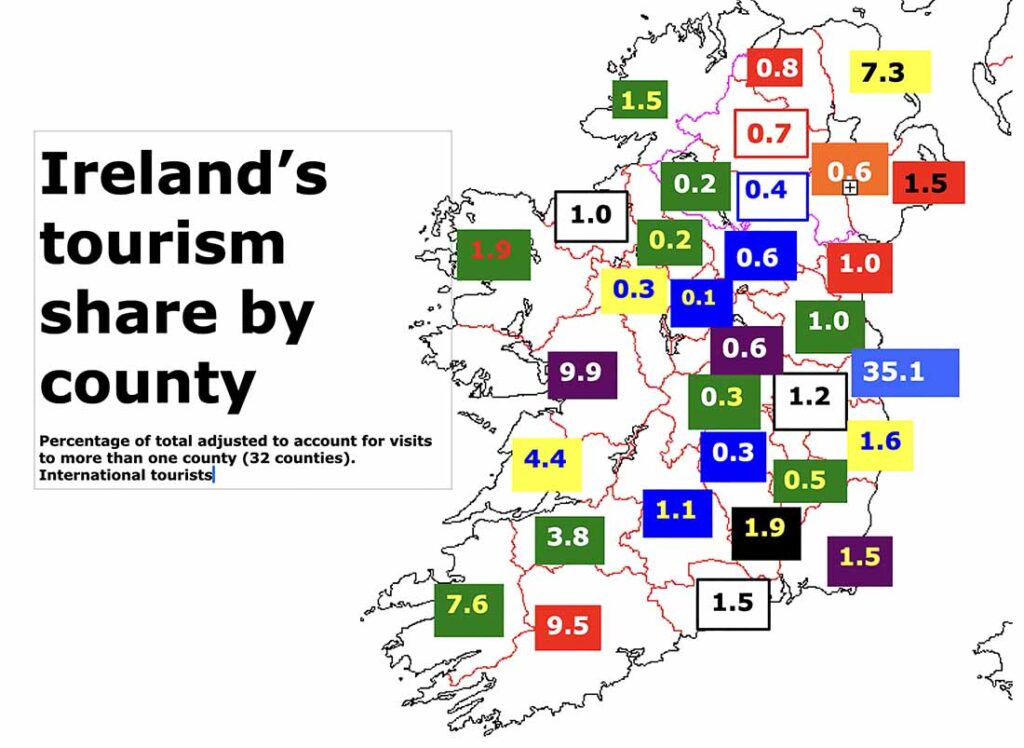
Ireland’s county Limerick combines historic landmarks with riverside charm, with Limerick City’s King John’s Castle offering insights into medieval history along the Shannon. The Hunt Museum showcases an eclectic art collection, while Adare’s thatched cottages and historic manor add picturesque appeal. Other attractions include the nearby Ballyhoura Mountains’ cycling trails. Limerick is Ireland’s tenth largest county by size (2,686 sq km), and ninth largest by population (209,536). Population peaked at 330,029 in 1841 and reached its lowest point, 133,339 in 1971. In terms of hospitality, Limerick is Ireland’s seventh most visited tourist county with around 420,000 international visitors per year.
Introduction – Adventure – Anthem – Archaeology – Attractions – Awards – Birdwatching – Camping – Castles – Churches – Contact list – Cycling – Dining – Equestrian – Festivals – Fishing – Folklore – Gardens – Golf – Graveyards – Happening – Haunted – Highest – Hiking – History – Holy Wells – Hotels – Hotels top 8 – Hunting & shooting – Instagrammable – Itineraries – Largest town – Luxury – MICE – Movies – Music – Name – New – Novelists – Off the beaten track – Poets – Pubs – Quotes – Random Facts – Restaurant Awards – Sacred Places – Saints – Songs – Spas – Sports – Sunsets – Sustainable – Things to do – Towns – Video – Villages – Walking – Wanderlist – Weddings – Wild swimming – Writers – 1837 – 1846 – 1852 – 1909 – 1955 – 1980 –