- Enniskillen Castle: Built around 1428 by Hugh “the Hospitable” Maguire, Enniskillen Castle is a 15th-century fortress on the River Erne in the heart of Enniskillen town. A key Gaelic stronghold, it later served as a Plantation-era garrison and military barracks in the 17th century. Today, it’s a well-preserved castle hosting two museums: the Fermanagh County Museum and the Inniskillings Museum, showcasing local and military history. Its strategic location made it the “Gateway to Ulster.” Open Monday–Friday (9:30 AM–5 PM) and Saturday (11 AM–5 PM, check enniskillencastle.co.uk for updates), visitors can explore the castle’s keep, barracks, and exhibitions for £5 adults, £3.50 children/seniors, £14 family. Guided tours (included in admission) cover Maguire history, the Plantation, and military artifacts, including uniforms and weapons. Expect a 1–2 hour visit with interactive displays, family-friendly events (e.g., craft fairs, lectures), and a “Pilgrim Pass” for access to Devenish Island’s monastic site. Amenities include parking, toilets, and a gift shop. The castle is wheelchair-accessible on the ground floor. Its central location makes it ideal for combining with Enniskillen’s shops and cafes. A top attraction for its accessibility, museums, and insight into Fermanagh’s history.
- Castle Coole: Built in the 1790s for the Earls of Belmore, Castle Coole near Enniskillen is one of Ireland’s finest neo-classical mansions, designed by James Wyatt. Not a medieval fortress but a grand 18th-century estate, it features opulent interiors and a 1,500-acre parkland setting near Upper Lough Erne. Managed by the National Trust, it reflects the lavish lifestyle of the Anglo-Irish aristocracy. Open March–October (house tours 11 AM–5 PM, grounds 10 AM–6 PM; winter grounds only, check nationaltrust.org.uk), visitors can tour the mansion’s state rooms, including the saloon and servants’ quarters, for £10 adults, £5 children, free for National Trust members. Guided tours (45 minutes) highlight Regency furnishings and Belmore family history. The 700-acre grounds offer lake walks, a walled garden, and the Tallow House Tea-room (seasonal menu, £3–£10). Expect a 2–3 hour visit with family-friendly trails, picnic areas, and events (e.g., seasonal festivals). Amenities include parking, accessible toilets, a wheelchair, and a mobility scooter (book at 028 6632 2690). A buggy and video tour aid accessibility. The serene lakeland setting is perfect for nature lovers. Ideal for those seeking Georgian elegance and extensive grounds, less focused on medieval history.
- Crom Castle (Old Crom Castle and New Crom Castle): Located on Upper Lough Erne, Crom Castle includes the ruins of the 17th-century Old Crom Castle, destroyed by fire in 1764, and the 19th-century New Crom Castle, built in 1840 by Edward Blore for the Crichton family, Earls of Erne. The estate, a National Trust property, spans 1,900 acres and is a key conservation area with ancient yew trees and wildlife. The old castle’s ruins are evocative, while the new castle is a private residence. Open year-round (grounds 10 AM–6 PM, check nationaltrust.org.uk), visitors can explore the Old Crom Castle ruins, lakeside trails, and gardens for £6 adults, £3 children. The ruins include a bawn and remnants of the original Plantation-era structure. The estate offers holiday cottages, glamping pods, and a campsite, with activities like boating and wildlife spotting (e.g., “swimming cows” on Inisherk Island). Expect a 1–2 hour visit, with a visitor center, parking, and toilets. The new castle is private but visible from the grounds. Accessibility includes level paths for mobility scooters. Combine with nearby Devenish Island for a historical day trip. Perfect for outdoor enthusiasts and those seeking a tranquil, nature-rich experience.
- Belle Isle Castle: Belle Isle Castle, near Lisbellaw on Lower Lough Erne, is a 17th-century estate built by Sir Paul Gore, later expanded into a grand mansion. Set on a 400-acre private estate, it’s a Special Area of Conservation and a luxury accommodation venue, not a medieval fortress. Its history ties to the Plantation of Ulster, and it’s known for its romantic setting and conservation efforts. Not open for regular public tours, Belle Isle is accessible via self-catering stays (castle, cottages, or courtyard apartments, £150–£500/night, check belle-isle.com). Visitors staying on-site can explore the estate’s gardens, lake views, and walking trails, with activities like fishing or kayaking. Expect a private, luxurious experience with modern amenities (WiFi, wood-burning stoves). The estate hosts weddings and events, with a homely atmosphere praised in reviews. Amenities include parking and pet-friendly options. A 1–2 day stay suits those seeking exclusivity, with nearby attractions like Enniskillen or Marble Arch Caves. Non-guests may arrange event-based visits. Best for those wanting a high-end castle stay, not a traditional tour.
- Tully Castle: Built in 1612 by Sir John Hume on Tully Point near Lower Lough Erne, Tully Castle is a 17th-century Plantation-era fortified house with a bawn. Attacked and burned in 1641 by Rory Maguire, it remains a ruin, offering a glimpse into Ulster’s turbulent Plantation history. It’s a National Monument managed by the NI Environment Agency. Open year-round (dawn–dusk, free entry), visitors can explore the castle’s ruins, including the bawn, corner towers, and remnants of the house, set against Lough Erne’s shores. Information boards detail its history. Expect a 30–60 minute visit, ideal for history buffs and photographers. No facilities like restrooms or a cafe are on-site, but parking is available. The nearby Tully Wood trail offers scenic walks, and two ancient yew trees add charm. The site is remote, so combine with Castle Archdale or Crom for a fuller day. Suits those seeking a quiet, historical ruin in a lakeside setting.
Fermanagh has minor castle ruins like Aghalane Castle (17th-century, heavily overgrown, no public access) and Castle Caldwell (1612, ruins in a forest park with lake views, free to view but minimal remains). These are less prominent and lack visitor amenities. Monea Castle, often listed, is sometimes confused with Monaghan but is in Fermanagh; it’s a 17th-century Plantation ruin, free to visit, with a bawn and towers, but lacks facilities and is less accessible.
Fermanagh’s castles lakeland settings and historical significance make them compelling. Enniskillen and Castle Coole are the most visitor-friendly, while Crom and Tully offer rugged charm, and Belle Isle caters to luxury seekers.
Castles
Antrim – Armagh – Carlow – Cavan – Clare – Cork – Derry – Donegal – Down – Dublin – Fermanagh – Galway – Kerry – Kildare – Kilkenny – Laois – Leitrim – Limerick – Longford – Louth – Mayo – Meath – Monaghan – Offaly – Roscommon – Sligo – Tipperary – Tyrone – Waterford – Westmeath – Wexford – Wicklow
County Fermanagh:
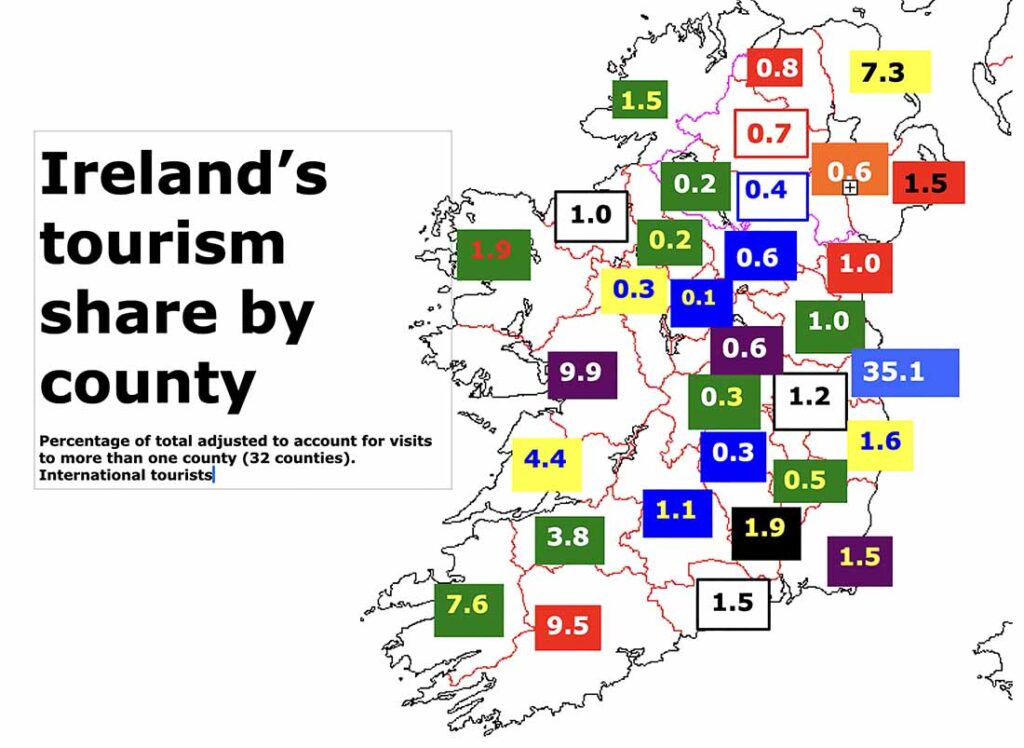
Ireland’s county Fermanagh is a county of lakes and historic charm, with Lough Erne’s waterways offering boating and fishing amidst serene islands. Enniskillen Castle and its museums explore local history, while the Marble Arch Caves, part of a UNESCO Geopark, showcase stunning underground caverns. Other attractions include the historic Florence Court estate and its gardens. Fermanagh is Ireland’s 20th largest county by size (1,876 square km) and fourth smallest by population (63,585). Population peaked at 156,481 in 1841 and reached its lowest point, 49,886 in 1966. In terms of hospitality, Fermanagh is Ireland’s 28th most visited tourist county with around 43,000 international visitors per year.
Introduction – Adventure – Anthem – Archaeology – Attractions – Awards – Birdwatching – Camping – Castles – Churches – Contact list – Cycling – Dining – Equestrian – Festivals – Fishing – Folklore – Gardens – Golf – Graveyards – Happening – Haunted – Highest – Hiking – History – Holy Wells – Hotels – Hotels top 8 – Hunting & shooting – Instagrammable – Itineraries – Largest town – Luxury – MICE – Movies – Music – Name – New – Novelists – Off the beaten track – Poets – Pubs – Quotes – Random Facts – Restaurant Awards – Sacred Places – Saints – Songs – Spas – Sports – Sunsets – Sustainable – Things to do – Towns – Video – Villages – Walking – Wanderlist – Weddings – Wild swimming – Writers – 1837 – 1846 – 1852 – 1909 – 1955 – 1980 –