- Aindrias Mac Cruitín (c. 1670–1738): A poet and scribe born at Moyglass, near Milltown Malbay.
- Aodh Buí Mac Crúitín (Hugh MacCurtin): Born in Kilmacreehy, near Liscannor. (c.1680-1755): Aodh Buí Mac Crúitín was a Gaelic poet and scholar of the bardic tradition, known for his elegies and historical poems. He published A Brief Discourse in Vindication of the Antiquity of Ireland (1717) in English, showing his bilingual proficiency. His poetry reflects the transition from classical bardic forms to more modern meters.
- Brian Merriman (Brian Mac Giolla Meidhre): Born in Ennistymon, County Clare; lived in Feakle, County Clare . (c.1747-1805): Brian Merriman is best known for his Irish-language poem Cúirt an Mheán Oíche (The Midnight Court), a satirical and bawdy masterpiece that critiques social and sexual mores. Written in Feakle, it remains a cornerstone of Irish literature. Merriman was a hedge-school teacher and farmer, blending classical and folk influences in his work.
- Donnchadh Wulf (Denis Woulfe): A bilingual poet and schoolmaster born in Sixmilebridge.
- Edna O’Brien: Born in Tuamgraney, County Clare . (1930–2024): Primarily known as a novelist, Edna O’Brien also wrote poetry and short stories. Her debut novel The Country Girls (1960) was banned in Ireland for its frank depiction of female sexuality, but her lyrical prose often carried a poetic quality. Her work reflects rural Clare life and challenges Catholic conservatism.
- Eugene O’Curry (Eoghan Ó Comhraidhe) (1794–1862): A noted Irish scholar and poet born in Doonaha.
- Fionnghuala Ní Bhriain (Inghean Dhomhnaill Uí Bhriain): Lived in Burren, County Clare . (c.1557-1657): A member of the O’Brien dynasty, Fionnghuala wrote a lament for her husband, Uaithne Ó Lochlainn, Lord of Burren. Her sole surviving poem is a significant example of female Gaelic poetry from the 16th-17th century, reflecting personal grief and dynastic pride.
- Frances Marcella O’Brien (1840–1883): A poet and novelist born near Ennis.
- Henry Blake (Aonraoí de Bláca): Lived in Kilbaha, County Clare . (c.1840–c.1910, exact dates uncertain): Known as the “Blind Poet of Kilbaha,” Henry Blake was a seanchaí (storyteller) and poet, celebrated for his Irish-language oral poetry and storytelling. Despite blindness, he was a prominent cultural figure in Kilbaha, also known for wood carvings and dancing. His work preserved local folklore and traditions.
- Malachy Curry (Maoileachlainn Ó Comhraidhe): A poet and scholar born in Doonaha.
- Mary O’Donoghue (b. 1975): A poet, translator, and novelist who grew up in County Clare.
- Micheál Ó Mongáin (Michael Mangan): A scribe and poet from Carrigaholt.
- Niamh Twomey: A nature poet and editor based in East Clare.
- Peadar Ó Conaill (Peter O’Connell) (1755–1826): A scholar and poet born at Carne or Money Point, near Kilrush.
- Stephen Joseph Meany (1822–1888): A nationalist, journalist, and poet born at Newhall, near Ennis.
- Thomas Dermody (1775–1802): A poet born in Ennis, often described as a precocious genius.
- Tomás Ó hAllurain (fl. 1815): Known as “An Saor Mór,” a poet who lived near Miltown Malbay.
Poets
Antrim – Armagh – Carlow – Cavan – Clare – Cork – Derry – Donegal – Down – Dublin – Fermanagh – Galway – Kerry – Kildare – Kilkenny – Laois – Leitrim – Limerick – Longford – Louth – Mayo – Meath – Monaghan – Offaly – Roscommon – Sligo – Tipperary – Tyrone – Waterford – Westmeath – Wexford – Wicklow
County Clare:
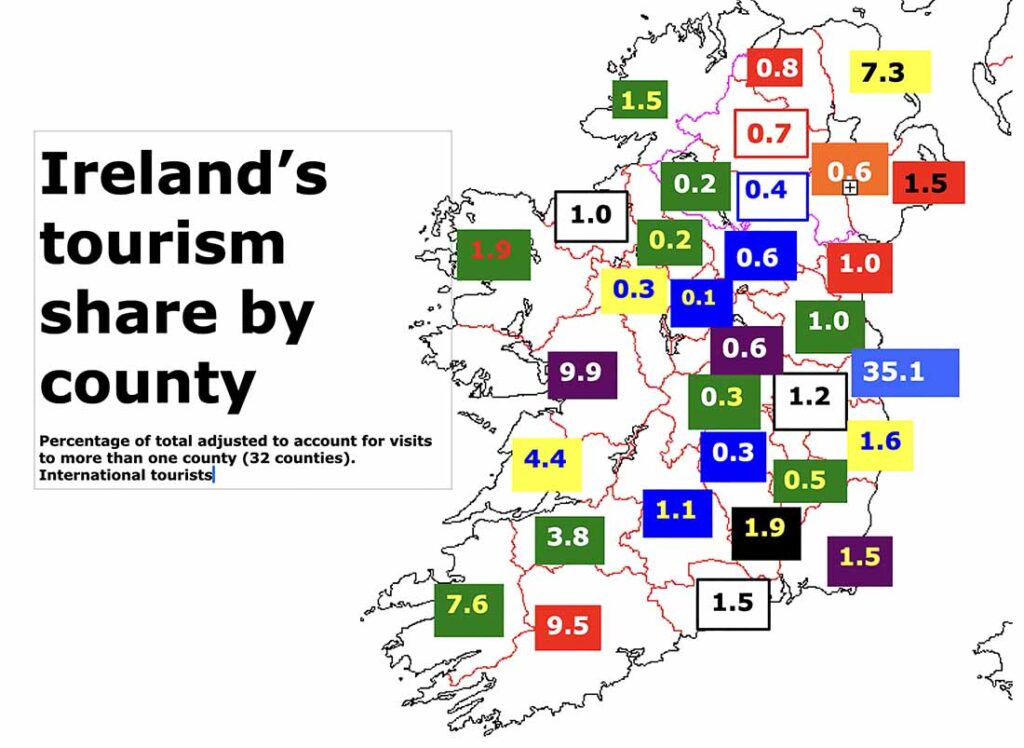
Ireland’s county Clare is renowned for its dramatic cliffs and traditional heritage, with the Cliffs of Moher offering breathtaking views over the Atlantic. The Burren’s unique limestone landscape provides hiking and rare flora, while Bunratty Castle offers medieval history with its restored interiors. Check out the traditional music scene in Doolin and the county’s coastal beaches. Clare is Ireland’s eighth largest county by size (3,188 square km) and 19th largest by population (127,938). Population peaked at 286,394 in 1841 and reached its lowest point, 73,597 in 1966. In terms of hospitality, Clare is Ireland’s sixth most visited tourist county with around 485,000 international visitors per year.
Introduction – Adventure – Anthem – Archaeology – Attractions – Awards – Birdwatching – Camping – Castles – Churches – Contact list – Cycling – Dining – Equestrian – Festivals – Fishing – Folklore – Gardens – Golf – Graveyards – Happening – Haunted – Highest – Hiking – History – Holy Wells – Hotels – Hotels top 8 – Hunting & shooting – Instagrammable – Itineraries – Largest town – Luxury – MICE – Movies – Music – New – Name – Novelists – Off the beaten track – Poets – Pubs – Quotes – Random Facts – Restaurant Awards – Sacred Places – Saints –Songs – Spas – Sports – Sunsets – Sustainable – Things to do – Towns – Video – Villages – Walking – Wanderlist – Weddings – Wild swimming – Writers – 1837– 1846 – 1852 – 1909 – 1955 – 1980 –