- Sliabh na mBan (Slievenamon): A patriotic anthem celebrating Slievenamon, Tipperary’s iconic mountain, originally titled The Maid of Slievenamon. It symbolizes love for Tipperary and is often sung as the county’s unofficial anthem, especially at GAA hurling and football matches. Written by Charles J. Kickham, Tipperary native and Fenian leader (1828–1882).
- The Bansha Peeler (Peeler and the Goat): A humorous folk song about a surreal encounter between a “Peeler” (policeman named after Sir Robert Peel, MP for Cashel) and a goat in Bansha, Tipperary. It satirizes the early Irish police force and reflects local wit. Written by Darby Ryan, Tipperary poet (c. 1800s).
- Cashel My Hometown: A sentimental ballad expressing love for Cashel, Tipperary’s “City of the Kings,” known for the Rock of Cashel. It evokes nostalgia and pride in the town’s history and community. Written by Associated with Denis Heffernan, former barman at Cashel Palace Hotel.
- Any Tipperary Town: A nostalgic song celebrating Tipperary’s towns (Nenagh, Cahir, Cashel, Clonmel, Templemore) and landmarks (Galtee Mountains, Silvermines, Shannon). It captures the emigrant’s longing for home and county pride. Written by Pat Ely, credits Johnny McCauley; popularised by Daniel O’Donnell.
- The Glen of Aherlow (Patrick Sheehan): A historical ballad about Patrick Sheehan, a Tipperary soldier from the Glen of Aherlow, blinded at the Siege of Sevastopol (1855) and later jailed for begging. It highlights social injustice and local hardship. Written by Charles J. Kickham, Tipperary native.
- Éamonn an Chnoic: A resistance ballad about Éamonn Ó Riain, a Tipperary aristocrat (1670–1724) turned rapparee (outlaw), who fought against oppression. It celebrates resistance and the county’s defiant spirit. Traditional, no specific author; part of Tipperary’s oral tradition.
- The Hills of Killenaule: A nostalgic song celebrating Killenaule, Tipperary, focusing on its scenic hills and community pride. It evokes memories of rural life and local identity. Written by Music by Liam O’Donnell, lyrics by Davy Cormack, both from Killenaule.
- Goodbye Mick (Leaving Tipperary): An emigration song about leaving Tipperary, capturing the pain of departure and nostalgia for the county’s towns and landscapes. Traditional, no specific author; recorded by P.J. Murrihy and Ryan’s Fancy.
- Galtee Mountain Boy: A resistance anthem about a Tipperary resistance leader fighting in the Irish War of Independence, set in the Galtee Mountains and based on Patrick Davern. It celebrates bravery and the county’s revolutionary history. Traditional, no specific author; associated with Tipperary’s resistance tradition.
- Seán Treacy: A ballad commemorating Seán Treacy, leader of the Third Tipperary Brigade, IRA, killed in Dublin in 1920. It honours his sacrifice and Tipperary’s role in the fight for independence. Traditional, no specific author; part of Tipperary’s resistance song tradition.
- Long way to Tipperary: Included here because sometimes people mistakenly believe it to be a song in the Irish tradition. It was written by Jack Judge, a third generation Mayoman who made a lot of money in England out of songs humiliating and ridiculing Ireland and the Irish (“Hurray for Paddy Maloney’s aeroplane:”) to cash in on the near-hysterical Hibernophobia that engulfed England at the time, it is a World War I marching song where the soldiers nostalgically reference landmarks in London, which included the Tipperary district of Soho (also giving its name to a bar in Fleet Street), where, at the time, women of negotiable virtue could be secured for the plesure of a young squaddie.
Songs
Antrim – Armagh – Carlow – Cavan – Clare – Cork – Derry – Donegal – Down – Dublin – Fermanagh – Galway – Kerry – Kildare – Kilkenny – Laois – Leitrim – Limerick – Longford – Louth – Mayo – Meath – Monaghan – Offaly – Roscommon – Sligo – Tipperary – Tyrone – Waterford – Westmeath – Wexford – Wicklow
County Anthem
Antrim – Armagh – Carlow – Cavan – Clare – Cork – Derry – Donegal – Down – Dublin – Fermanagh – Galway – Kerry – Kildare – Kilkenny – Laois – Leitrim – Limerick – Longford – Louth – Mayo – Meath – Monaghan – Offaly – Roscommon – Sligo – Tipperary – Tyrone – Waterford – Westmeath – Wexford – Wicklow
County Tipperary:
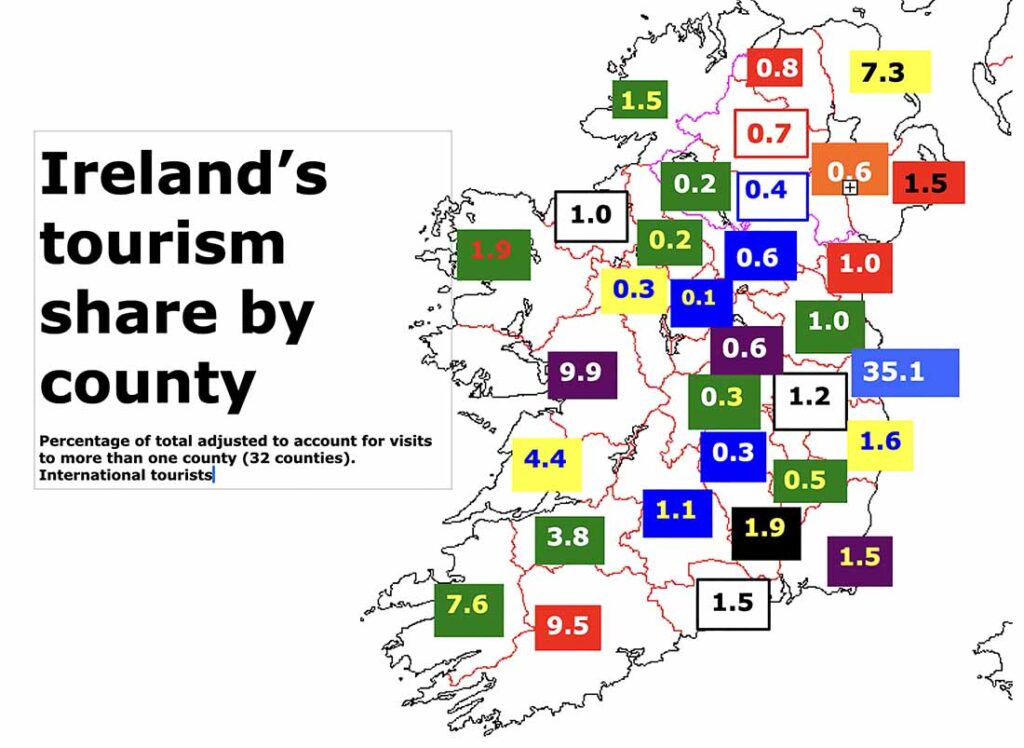
Ireland’s county Tipperary offers a mix of historic landmarks and lush countryside, with the Rock of Cashel’s medieval fortress and cathedral providing a stunning hilltop vista. Cahir Castle, one of Ireland’s best-preserved castles, offers historical insights, while the Glen of Aherlow’s walking trails showcase scenic valleys. Other attractions include the historic town of Clonmel and its markets. Tipperary is Ireland’s sixth largest county by size (4,254 square km) and 12th largest by population (167,895). Population peaked at 435,553 in 1841 and reached its lowest point, 122,812 in 1966. In terms of hospitality, Tipperary is Ireland’s 14th most visited tourist county with around 168,000 international visitors per year.
Introduction – Adventure] – Anthem – Archaeology – Attractions – Awards – Birdwatching – Camping – Castles – Churches – Contact list – Cycling – Dining – Equestrian – Festivals – Fishing – Folklore – Gardens – Golf – Graveyards – Happening – Haunted – Highest – Hiking – History – Holy Wells – Hotels – Hotels top 8 – Hunting & shooting – Instagrammable – Itineraries – Largest town – Luxury – MICE – Movies – Music – Name – New – Novelists – Off the beaten track – Poets – Pubs – Quotes – Random Facts – Restaurant Awards – Sacred Places – Saints – Songs – Spas – Sports – Sunsets – Sustainable – Things to do – Towns – Video – Villages – Walking – Wanderlist – Weddings – Wild swimming – Writers – 1837 – 1846– 1852 – 1909 – 1955 – 1980 –