The highest point in County Tipperary is Galtymore, standing at 917.9 meters (3,011 feet). Galtymore is located in the Galty Mountains (or Galtee Mountains), straddling the border of County Tipperary and County Limerick, near the village of Kilbehenny and the Glen of Aherlow. It lies within Ireland’s Hidden Heartlands and Munster Vales, a region known for its rolling hills and lush valleys.
- Elevation: At 917.9 meters, Galtymore is the highest peak in Tipperary and the Galty Mountains, as well as the 14th highest in Ireland, offering a prominent and challenging climb.
- Terrain: The mountain features grassy slopes, rocky ridges, and boggy patches, with a broad summit plateau marked by a white cross and a trig pillar. The terrain includes steep ascents and exposed ridges, with stunning corries like Lough Curra and Lough Dihneen.
Starting Point and Access:
- Driving Route: The most common trailhead is at King’s Yard (also called Clydagh Valley car park), near Kilbehenny, accessible via the R664 from Mitchelstown (15 minutes, 10 km) or the N8 from Cahir (20 minutes, ~15 km). The car park is small but well-known, with space for vehicles. From Tipperary town, the drive takes about 30 minutes (25 km), and from Limerick city, it’s about 45 minutes (~40 km). The route offers scenic views of the Glen of Aherlow.
- Alternative Access: Another approach is from the Black Road (near Lisvarrinane), a forest track on the northern side, often used for the Galty Crossing or loops including Galtybeg (799 meters). A less common start is from Anglesboro, following paths through the southern slopes.
- Public Transport: Public transport is limited. Mitchelstown or Cahir are served by buses from Dublin, Cork, or Limerick (e.g., Bus Éireann 245 or 55), but reaching the trailhead requires a car or taxi. Guided hikes, such as those offered by Galtee Walking Club or Ireland Walk Hike Bike, include transport from nearby towns like Tipperary or Mitchelstown.
King’s Yard Route (Clydagh Valley):
- Distance: Approximately 10–12 km round trip.
- Duration: 4–6 hours, depending on pace and conditions.
- Description: This is the most popular route, starting at King’s Yard. The trail follows a clear path through the Clydagh Valley, passing farmland and forest before ascending steeply up a grassy ridge to Lough Curra. From the lough, hikers climb a rocky slope to the summit, marked by a white cross and trig pillar. The descent retraces the path, with care needed on steep, slippery sections.
- Difficulty: Strenuous, suitable for experienced hikers with good fitness. The steep ascent and rocky terrain require sure footing, especially in wet conditions.
Black Road Route:
- Distance: 8–10 km round trip.
- Duration: 4–5 hours.
- Description: Starting at the Black Road car park, this route ascends via the northern slopes, following a forest track before climbing open moorland to the summit ridge. It’s slightly shorter but involves a steep climb to Lough Dihneen. The route can be extended to include Galtybeg for a loop.
- Difficulty: Strenuous, best for hikers comfortable with steep inclines and navigation.
Galty Crossing (Full Ridge Walk):
- Distance: 12–15 km one way (requires transport arrangements).
- Duration: 6–8 hours.
- Description: This challenging route crosses the entire Galty ridge, starting at King’s Yard or Black Road and ending at Anglesboro or vice versa. It includes Galtymore, Galtybeg, and other peaks like Greenane (802 meters), with stunning views of corries and valleys.
- Difficulty: Very strenuous, requiring advanced navigation, stamina, and arrangements for a return shuttle.
Navigation Tips:
- Use an Ordnance Survey map (Discovery Series Sheet 74) or apps like HiiKER, AllTrails, or PeakVisor for navigation, as fog can reduce visibility on the summit ridge.
- Bring a compass or GPS device, as the open moorland and ridges lack clear waymarking in poor weather.
- Wear sturdy, waterproof hiking boots with good grip, as the terrain includes boggy patches, loose rocks, and steep slopes. Trekking poles are recommended for stability.
Scenery and Views:
- Summit Views: On clear days, Galtymore offers spectacular 360-degree views of the Glen of Aherlow, the Knockmealdown Mountains, the Comeraghs, and the rolling plains of Tipperary and Limerick. On exceptional days, the Wicklow Mountains and even the Kerry mountains are visible. The corries of Lough Curra and Lough Dihneen add dramatic beauty.
- Landscape: The lower slopes feature grassy fields and forest tracks, transitioning to rocky ridges and open moorland. The summit is a broad plateau with a white cross, offering a commanding view of the Galty range’s glacial features.
- Unique Features: Galtymore’s corries and the white cross at the summit are iconic. The mountain is steeped in local folklore, with tales of fairies and ancient clans, and its prominence makes it a focal point of the Munster Vales.
Hiking Experience:
- Duration: The King’s Yard route takes 4–6 hours, Black Road 4–5 hours, and the Galty Crossing 6–8 hours, including summit time.
- Conditions: The terrain is varied, with boggy lower slopes, steep rocky ascents, and exposed ridges. The summit is windy and prone to mist. Spring and summer (April–September) offer the best conditions, with vibrant greenery and longer daylight. August showcases heather, while winter hikes are challenging due to snow, ice, and shorter days.
- Cultural Significance: Galtymore is tied to Tipperary’s heritage, with the Glen of Aherlow linked to historical events like the Irish War of Independence. The mountain’s name derives from the Irish “Sléibhte na gCoillte” (Mountains of the Woods), reflecting its forested lower slopes.
- Weather: The summit is exposed, with frequent mist, strong winds, and rapid weather changes. Check forecasts (e.g., Met Éireann) and avoid hiking in severe conditions.
- Terrain: Steep slopes, loose rocks, and boggy patches require careful footing. The Galty Crossing involves exposed ridges, demanding confidence and navigation skills.
- Safety: Inform someone of your plans, as there are no rangers. Bring water, snacks, and warm clothing, as temperatures drop significantly. Solo hikers should be experienced or opt for guided tours, especially for the Galty Crossing.
- Wildlife: Expect to see red deer, Irish hares, and birds like peregrine falcons or skylarks. The Galtees support alpine flora, heather, and bilberries.
Highest point in county
Antrim – Armagh – Carlow – Cavan – Clare – Cork – Derry – Donegal – Down – Dublin – Fermanagh – Galway] – Kerry – Kildare – Kilkenny – Laois – Leitrim – Limerick – Longford – Louth – Mayo – Meath – Monaghan – Offaly – Roscommon – Sligo – Tipperary – Tyrone – Waterford – Westmeath – Wexford – Wicklow
County Tipperary:
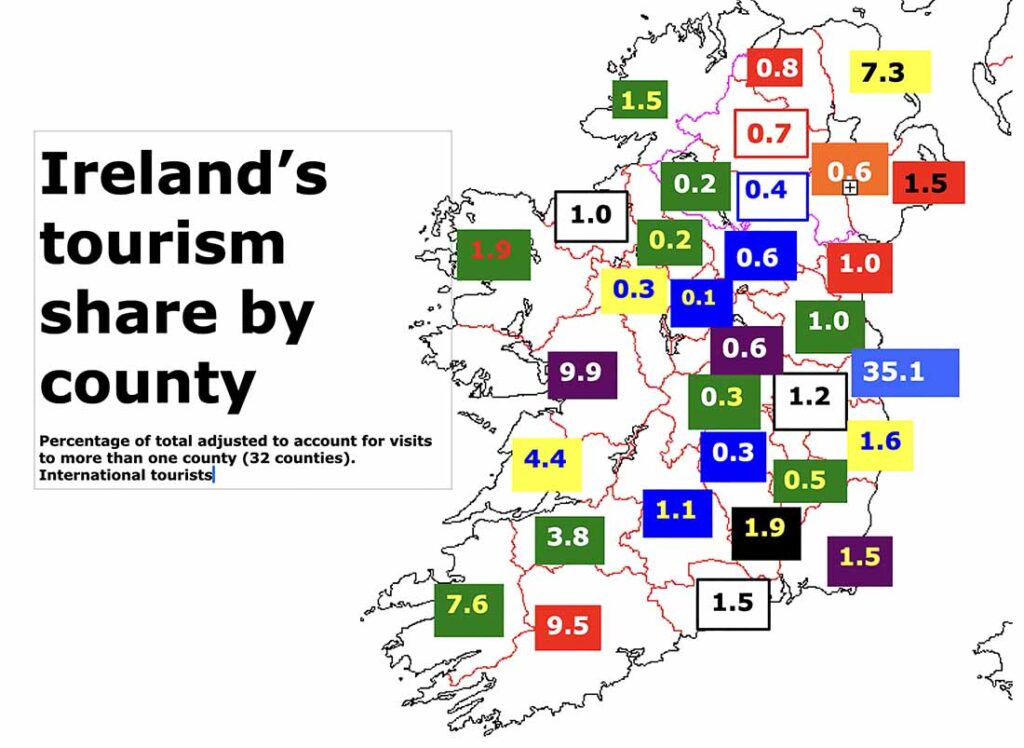
Ireland’s county Tipperary offers a mix of historic landmarks and lush countryside, with the Rock of Cashel’s medieval fortress and cathedral providing a stunning hilltop vista. Cahir Castle, one of Ireland’s best-preserved castles, offers historical insights, while the Glen of Aherlow’s walking trails showcase scenic valleys. Other attractions include the historic town of Clonmel and its markets. Tipperary is Ireland’s sixth largest county by size (4,254 square km) and 12th largest by population (167,895). Population peaked at 435,553 in 1841 and reached its lowest point, 122,812 in 1966. In terms of hospitality, Tipperary is Ireland’s 14th most visited tourist county with around 168,000 international visitors per year.
Introduction – Adventure] – Anthem – Archaeology – Attractions – Awards – Birdwatching – Camping – Castles – Churches – Contact list – Cycling – Dining – Equestrian – Festivals – Fishing – Folklore – Gardens – Golf – Graveyards – Happening – Haunted – Highest – Hiking – History – Holy Wells – Hotels – Hotels top 8 – Hunting & shooting – Instagrammable – Itineraries – Largest town – Luxury – MICE – Movies – Music – Name – New – Novelists – Off the beaten track – Poets – Pubs – Quotes – Random Facts – Restaurant Awards – Sacred Places – Saints – Songs – Spas – Sports – Sunsets – Sustainable – Things to do – Towns – Video – Villages – Walking – Wanderlist – Weddings – Wild swimming – Writers – 1837 – 1846– 1852 – 1909 – 1955 – 1980 –