Pre-1000 The Gaelic Nation
County Tipperary, seat of the ancient kingdom of Munster, was dominated by the Éoganacht dynasty with the Dál gCais house of Brian (Ó Briain) dynasty emerging as disrupter in the 900s. The county’s name derives from Tiobraid Árann (‘well of Ara’), linked to a spring in Tipperary town. Archaeological sites, such as the Rock of Cashel, a royal fortress and later ecclesiastical centre, highlight Tipperary’s significance from the 4th century. Christianity spread early, with Cashel becoming a bishopric under St. Ailbe (c. 5th century). Monastic sites like Holycross and Emly flourished, as noted in The Annals of Ulster. Viking raids targeted the Shannon and Lough Derg, but Tipperary’s inland areas remained under Gaelic control, with the O’Briens consolidating power.
1000–1100: Gaelic Power and Brian Boru
Tipperary was central to Munster’s Gaelic power under the Dál gCais, led by Brian Boru (d. 1014), whose victory at Clontarf (1014) solidified his status as High King. The O’Briens ruled from Cashel, which became a royal and religious hub. Monastic sites, including Cormac’s Chapel (c. 1134, built later but rooted in this period), underscored Tipperary’s ecclesiastical importance. The Annals of the Four Masters record conflicts between the O’Briens and rival Munster clans, with Tipperary as a strategic base. The county’s fertile Golden Vale supported agriculture, making it a wealthy region. The Synod of Cashel (1101) reinforced ecclesiastical reforms, cementing Tipperary’s religious role.
1100–1200: Norman Invasion and Gaelic Resistance
The Norman invasion (1169) significantly impacted Tipperary. By 1171, Strongbow granted lands to Norman lords like the Butlers, who established a foothold in Ormond (north Tipperary). The O’Briens resisted, retaining control of Thomond (including parts of Tipperary), as noted in The Annals of Tigernach. Cashel became an archdiocese in 1152, strengthening its religious status. Norman castles, such as Nenagh and Cahir, were built to secure the region. The O’Kennedys and other Gaelic dynasties resisted Norman encroachment, leveraging Tipperary’s rivers and hills. Gaelic lords maintained power in much of the county.
1200–1300: Norman Consolidation and Butler Ascendancy
The Butlers, granted the Lordship of Ormond, consolidated power in north Tipperary, building castles like Roscrea and Nenagh. The O’Briens and O’Kennedys retained influence in Thomond and central Tipperary, balancing submission with resistance. Holycross Abbey, founded c. 1180, became a Cistercian powerhouse, driving agriculture and trade, as noted in historical surveys. The Black Death (1348–1350) reduced Tipperary’s population. The Annals of Connacht detail conflicts between Normans and Gaelic clans, with Tipperary as a contested frontier. The county’s fertile lands made it a key region for the Anglo-Norman economy, though Gaelic traditions persisted.
1300–1400: Gaelic Resurgence and Norman-Gaelic Hybridity
The decline of Norman authority allowed Gaelic dynasties like the O’Kennedys and O’Carrolls to regain ground in Tipperary. The Butlers, increasingly Gaelicised, maintained control of Ormond, intermarrying with local clans. Castles like Cahir and Kilkenny (on Tipperary’s border) were fortified to counter Gaelic raids. Holycross Abbey and Cashel’s cathedral remained religious hubs, though monastic wealth attracted English scrutiny. The Annals of Ulster record the O’Briens’ alliances with Connacht’s O’Connors, reflecting Tipperary’s role in Munster politics. Figures like James Butler (1st Earl of Ormond) shaped Tipperary’s feudal landscape. The county remained a hybrid of Gaelic and Norman influences.
1400–1500: Late Medieval Stability
Tipperary was divided between Gaelic dynasties (O’Kennedys, O’Carrolls) in central and southern areas and the Butlers in Ormond. The Butlers, as Earls of Ormond, built strongholds like Cahir Castle, cementing their dominance. The county’s fertile Golden Vale supported agriculture, with market towns like Clonmel and Nenagh growing. Monastic decline began, but Holycross and Cashel remained pilgrimage centres. The Annals of Ulster note the Butlers’ conflicts with the Desmond Fitzgeralds, Tipperary’s southern neighbours. Tipperary’s proximity to the Pale ensured English oversight, but Gaelic autonomy persisted in rural areas.
1500–1600: Tudor Conquest and Butler Dominance
The Tudor reconquest strengthened English control in Tipperary. The Butlers, loyal to the crown, expanded their influence, with Piers Butler (8th Earl of Ormond) securing lands,. Tipperary was shired in 1328 but fully integrated into English administration by the 16th century. The Desmond Rebellions (1569–1583) saw southern Tipperary as a battleground, with Clonmel resisting sieges. The dissolution of monasteries (1536–1541) secularised Holycross and other abbeys, redistributing their lands to Anglo-Irish lords. The Annals of the Four Masters detail Gaelic resistance, while early plantation efforts introduced English settlers. The Butlers’ loyalty ensured Tipperary’s alignment with Tudor policies.
1600–1700: Cromwellian Upheaval and Plantation
The 1641 Rebellion saw Tipperary’s Gaelic and Old English lords, including the O’Kennedys and Butlers, join Confederate forces, seizing Clonmel and Nenagh. Cromwell’s campaign (1649–1653) devastated the county, with Clonmel’s siege (1650) a brutal defeat. Cromwellian confiscations redistributed lands to English settlers, though the Butlers retained estates. The transplantation to Connacht forced many Gaelic families westward. The Williamite War (1689–1691) saw Tipperary align with William III, with minor skirmishes. Kilkenny and Clonmel grew as administrative centres. The Confederate Wars documents highlight Tipperary’s turbulent century.
1700–1800: Anglo-Irish Ascendancy
Tipperary’s Anglo-Irish elite, led by the Butlers and Ponsonbys, dominated under the Penal Laws, building estates like Kilkenny Castle (on the border) and Dromore House. The county’s economy thrived on agriculture, with the Golden Vale producing grain and livestock. Clonmel and Nenagh became market towns. The 1798 Rebellion saw unrest in Tipperary, with local United Irishmen active, entries on figures like John Ponsonby. The Act of Union (1800) integrated Tipperary into English rule, reducing local influence. The county’s Catholic majority faced restrictions, but Colonial/protestan settlers added diversity.
1800–1900: Famine and Land Reform
The Great Famine (1845–1852) severely impacted Tipperary, with its population falling from 435,000 in 1841 to 331,000 by 1851, per census records. Workhouses in Clonmel and Thurles were overwhelmed, and emigration surged to America, Scotland and England. The county’s fertile lands mitigated some effects, but evictions were widespread. The Land League, active in Tipperary, pushed for tenant rights, with figures like William O’Brien leading campaigns,. The Gaelic Revival highlighted Cashel and Holycross as heritage sites. Clonmel and Thurles grew as administrative centres. Tipperary’s hurling tradition, formalised in the 1880s, became a cultural hallmark.
1900–2025: Independence and Modernisation
Tipperary played a significant role in the War of Independence (1919–1921), with IRA ambushes in Soloheadbeg (1919, the war’s first action) and Thurles, as documented in History Ireland. The county joined the Irish Free State in 1922, split into North and South Tipperary (reunified in 2014). The population stabilised, reaching 159,553 by 2022, per census data. Infrastructure, including the M7 and M8 motorways, improved connectivity. Tourism grew, focusing on the Rock of Cashel, Holycross Abbey, and Cahir Castle. The county’s economy diversified, with agriculture, dairy (Tipperary Co-op), and tourism prominent. Tipperary is one of 24 Irish counties that still has a smaller population than it did in 1841.
History
Antrim – Armagh – Carlow – Cavan – Clare – Cork – Derry – Donegal – Down – Dublin – Fermanagh – Galway – Kerry – Kildare – Kilkenny – Laois – Leitrim – Limerick – Longford – Louth – Mayo – Meath – Monaghan – Offaly – Roscommon – Sligo – Tipperary – Tyrone – Waterford – Westmeath – Wexford – Wicklow
County Tipperary:
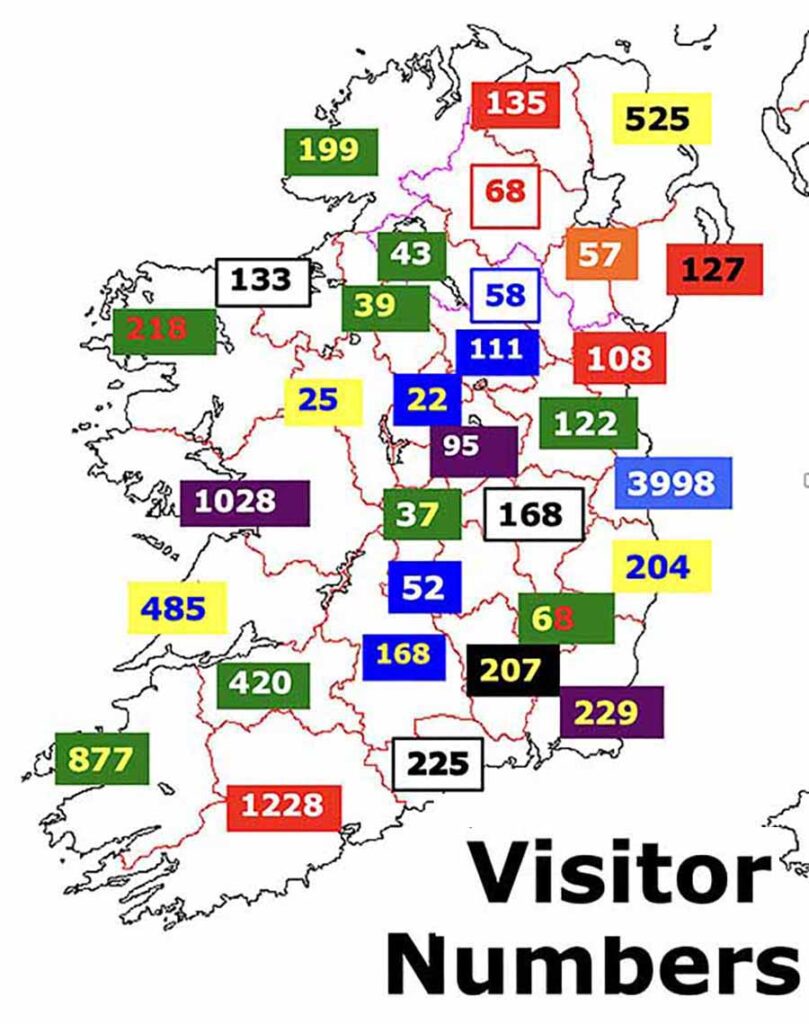
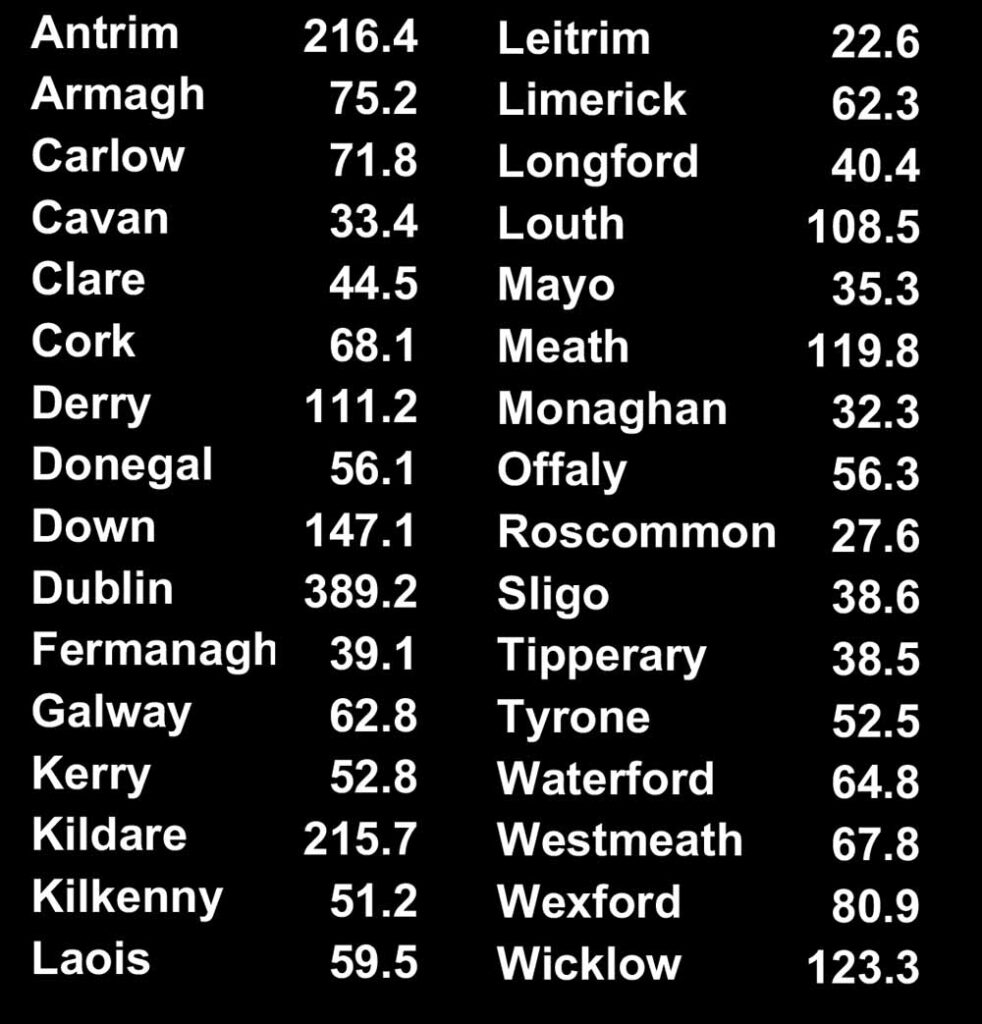
Ireland’s county Tipperary offers a mix of historic landmarks and lush countryside, with the Rock of Cashel’s medieval fortress and cathedral providing a stunning hilltop vista. Cahir Castle, one of Ireland’s best-preserved castles, offers historical insights, while the Glen of Aherlow’s walking trails showcase scenic valleys. Other attractions include the historic town of Clonmel and its markets. Tipperary is Ireland’s sixth largest county by size (4,254 square km) and 12th largest by population (167,895). Population peaked at 435,553 in 1841 and reached its lowest point, 122,812 in 1966. In terms of hospitality, Tipperary is Ireland’s 14th most visited tourist county with around 168,000 international visitors per year.
Introduction – Adventure] – Anthem – Archaeology – Attractions – Awards – Birdwatching – Camping – Castles – Churches – Contact list – Cycling – Dining – Equestrian – Festivals – Fishing – Folklore – Gardens – Golf – Graveyards – Happening – Haunted – Highest – Hiking – History – Holy Wells – Hotels – Hotels top 8 – Hunting & shooting – Instagrammable – Itineraries – Largest town – Luxury – MICE – Movies – Music – Name – New – Novelists – Off the beaten track – Poets – Pubs – Quotes – Random Facts – Restaurant Awards – Sacred Places – Saints – Songs – Spas – Sports – Sunsets – Sustainable – Things to do – Towns – Video – Villages – Walking – Wanderlist – Weddings – Wild swimming – Writers – 1837 – 1846– 1852 – 1909 – 1955 – 1980 –