- Rock of Cashel (St. Patrick’s Rock): The Rock of Cashel, near Cashel town, is a 12th-century ecclesiastical complex rather than a traditional castle, but its fortified tower house and historical significance as the seat of the Kings of Munster make it a standout. Perched on a limestone outcrop in the Golden Vale, it includes a round tower, Romanesque chapel (Cormac’s Chapel with rare frescoes), Gothic cathedral, high cross, and the 15th-century Hall of the Vicars Choral. Legend claims St. Patrick converted King Aenghus here in the 5th century, and Brian Boru was crowned High King in 978. Open year-round (except Dec 24-26), managed by Heritage Ireland, with admission (~€8 adults, €4 seniors, free first Wednesday monthly). Guided or self-guided tours (45-60 minutes) explore the medieval buildings, with access to Cormac’s Chapel’s frescoes (limited due to UV conservation). The audiovisual exhibit details its religious and royal history. Stunning views of the Golden Vale and Hore Abbey nearby are highlights. The site includes a small museum and gift shop, with parking and toilets available. Allow 1-1.5 hours, reachable by car from Cashel (5-minute drive) or bus (X8 from Dublin). Combine with Hore Abbey or Cahir Castle (20-minute drive). The iconic silhouette, Celtic art, and spiritual history make it one of Ireland’s most visited sites, ideal for history buffs and photographers. Steep paths and steps; wear sturdy shoes. Book chapel tours in advance for limited slots.
- Cahir Castle: Cahir Castle, in Cahir town, is a 13th-century Norman fortress built in 1142 by Conor O’Brien on a rocky island in the River Suir. One of Ireland’s largest and best-preserved castles, it was a Butler family stronghold, designed for defense with thick walls, towers, and a portcullis. It fell to the Earl of Essex in 1599 and Cromwell in 1650, and has starred in films like Excalibur and The Tudors. Open year-round (seasonal hours), managed by Heritage Ireland, with admission (~€5 adults, €3 seniors). Guided tours (40-50 minutes) or self-guided visits with an audiovisual show explore the castle’s history, from its O’Brien origins to Butler ownership. Visitors can climb towers for River Suir views, see the restored great hall, and spot a cannonball embedded in the northeast tower from the 1599 siege. The castle’s museum showcases medieval artifacts. Allow 1-1.5 hours, reachable by car from Cahir (central) or bus from Dublin (2 hours). Combine with the Swiss Cottage or Mitchelstown Cave. The castle’s intact medieval architecture, film history, and uncrowded atmosphere make it a favorite for medieval enthusiasts. Some areas involve narrow stairs; check accessibility. Book guided tours for deeper insights.
- Ormond Castle: Ormond Castle, in Carrick-on-Suir, is Ireland’s finest Elizabethan manor house, built in 1565 by Thomas “Black Tom” Butler, 10th Earl of Ormond, to honor Queen Elizabeth I (who never visited). Integrated with two 15th-century towers from an earlier Butler castle, it features ornate stucco plasterwork and period furnishings, reflecting Tudor elegance and the Butler family’s royal ties. Open seasonally (April-October), managed by Heritage Ireland, with free admission. Guided tours (40-50 minutes) explore the manor’s opulent interiors, including the Long Gallery with intricate plasterwork depicting Butler lineage and Elizabethan motifs. The castle’s compact size and riverside setting by the River Suir make for a charming visit. No on-site facilities, but Carrick-on-Suir has cafés. Allow 1 hour, reachable by car from Carrick-on-Suir (central) or bus from Waterford (30 minutes). Combine with the Main Guard in Clonmel. The unique Elizabethan architecture and historical connection to Queen Elizabeth I make it a hidden gem for architecture lovers. Seasonal access; check heritageireland.ie for hours. Limited accessibility due to stairs.
- Roscrea Castle: Roscrea Castle, in Roscrea, is a 13th-century royal castle begun in 1213 as a motte-and-bailey, with the stone structure built around 1280 by the de Burgo family. It features a gate tower, curtain walls, two corner towers, and a later Damer House (18th-century Queen Anne-style house) in its courtyard. A Butler stronghold, it reflects Tipperary’s turbulent medieval history. Open seasonally (March-October), managed by Heritage Ireland, with admission (~€5 adults, €3 seniors). Guided tours (1 hour) cover the castle’s medieval defenses and Damer House’s elegant interiors, with exhibitions on Roscrea’s history. Visitors can climb the gate tower for views and explore the courtyard. The nearby St. Cronan’s Church and round tower add context. Allow 1-1.5 hours, reachable by car from Roscrea (central) or bus from Dublin (2 hours). Combine with the Black Mills or Leap Castle (30-minute drive). The castle’s blend of medieval and Georgian architecture, plus its restored state, make it a rewarding stop for history fans. Book tours in advance (roscreaheritage@opw.ie). Uneven surfaces and stairs may limit accessibility.
- Nenagh Castle: Nenagh Castle, in Nenagh town, is a 13th-century Norman castle built between 1200 and 1220 by Theobald Fitzwalter (1st Baron Butler), founder of the Butler dynasty. Its 100-foot cylindrical keep, one of Ireland’s finest, is splayed at the base for defense against cannon fire. The castle was a military stronghold, with later additions like a five-sided courtyard, and is central to Nenagh’s development. Open year-round (limited hours), managed by Tipperary County Council, with free admission. Self-guided visits focus on the keep’s exterior and partial interior access, with climbing to the top for panoramic views of Nenagh. Informational panels detail its Butler history. No formal facilities, but Nenagh offers cafés and the nearby Nenagh Heritage Centre. Allow 30-45 minutes, reachable by car from Nenagh (central) or bus from Limerick (1 hour). Combine with the Franciscan Friary ruins or Lough Derg. The striking cylindrical keep and its central location make it a quick, engaging stop for castle enthusiasts. Limited interior access; steep stairs to the top.
Castles
Antrim – Armagh – Carlow – Cavan – Clare – Cork – Derry – Donegal – Down – Dublin – Fermanagh – Galway – Kerry – Kildare – Kilkenny – Laois – Leitrim – Limerick – Longford – Louth – Mayo – Meath – Monaghan – Offaly – Roscommon – Sligo – Tipperary – Tyrone – Waterford – Westmeath – Wexford – Wicklow
County Tipperary:
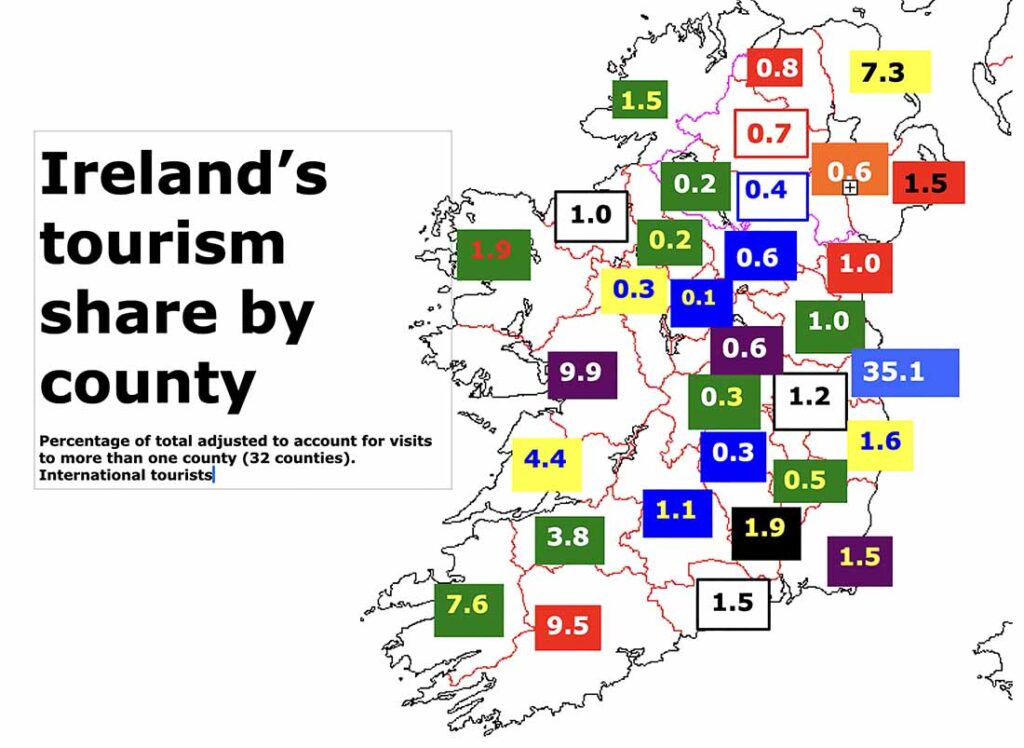
Ireland’s county Tipperary offers a mix of historic landmarks and lush countryside, with the Rock of Cashel’s medieval fortress and cathedral providing a stunning hilltop vista. Cahir Castle, one of Ireland’s best-preserved castles, offers historical insights, while the Glen of Aherlow’s walking trails showcase scenic valleys. Other attractions include the historic town of Clonmel and its markets. Tipperary is Ireland’s sixth largest county by size (4,254 square km) and 12th largest by population (167,895). Population peaked at 435,553 in 1841 and reached its lowest point, 122,812 in 1966. In terms of hospitality, Tipperary is Ireland’s 14th most visited tourist county with around 168,000 international visitors per year.
Introduction – Adventure] – Anthem – Archaeology – Attractions – Awards – Birdwatching – Camping – Castles – Churches – Contact list – Cycling – Dining – Equestrian – Festivals – Fishing – Folklore – Gardens – Golf – Graveyards – Happening – Haunted – Highest – Hiking – History – Holy Wells – Hotels – Hotels top 8 – Hunting & shooting – Instagrammable – Itineraries – Largest town – Luxury – MICE – Movies – Music – Name – New – Novelists – Off the beaten track – Poets – Pubs – Quotes – Random Facts – Restaurant Awards – Sacred Places – Saints – Songs – Spas – Sports – Sunsets – Sustainable – Things to do – Towns – Video – Villages – Walking – Wanderlist – Weddings – Wild swimming – Writers – 1837 – 1846– 1852 – 1909 – 1955 – 1980 –