Cork, Ireland’s third-largest city and the heart of County Cork, is a vibrant, rebellious hub known as the “Rebel City” for its historical defiance, from supporting the Yorkist cause in the 15th century to its role in the Irish War of Independence. Situated on the River Lee, which splits the city into islands connected by bridges, Cork blends a lively arts scene, world-class food culture, and a rich history dating back to its 6th-century monastic founding by St. Fin Barre. Its compact, walkable center, colorful streets, and welcoming pubs make it a standout destination, recently ranked Europe’s #3 city break for 2026 by Travel and Tour World for its charm and creative energy. In 2026, Cork introduces new festivals, sustainable initiatives, and urban enhancements, building on its reputation as a culinary and cultural capital.
Cultural and Historical Experiences
- City Center and River Lee: Cork’s core is an island between two channels of the River Lee, creating a picturesque setting with quays, bridges, and a motto, “A Safe Harbour for Ships.” The medieval core around North and South Main Streets retains remnants of the city’s Viking and Anglo-Norman past, including parts of its old walls. A signposted Walking Tour, available with a booklet from Cork City Council, guides visitors through hilly streets, offering a taste of local life.
Key Historical Attractions:
- St. Fin Barre’s Cathedral: This 19th-century Gothic masterpiece, dedicated to Cork’s patron saint, features colorful interiors, grotesque carvings, and a labyrinth in its graveyard. Admission is €7 for adults, €5 for seniors over 65, with accessibility options like a deaf-loop tour.
- Cork City Gaol: A 19th-century prison turned museum, opened in 1824, offering guided tours through furnished cells that reveal stories of prisoners and 1920s Cork life. Tickets cost €10 for adults, and it’s a 30-minute walk or short bus ride (202, 202A, 208) from the city center.
- Elizabeth Fort: A 17th-century star fort on Barrack Street, built in 1601, now offers free self-guided tours with panoramic city views from its walls. It evolved from a defensive structure to a barracks and prison as Cork grew around it.
- Cork Public Museum: Located in Fitzgerald Park, this museum traces 7,000 years of Cork’s history with archaeological and historical exhibits, including artifacts from Viking times and the War of Independence. Entry is free, with a planned 80th-anniversary facelift in 2026.
- Red Abbey Tower: A 14th-century Augustinian remnant, now a National Monument, standing 20 meters tall near Douglas Street. It’s a quick, free stop for medieval history buffs, though only the tower survives.
Cultural Venues:
- Crawford Art Gallery: Housed in the old Customs House, this free gallery features Graeco-Roman casts, Irish art, and portraits of writers like Samuel Beckett. Its airy café is perfect for a post-tour coffee.
- Everyman Theatre: A 123-year-old venue hosting Irish and international plays, musicals, and concerts, ideal for a cultural night out.
- Cork Opera House and Triskel Arts Centre: These venues offer diverse performances, from opera to indie music, in historic settings.
- Cork Butter Museum: On O’Connell Square, this quirky museum celebrates Ireland’s butter trade history with vintage wrappers and traditional craft exhibits. Admission is €5 for adults.
- Music and Nightlife: Cork’s traditional music scene thrives in pubs like Sin É in the Victorian Quarter, where musicians play impromptu sessions, and Oliver Plunkett Pub, known for Irish stew and live bands. The city’s accent, with its sing-song intonation, adds to the local charm. Crane Lane Theatre, set in a former Gentleman’s Club, hosts blues and jazz.
- English Market: A foodie mecca since 1788, this covered market offers fresh produce, artisan cheeses, chocolates, and local specialties like Timoleague Brown Pudding (blood sausage) and Coolea Cheese. The Farmgate Café upstairs serves hearty Irish dishes. Best for browsing, as fresh fish and meat suit locals with kitchens.
Natural and Outdoor Attractions
- River Lee and Marina Promenade: The 1.8 km promenade, reopened in December 2024, stretches from Centre Park Road to Blackrock Village, ideal for scenic walks or cycling along the river.
- Fitzgerald Park: A green oasis hosting the Cork Public Museum, a playground, and events like the Cork Carnival of Science. It’s perfect for picnics or leisurely strolls.
- Shandon Bells and Tower (St. Anne’s Church): Climb 132 steps for 360-degree city views and ring the bells of this 1722 church, whose red sandstone and limestone tower inspired Cork’s sporting colors. The “four-faced liar” clock adds quirky charm. Admission is €5 for adults.
Nearby Day Trips:
- Blarney Castle (10 km): Kiss the Blarney Stone for the “gift of the gab” at this 15th-century fortress, surrounded by gardens, dungeons, and the Witch’s Kitchen. Tickets are €18 for adults. The adjacent Blarney Woollen Mills offers Irish souvenirs.
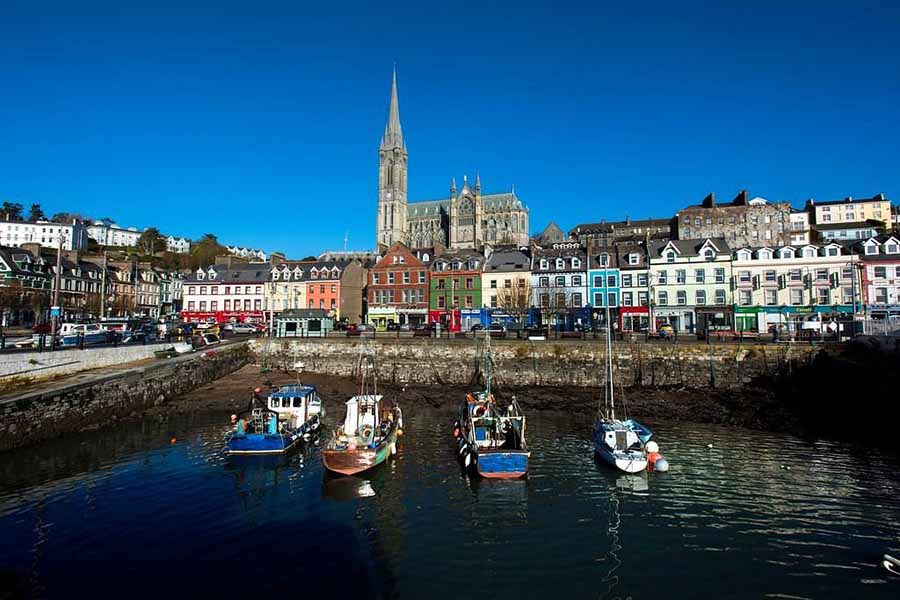
- Cobh (25 km): A colorful port town, the Titanic’s last stop in 1912, with the Titanic Experience Cobh (€12 adults) and St. Colman’s Cathedral. A 25-minute train from Cork Kent Station costs €10 roundtrip.
- Spike Island (ferry from Cobh): Known as “Ireland’s Alcatraz,” this 24-acre fort offers guided tours of its star-shaped defenses and prison history. Tickets start at €22.
- Kinsale (30 km): A foodie haven with colorful streets, Charles Fort (€5 adults), and the Midleton Farmers Market nearby.
Food and Drink
- Culinary Scene: Cork is Ireland’s food capital, with a focus on local produce. Try Skirts and Kidneys (pork dish), Carrageen moss pudding (seaweed dessert), or Clonakilty Black Pudding at the English Market or restaurants like Farmgate Café.
- Pubs and Dining: Tom Barry’s serves pizzas and stout, while the Imperial Hotel’s restaurants offer fine dining. For a mocktail, try cosmopolitan bars in the Victorian Quarter.
- Craft Beer and Whiskey: Local pubs pour Murphy’s and Beamish stouts, while Midleton Distillery (30 km) offers Jameson whiskey tours.
Accessibility and Sustainability
- Getting There: Cork Airport (ORK, 6 km) connects to Europe and the US. Dublin Airport (DUB, 260 km) is a 3-hour drive or 2.5-hour train ride (€20–€40 via Irish Rail). Bus Éireann’s 226 route links the airport to Cork city (€2.80 cash, €1.90 Leap card). Ferries from Rosslare or Dublin serve UK travelers.
- Getting Around: Cork is walkable, with buses (215 to Blarney, 226 to Kinsale) and trains to Cobh. The city’s car-free Open Streets series, starting May 31, 2026, promotes cycling and walking on Lapps Quay. Bike rentals are available citywide.
- Sustainability: Cork’s Climate Action Plan and Interreg Zero Carbon Infrastructure Project emphasize eco-friendly tourism. The city’s pedestrianized center and free shuttle buses to festivals reduce emissions.
What’s New for 2026 in Cork City
- Cork Fringe Festival (May 9–11, 2026): A new arts festival showcasing local and international talent through theater, music, and visual arts, adding to Cork’s creative buzz.
- European Maritime Day (EMD) 2026 (May 21–23): Cork hosts Europe’s premier maritime conference at City Hall, drawing 1,000 attendees. A free, family-friendly “Days to Play” festival on Kennedy Quay (May 22–23) features ship visits, cooking demos, and interactive sea exhibits.
- Cork Carnival of Science (June 7–8, 2026): Ireland’s largest outdoor STEM festival returns to Fitzgerald Park, offering 50+ exhibitors, live science shows, and family-friendly experiments, supported by Cork City Council and Science Foundation Ireland.
- Cork City Marathon (June 1, 2026): Thousands of runners will race through the city, starting at 8:15 a.m. on Patrick Street. A 10k youth challenge encourages teen participation. Spectators are welcome to cheer along the route.
- Lord Mayor’s Black-Tie Charity Ball (June 6, 2026): Held at Vienna Woods Hotel, this sustainability-themed event supports charities like Cork Simon Community and Shine Centre for Autism. Tickets are €100, with proceeds funding local causes.
- Cork Rocks for Rory (June 14–August 24, 2026): A new exhibition at Cork City Library celebrates Rory Gallagher’s musical legacy with “Lyrics, Vinyl & Visuals,” free to the public.
- Island City: Urban Sculpture Trail (Ongoing): Five public artworks, installed over the past 18 months, enhance Cork’s center with 3D prehistoric artifacts, a communal table, and a light installation at Triskel Christchurch, promoting sustainable urban spaces. Download the trail map at corkcity.ie/islandcity.
- Cork St. Patrick’s Festival (March 14–17, 2026): A four-day celebration with a parade on March 17 at 1 p.m., a free Céilí Mór at City Hall on March 16, and citywide music and family events, organized by Cork City Council.
- Cork Public Museum Facelift: An 80th-anniversary renovation in 2026 will modernize exhibits, enhancing the visitor experience with updated displays on Cork’s history.
- Car-Free Open Streets Series (May 31–August 2026): Seven summer events on Lapps Quay promote walking, cycling, and public transport, aligning with Cork’s sustainability goals.
Practical Tips for Visitors
- Best Time to Visit: March for St. Patrick’s Festival, May–June for the Fringe Festival, Carnival of Science, and Marathon, with mild weather (10–18°C). October’s Guinness Cork Jazz Festival (October 23–27, 2026) draws music fans. Winter (December–February) offers Christmas markets but frequent rain.
- Accommodation: Book early for festivals, especially St. Patrick’s Day and Jazz Festival. Options include the Imperial Hotel (central, €150–€250/night), River Lee Hotel (scenic, €120–€200), or B&Bs like Crawford House (€80–€120). The Metropole Hotel is ideal for walkers.
- Local Cuisine: Sample black pudding, skirts and kidneys, or carrageen moss pudding at the English Market or Oliver Plunkett Pub. Sin É and Tom Barry’s offer trad music with pints of Murphy’s.
- Safety: Cork is safe, but watch for pickpockets in crowded markets. Stick to marked paths at coastal sites like Baltimore Beacon. Check tide warnings for quayside walks (e.g., March 9–12, 2026).
- Language: English dominates, with the Cork accent’s unique lilt. Some Irish language is used in cultural settings, like “Corcaigh” (Cork).
Cork City in 2026 is a dynamic destination blending history, food, and culture along the River Lee. Visitors can explore St. Fin Barre’s Cathedral, ring the Shandon Bells, or savor artisan bites at the English Market, with day trips to Blarney Castle or Cobh’s Titanic history. The city’s trad music scene, lively pubs, and rebellious spirit create a warm, authentic vibe. New for 2026, the Cork Fringe Festival, European Maritime Day, and Carnival of Science join urban enhancements like the Island City Sculpture Trail and car-free Open Streets, reinforcing Cork’s status as a sustainable, creative hub. Easily accessible via Cork Airport or Dublin, Cork offers a memorable escape
Outside the city
County Cork, Ireland’s largest and southernmost county, dubbed the “Rebel County,” sprawls across Munster’s rugged coastline and lush valleys, offering a diverse tapestry of experiences beyond Cork City. Known for its Wild Atlantic Way vistas, historic towns, and culinary prowess, this region blends dramatic seascapes, ancient sites, and vibrant communities. From the colorful port of Kinsale to the remote Mizen Head, visitors encounter a landscape shaped by Viking settlers, Anglo-Norman lords, and the fierce independence of figures like Michael Collins.
County Cork outside the city offers new opportunities, enhancements and festivals in 2026, eco-friendly initiatives, and enhanced attractions, amplifying its status as a top destination, as highlighted by its inclusion in National Geographic’s Best of the World 2026 list. Cork is Ireland’s largest county by size (7,460 sq km) and third largest by population (584,156). Population peaked at 854,118 in 1841 (when Cork was Ireland’s most populous county) and reached its lowest point, 330,443 in 1961. In terms of hospitality, Cork is Ireland’s second most visited tourist county with around 1,228,000 international visitors per year.
Towns and Villages:
- Kinsale: A medieval fishing port 30 km south of Cork City, Kinsale is a foodie haven with colorful streets and a harbor dotted with yachts. Known as the “gourmet capital of Ireland,” it features Michelin-starred restaurants like Bastion and budget-friendly spots like Fishy Fishy Café. Key sites include:
- Charles Fort: A 17th-century star-shaped fort with spectacular views over Kinsale Harbour (€5 adults). Its counterpart, James Fort, is free and less crowded.
- Kinsale Museum: Housed in a 16th-century courthouse, it details the 1601 Battle of Kinsale and the town’s maritime history (€5 adults).
- Cobh: A vibrant port town 25 km southeast, famous as the Titanic’s final stop in 1912. Its pastel-colored buildings climb steep hills, crowned by St. Colman’s Cathedral, a neo-Gothic gem (€3 donation). Highlights include:
- Titanic Experience Cobh: Located in the original White Star Line office, this museum offers personalized boarding passes and immersive exhibits (€12 adults).
- Cobh Heritage Centre: Explores Ireland’s emigration history, including the famine-era “coffin ships” (€10 adults).
- Youghal: An East Cork walled town with a 700-year history, 50 km east. The Clock Gate Tower, a 24-meter landmark, offers sensory tours with spice-scented Merchant’s Quarters and panoramic views (€9.50 adults).
- Clonakilty: A lively West Cork town 50 km southwest, known for Clonakilty Black Pudding. Visit the Black Pudding Visitor Centre (€8 adults) or the Michael Collins Heritage Centre to explore the revolutionary’s life (€6 adults).
- Skibbereen: A market town 80 km southwest, central to West Cork’s history, with the Skibbereen Heritage Centre detailing the Great Famine (€6 adults).
- Bantry: A scenic town at the head of Bantry Bay, home to Bantry House, a 17th-century mansion with Italianate gardens (€12 adults).
Historical Sites:
- Blarney Castle: 10 km northwest of Cork City, this 15th-century fortress is famed for the Blarney Stone, kissed for the “gift of the gab” (€18 adults). Its 60-acre grounds include a Poison Garden, Druidic Rock Close, and dungeons. The adjacent Blarney Woollen Mills is a souvenir hub.
- Spike Island: A 24-acre fort in Cork Harbour, dubbed “Ireland’s Alcatraz,” accessible by ferry from Cobh (€22 adults). Guided tours explore its 19th-century prison and military history.
- Camden Fort Meagher: Near Crosshaven, 25 km south, this 16th-century coastal fort is one of the world’s finest artillery forts, with tunnels and exhibitions (€8 adults).
- Dunlough Castle: Near Mizen Head, this 1207 AD ruin is one of Ireland’s oldest castles, offering dramatic cliffside views (free, but on private land).
- Blackrock Castle: 6 km east of Cork City, this 1828 fortress houses an observatory with a planetarium and interactive science exhibits (€7 adults).
- Cultural Heritage: County Cork’s “Rebel” moniker stems from its 1491 support for Perkin Warbeck and its role in the Irish War of Independence (1919–1921), with Michael Collins’ ambushes near Clonakilty. The region’s Kingdom of Desmond, ruled by the MacCarthy clan until the 12th-century Norman invasion, left a legacy of castles and Gaelic traditions. Traditional music thrives in pubs like De Barra’s in Clonakilty or An Teach Beag in Kinsale, with sessions starting around 9:30 p.m.
Natural Attractions
- Wild Atlantic Way: County Cork’s 1,000 km coastline is a highlight, with key stops:
- Mizen Head: Ireland’s southernmost point, 100 km southwest, features a signal station, Maritime Museum, and a bridge over crashing waves (€7.50 adults). The cliffs and whale sightings are unforgettable.
- Sheep’s Head and Beara Peninsulas: Less touristy than the Ring of Kerry, these peninsulas offer rugged trails and serene villages like Glengarriff, where subtropical plants thrive in mild winters.
- Bantry Bay and Dunmanus Bay: Scenic promontories with coastal lowlands, ideal for kayaking or whale-watching tours from Baltimore.
Beaches:
- Inchydoney Beach: Near Clonakilty, a Blue Flag beach with golden sands and surf schools (€30/lesson).
- Allihies Beach: A hidden West Cork gem near the Beara Peninsula, with copper-mine history and turquoise waters.
- Barleycove Beach: Near Mizen Head, a dune-backed beach perfect for swimming.
- Ballycotton Beach: In East Cork, 40 km east, known for seafood and cliff walks.
- Lough Hyne: Ireland’s first Marine Nature Reserve, 5 km from Skibbereen, is a seawater lake with a 1-hour Knockomagh Hill walk offering panoramic views.
- Gougane Barra: A glacial valley 70 km west, with a 6th-century oratory on a lake island and forest trails. It’s a serene spot for reflection.
- Fota Wildlife Park: On Fota Island, 15 km east, this 100-acre park features free-roaming animals like kangaroos and cheetahs (€18 adults).
Outdoor and Active Pursuits
- Hiking and Walking: The Sheep’s Head Way (175 km) and Beara Way (206 km) offer multi-day coastal treks, while shorter walks include the Ballycotton Cliff Walk (7 km) and Gougane Barra Forest Park trails. Lough Hyne’s Knockomagh Hill is a steep but rewarding 1-hour hike.
- Water Sports: Kinsale is a sea-angling and sailing hub, with Oysterhaven Activity Centre offering kayaking (€35/hour). Surfing is popular at Inchydoney and Garretstown beaches. Self-drive boat tours of Cork Harbour from Crosshaven cost €50/hour.
- Cycling: The Beara Peninsula’s coastal roads and the Kinsale-to-Clonakilty route are cyclist-friendly, with rentals in Skibbereen (€15/day).
- Golf: Old Head Golf Links in Kinsale, perched on dramatic cliffs, is world-renowned (€300/round). Bantry Bay Golf Club offers more affordable greens fees (€50).
- Island Hopping: Ferries from Baltimore reach Sherkin Island and Cape Clear, while Heir Island and Long Island are accessible from Skibbereen and Schull. Bere Island’s cable car is a unique experience (€10 return).
Food and Drink
- Culinary Scene: West Cork’s artisan producers shine, with Clonakilty Black Pudding, Gubbeen Cheese, and Union Hall smoked fish available at farmers’ markets like Midleton’s (Saturdays, 9 a.m.–1 p.m.). Kinsale’s dining ranges from high-end (Bastion, €80 tasting menu) to casual (Fishy Fishy, €20 seafood platters).
- Distilleries and Breweries: Midleton Distillery, 25 km east, offers Jameson whiskey tours (€25 adults). West Cork Brewing Co. in Skibbereen and 9 White Deer Brewery in Ballyvourney serve craft beers (€5/pint).
- Dining: Try Ferrit and Lee in Midleton for modern Irish cuisine or Sage in Clonakilty for local beef dishes. Bantry’s Fish Kitchen uses fresh catches from the bay.
Accessibility and Sustainability
- Getting There: Cork Airport (ORK, 6 km from Cork City) serves Europe and the US. Dublin Airport (DUB, 260 km) is a 3-hour drive or 2.5-hour train ride (€20–€40). Ferries from Roscoff and Santander dock at Ringaskiddy, 7 km south. Bus Éireann routes (e.g., 226 to Kinsale, 237 to Skibbereen) and trains to Cobh and Midleton connect the region.
- Getting Around: A rental car is ideal for rural areas, as buses are infrequent (e.g., Local Link services run 1–2 times weekly). Buses 251 (Blarney), 220X (Crosshaven), and 236 (Bantry) are reliable. Cycling is popular, but Atlantic winds challenge westward routes.
- Sustainability: County Cork promotes eco-tourism via the Burren and Cliffs of Moher Geopark model, with car-free options like the Kinsale-Clonakilty bus and harbor boat trips. Fota Wildlife Park and Lough Hyne emphasize conservation.
What’s New for 2026 in County Cork (Outside Cork City)
- Blackwater Valley Opera Festival (May 29–June 2, 2026): Held in Lismore, 60 km northeast, this festival features Benjamin Britten’s A Midsummer Night’s Dream at Lismore Castle, directed by Patrick Mason. Free open-air recitals in Youghal and Castlemartyr draw 5,000+ visitors.
- Explore Cork App Enhancements: Cork County Council’s app, featuring 850+ attractions, adds new 2026 features like real-time trail updates and eco-friendly travel tips, covering hidden gems like Allihies Beach and Camden Fort Meagher.
- Slow Food Clare Festival Expansion (October 2026): While centered in Ennis, this festival includes West Cork producers from Skibbereen and Clonakilty, with pop-up stalls and talks at Bantry’s farmers’ market, promoting sustainable gastronomy.
- Historic Town Maps: Cork County Council’s Heritage Section releases updated 2026 maps for 13 towns, including Kinsale, Youghal, and Skibbereen, with QR codes linking to virtual tours of sites like Dunlough Castle.
- Blue Flag Awards 2026: Inchydoney, Barleycove, and Ballycotton beaches retain Blue Flag status, with new eco-initiatives like waste-free beach cleanups organized by Cork County Council.
- Fota Wildlife Park Conservation Programs: New 2026 exhibits focus on endangered Irish species, with interactive workshops during National Biodiversity Week (May 2026), enhancing its family-friendly appeal.
- Kinsale Community Pub Initiative: A 2026 crowdfunding campaign to save a historic pub reflects Kinsale’s community-driven tourism, with events like trad music nights to attract visitors.
- West Cork Coastal Trail Upgrades: New signage and rest stops along the Sheep’s Head Way and Beara Way, funded by Fáilte Ireland, improve accessibility for hikers, with guided tours starting in Bantry.
Practical Tips for Visitors
- Best Time to Visit: May–June for mild weather (10–18°C) and festivals like the Blackwater Valley Opera; September–October for autumn colors and fewer crowds; July–August for beaches but expect crowds. Winter (December–February) is quiet, with rain and occasional storms.
- Accommodation: Book early for summer and festivals. Options include Hayfield Manor in Kinsale (luxury, €200–€300/night), Commodore Hotel in Cobh (waterfront, €100–€150), or B&Bs like Sea View in Clonakilty (€80–€120). Glamping on Bere Island and camping at Barleycove are budget-friendly.
- Local Cuisine: Sample black pudding at Clonakilty’s market, smoked fish in Skibbereen, or seafood in Kinsale. Midleton Farmers Market is a Saturday must.
- Safety: Rural roads are narrow; drive cautiously. Check tide times for coastal walks (e.g., Mizen Head) and heed weather warnings (March 9–12, 2026, for storms).
- Language: English is universal, with a lilting Cork accent. Irish is spoken in Múscraí (northwest), but rarely in tourism settings.
County Cork outside Cork City in 2026 is a captivating blend of rugged coastlines, historic towns, and culinary excellence. Visitors can kiss the Blarney Stone, explore Cobh’s Titanic legacy, or hike Mizen Head’s cliffs, all while savoring West Cork’s artisan foods in Kinsale or Clonakilty. The region’s rebel spirit shines through its music-filled pubs and storied castles. New for 2026, the Blackwater Valley Opera Festival, enhanced Explore Cork App, and eco-initiatives like Blue Flag beach programs elevate the experience, alongside trail upgrades and conservation efforts at Fota. Accessible via Cork Airport or regional buses, County Cork’s Wild Atlantic Way and hidden gems offer an unforgettable Irish adventure
Cork:
Introduction – Adventure – Anthem – Archaeology – Attractions – Awards – Birdwatching – Camping – Castles – Churches – Contact list – Cycling – Dining – Equestrian – Festivals – Fishing – Folklore – Gardens – Golf – Graveyards – Happening – Haunted – Highest – Hiking – History – Holy Wells – Hotels – Hotels top 8 – Hunting & shooting – Instagrammable – Itineraries – Largest town – Luxury – MICE – Movies – Music – New – Name – Novelists – Off the beaten track – Poets – Pubs – Quotes – Random Facts – Restaurant Awards – Sacred Places – Saints – Songs – Spas – Sports – Sunsets – Sustainable – Things to do – Towns – Video – Villages – Walking – Wanderlist – Weddings – Wild swimming – Writers – 1837– 1846 – 1852 – 1909 – 1955 – 1980 –
Destination Guide
Antrim – Armagh – Carlow – Cavan – Clare – Cork – Derry – Donegal – Down – Dublin – Fermanagh – Galway – Kerry – Kildare – Kilkenny – Laois – Leitrim – Limerick – Longford – Louth – Mayo – Meath – Monaghan – Offaly – Roscommon – Sligo – Tipperary – Tyrone – Waterford – Westmeath – Wexford – Wicklow