- Blarney Castle: Blarney Castle, located in Blarney Village, 8 km northwest of Cork City, is a 15th-century medieval fortress built in 1446 by Cormac MacCarthy of the Muskerry dynasty. Famous for the Blarney Stone, believed to grant the “gift of gab” when kissed, it’s one of Ireland’s most iconic landmarks. The castle, a partial ruin, is set amidst lush gardens with wooded hollows, caves, and a river. Its history spans from a 10th-century wooden structure to its current form, with features like a murder hole and battlements. Open year-round as a major tourist attraction, managed by Blarney Castle & Gardens. Visitors can climb the castle’s narrow spiral stairs to kiss the Blarney Stone, a unique (and physically demanding) experience requiring leaning backward while assisted by staff. Expect crowds, with wait times for the stone sometimes reaching an hour. The 60-acre gardens feature a Poison Garden with toxic plants, a fern garden, lake walk, and mystical rock formations. Guided coach tours and audio guides in multiple languages are available. Allow 3 hours for a full visit. Tickets cost €22 for adults, €10 for children (6-16), and €17 for students/seniors, with online booking recommended. Kissing the Blarney Stone, exploring diverse gardens, and experiencing medieval architecture. The castle’s romantic ruin and scenic grounds are ideal for families, photographers, and history enthusiasts. The climb to the stone involves steep, narrow stairs, which may not suit those with mobility issues or fear of heights.
- Blackrock Castle: Blackrock Castle, situated 2 km from Cork City on the River Lee, is a 16th-century fortress originally built to defend against pirates. Rebuilt in 1829 after a fire, it now houses the Blackrock Castle Observatory, blending history with modern science. Its picturesque setting and turrets give it a fairy-tale appearance. Open to the public as an observatory and science center, accessible by a 10-minute bus ride (202 bus) from Cork City. Visitors can explore interactive astronomy exhibits, including daily planetarium presentations and “The Comet Chaser” interactive theater. The castle’s exterior offers stunning views, especially at sunset, and the grounds are ideal for short walks. A café and gift shop enhance the family-friendly experience. Admission prices vary, typically €7-€10 for adults, with discounts for children. The blend of historical architecture and cutting-edge science, with engaging exhibits for kids and adults. The riverside location adds charm, making it a quick but enriching stop. Focus is more on the observatory than the castle’s interior, so expect a science-oriented visit rather than a traditional castle tour.
- Charles Fort: Charles Fort, located in Summer Cove near Kinsale, is a late 17th-century star-shaped fort built in 1682 on the site of an earlier fortification. A classic example of military architecture, it played a significant role until 1921 and is now a National Monument. Its strategic position by Kinsale Harbour offers scenic views. Open to the public, managed by the Office of Public Works, typically from March to November. Visitors can explore the fort’s bastions, barracks, and ramparts via guided or self-guided tours, with exhibits detailing its military history. The fort’s coastal location provides stunning harbor views, ideal for photography. A small museum and café are on-site. Admission is approximately €5 for adults, with family and group discounts. The nearby James Fort complements a visit. Allow 1-2 hours. The fort’s star-shaped design, historical exhibits, and picturesque setting make it a must for history buffs and those interested in military architecture. Wear comfortable shoes for walking the uneven grounds, and check seasonal opening hours.
- Desmond Castle: Desmond Castle, in Kinsale, is a 15th-century tower house built around 1500 as a customs house. It later served as a naval prison, workhouse, and gaol, notably during the American War of Independence and the Great Famine. Today, it hosts the International Museum of Wine, reflecting Kinsale’s historical trade. Open seasonally (April-October) as a museum, managed by the Office of Public Works. Visitors can take guided tours of the tower house, exploring its compact interiors and learning about its varied history through exhibits on wine trade and its prison past. The castle’s location in Kinsale’s vibrant town center allows for combining visits with local dining and sightseeing. Admission is around €5 for adults. Expect a 45-minute to 1-hour visit. The castle’s rich history, from customs house to prison, and its wine museum offer a unique perspective. Kinsale’s charm enhances the experience. The castle’s small size means tours are concise; book ahead during peak season.
- Barryscourt Castle: Barryscourt Castle, near Carrigtwohill in East Cork, is a well-preserved 15th-century tower house, home to the Barry family. Restored extensively, it features original fittings, a bawn (defensive wall), and a restored orchard. Built between 1392-1420, it exemplifies a traditional Irish tower house. Open to the public (seasonally, typically May-September) with free admission, managed by the Office of Public Works. Guided tours offer access to the castle’s interiors, showcasing restored furnishings and medieval life. The bawn and orchard provide a scenic walk, and a small café serves refreshments. The castle’s proximity to Cork City (15-minute drive) makes it an easy day trip. Allow 1-1.5 hours. The authentic restoration, detailed guided tours, and peaceful grounds make it ideal for those seeking an intimate historical experience. Check seasonal hours, as the castle may be closed in winter.
- Kanturk Castle: Kanturk Castle, near the town of Kanturk in North Cork, is a 17th-century ruined mansion built around 1609 for MacDonogh MacCarthy. Featuring a rectangular design with five-story square towers and Renaissance-style entrances, it was never fully completed and lacks a roof. Its picturesque setting by the Rivers Allow and Dallow adds charm. Open to the public with free admission, though the interior is inaccessible. Visitors can walk the grounds and admire the castle’s exterior, noting its intricate stonework and Gothic windows. The surrounding countryside is ideal for leisurely strolls, and the nearby town of Kanturk offers local amenities. Expect a 30-minute to 1-hour visit, best combined with a North Cork road trip. The castle’s striking architecture and serene rural setting appeal to history enthusiasts and those seeking a quiet stop. No interior access, so focus is on the exterior and grounds.
- Mallow Castle: Mallow Castle, located off Bridewell Lane in Mallow, is a National Monument with a 13th-century castle, a 16th-century fortified house, and a 19th-century mansion on 33 acres by the River Blackwater. Originally Norman-built, it was home to the Jephson family and later burned in the 17th century, leaving ruins. The grounds are open to the public, but the castle is not accessible internally due to its ruinous state and private ownership. Visitors can explore the scenic grounds, featuring well-maintained gardens and pathways, ideal for walks and wildlife spotting. The castle’s ruins, including the fortified house, are visible, offering a glimpse into its layered history. Allow 1 hour for a visit, often combined with Mallow town exploration. The expansive estate, historical ruins, and riverside setting make it a peaceful stop for history and nature lovers. Limited access to structures; focus on the grounds and exterior.
Visiting
- Access and Facilities: Blarney Castle is the most developed for tourism, with tickets, guides, and amenities. Charles Fort, Desmond Castle, and Barryscourt offer guided tours and small museums, while Kanturk and Mallow are more limited, focusing on exteriors and grounds. Blackrock Castle uniquely combines history with science.
- Cork’s castles span medieval tower houses (Barryscourt, Desmond), military forts (Charles Fort), and later mansions (Kanturk, Mallow), reflecting the county’s Norman, Gaelic, and Plantation history.
- Practical Tips: Book Blarney tickets online to avoid queues. Check seasonal hours for Charles Fort, Desmond Castle, and Barryscourt, as they may close in winter. Wear sturdy shoes for uneven grounds, especially at ruins like Kanturk and Mallow. Visit www.ireland.com or local tourism sites for updates.
Castles
Antrim – Armagh – Carlow – Cavan – Clare – Cork – Derry – Donegal – Down – Dublin – Fermanagh – Galway – Kerry – Kildare – Kilkenny – Laois – Leitrim – Limerick – Longford – Louth – Mayo – Meath – Monaghan – Offaly – Roscommon – Sligo – Tipperary – Tyrone – Waterford – Westmeath – Wexford – Wicklow
County Cork:
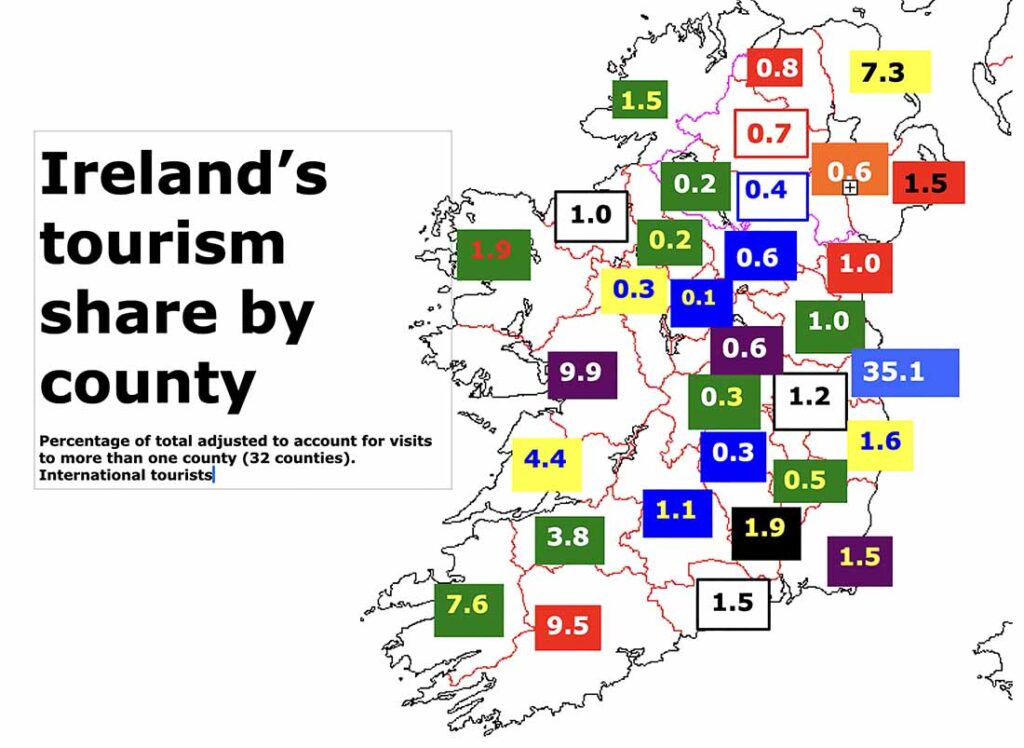
Ireland’s county Cork blends historic sites with scenic beauty, with Cork City’s English Market and St Fin Barre’s Cathedral offering cultural and architectural depth. Blarney Castle, home to the famous Blarney Stone, provides historic allure, while the coastal town of Kinsale offers sailing and seafood. Other attractions include the Beara Peninsula’s rugged trails. Cork is Ireland’s largest county by size (7,460 sq km) and third largest by population (584,156). Population peaked at 854,118 in 1841 (when Cork was Ireland’s most populous county) and reached its lowest point, 330,443 in 1961. In terms of hospitality, Cork is Ireland’s second most visited tourist county with around 1,228,000 international visitors per year.
Introduction – Adventure – Anthem – Archaeology – Attractions – Awards – Birdwatching – Camping – Castles – Churches – Contact list – Cycling – Dining – Equestrian – Festivals – Fishing – Folklore – Gardens – Golf – Graveyards – Happening – Haunted – Highest – Hiking – History – Holy Wells – Hotels – Hotels top 8 – Hunting & shooting – Instagrammable – Itineraries – Largest town – Luxury – MICE – Movies – Music – New – Name – Novelists – Off the beaten track – Poets – Pubs – Quotes – Random Facts – Restaurant Awards – Sacred Places – Saints – Songs – Spas – Sports – Sunsets – Sustainable – Things to do – Towns – Video – Villages – Walking – Wanderlist – Weddings – Wild swimming – Writers – 1837– 1846 – 1852 – 1909 – 1955 – 1980 –