The highest point in County Cork is Knockboy (Irish: An Cnoc Buí, meaning “yellow hill”), standing at 706 meters (2,316 feet). Located in the Shehy Mountains near the Cork-Kerry border, Knockboy is a prominent peak in a rugged, remote landscape, offering a challenging yet rewarding experience for hikers and visitors.
- Geological and Cultural Significance: Knockboy is part of the Shehy Mountains, a range of sandstone hills formed during the Devonian period, characterized by blanket bogs and heathery slopes. Its name may derive from the yellowish hue of its boggy terrain or local flora. While not steeped in mythology like some Irish peaks, Knockboy’s isolation and panoramic views make it a hidden gem in Cork’s mountainous west. The area is part of the broader Cork-Kerry uplands, known for their wild beauty and sparse population.
- Scenic Beauty: The summit offers expansive views over the Shehy and Caha Mountains, Bantry Bay, the Beara Peninsula, and, on clear days, the distant MacGillycuddy’s Reeks in Kerry. The open moorland and rolling hills create a sense of vastness, ideal for those seeking solitude in nature.
Approaching Knockboy
- Access Points: Knockboy is typically approached from the Priest’s Leap (Irish: Léim an tSagairt), a high mountain pass on the R584 road between Bantry and Kenmare, near the Cork-Kerry border. The main starting point is a small lay-by or parking area near the Priest’s Leap signpost (Grid Ref: W 058 648). Another option is from the village of Gougane Barra, where a longer route through Gougane Barra Forest Park connects to the mountain. Both starting points are remote, with no public transport, so a car is essential.
Trail Options:
- Priest’s Leap Route: The most direct route starts at the Priest’s Leap pass, following a faint path or open moorland toward the summit. This is a 6–8km round-trip hike (depending on the exact path), taking 2.5–4 hours. The terrain is boggy and trackless in parts, with a steady ascent over heather and grass. The summit is marked by a trig pillar. This route is moderately strenuous due to the uneven ground and potential for wet conditions.
- Gougane Barra Route: A longer approach (10–12km round trip, 4–5 hours) starts at Gougane Barra Forest Park, near the iconic Gougane Barra Oratory. Hikers follow forest trails, join the Beara Way (a long-distance trail), and ascend via the southern slopes of Knockboy. This route is more scenic, passing through forest and open hillside, but requires good navigation due to less-defined paths.
- Alternative Routes: Some hikers approach from the west, near Ballingeary, or combine Knockboy with nearby peaks like Caoinkeen or Knocknamanagh for a longer ridge walk. These routes are less common and best suited for experienced hikers with strong navigation skills.
- Navigation and Preparation: Knockboy’s routes lack clear waymarking, especially beyond the forest trails. Hikers should carry a map (Ordnance Survey Ireland, Discovery Series Sheet 85), compass, or GPS, as fog and low visibility are common. Waterproof hiking boots, gaiters, and rain gear are essential due to the boggy terrain and frequent rain in West Cork. Bring sufficient water and snacks, as there are no facilities nearby. Dogs are allowed but should be leashed to avoid disturbing livestock. Check weather forecasts, as the summit is exposed to strong winds and sudden changes.
Hiking Experience:
- The Priest’s Leap route is relatively straightforward but involves navigating boggy, pathless terrain, which can be challenging after rain. The ascent is gradual but relentless, with the final push to the trig pillar offering a sense of achievement.
- The Gougane Barra route is more varied, starting with serene forest trails and a picturesque lake before transitioning to open moorland. The Beara Way section adds a cultural element, as this trail connects to broader hiking networks in the region.
- The summit is a broad, flat area with a trig pillar and small cairn, surrounded by bog and heather. Its isolation means fewer crowds compared to more famous peaks like Carrauntoohil, offering a peaceful experience.
- Views and Photography: On clear days, the summit provides stunning 360-degree views, including Bantry Bay’s coastline, the rugged Caha Mountains, and Kerry’s dramatic peaks. The open landscape is ideal for photography, especially at sunrise or sunset when the light casts a golden glow over the hills. The remoteness enhances the sense of being immersed in nature.
- Wildlife and Nature: The Shehy Mountains support a variety of upland species, including red grouse, skylarks, and occasionally hen harriers or peregrine falcons. The blanket bog is home to unique flora like sphagnum moss, heather, and cotton grass. Grazing sheep are common, adding to the pastoral charm.
- Cultural and Historical Context: The Priest’s Leap pass is named after a local legend involving a priest escaping pursuit by leaping over the cliffs on horseback. Gougane Barra, a potential starting point, is historically significant as the site of St. Finbarr’s 6th-century monastery, with its oratory and forested island adding spiritual resonance. The area’s quiet villages, like Ballingeary, reflect Cork’s Irish language heritage.
- Amenities: There are no facilities at the Priest’s Leap starting point, so hikers must be self-sufficient. Gougane Barra Forest Park has a small car park, toilets, and picnic areas, and the nearby Gougane Barra Hotel offers meals and accommodation. Bantry, 20km away, is the closest town for supplies, dining, or lodging.
- Seasonal Considerations: Spring (April–May) and autumn (September–October) offer vibrant colors and milder weather, with heather blooming in late summer. Rainfall is frequent year-round, with winter (November–March) bringing potential snow or ice on higher ground. Summer (June–August) is warmest (15–20°C / 59–68°F) but can be busy with Beara Way hikers. West Cork’s 1,200–1,500 annual sunshine hours make clear days possible but not guaranteed.
- Guided Tours: Local operators, such as those based in Bantry or Kenmare, occasionally offer guided hikes of Knockboy, providing navigation support and insights into the region’s ecology and history. The Beara Way website or visitwestcork.com can connect you with guides.
- Safety: The lack of clear paths and exposure to weather make navigation critical. Inform someone of your plans, avoid hiking alone in poor conditions, and be prepared for wet, boggy ground. Mobile signal can be patchy, so offline maps are recommended.
- Accessibility: Knockboy is best suited for moderately experienced hikers due to its trackless sections and boggy terrain. The Gougane Barra route offers easier initial trails but becomes challenging higher up. The Priest’s Leap route is shorter but requires confidence in open moorland.
Knockboy offers a rugged, off-the-beaten-path hiking experience in County Cork, ideal for those seeking solitude and stunning views over the Shehy Mountains and Bantry Bay. Its remote location and lack of crowds contrast with more touristy peaks, while the nearby Gougane Barra adds cultural depth. Hikers should come prepared for boggy terrain, variable weather, and navigation challenges, but the reward is a true taste of West Cork’s wild beauty. For more details, consult visitwestcork.com or Kieron Gibbons’ Ireland’s County High Points – A Walking Guide.
Highest point in county
Antrim – Armagh – Carlow – Cavan – Clare – Cork – Derry – Donegal – Down – Dublin – Fermanagh – Galway] – Kerry – Kildare – Kilkenny – Laois – Leitrim – Limerick – Longford – Louth – Mayo – Meath – Monaghan – Offaly – Roscommon – Sligo – Tipperary – Tyrone – Waterford – Westmeath – Wexford – Wicklow
County Cork:
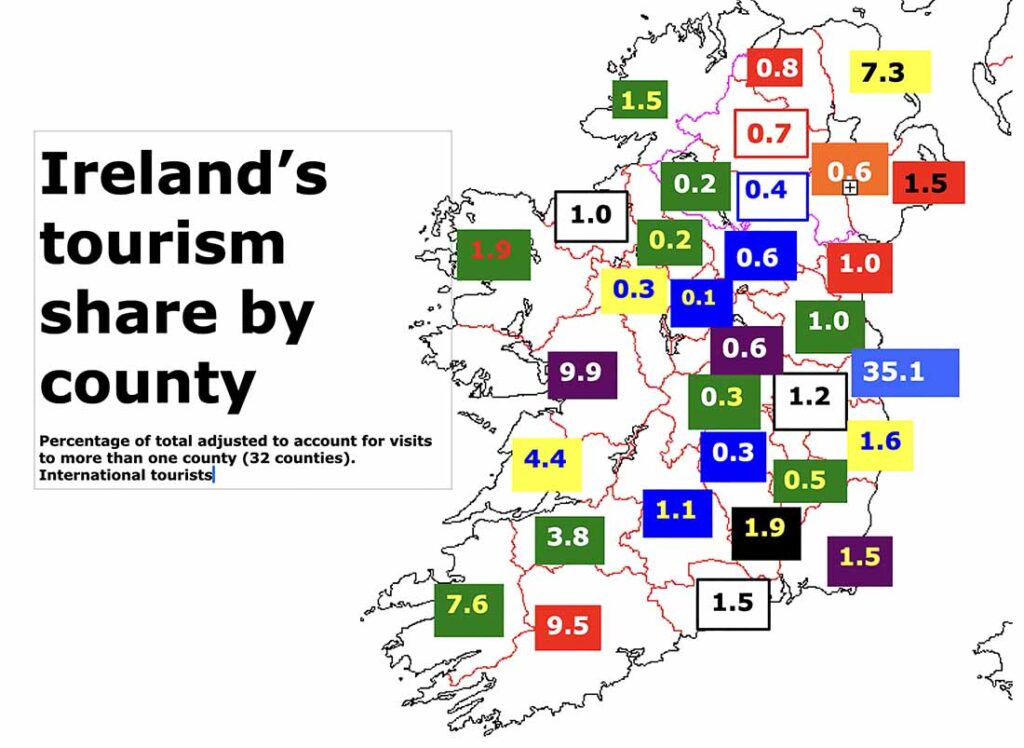
Ireland’s county Cork blends historic sites with scenic beauty, with Cork City’s English Market and St Fin Barre’s Cathedral offering cultural and architectural depth. Blarney Castle, home to the famous Blarney Stone, provides historic allure, while the coastal town of Kinsale offers sailing and seafood. Other attractions include the Beara Peninsula’s rugged trails. Cork is Ireland’s largest county by size (7,460 sq km) and third largest by population (584,156). Population peaked at 854,118 in 1841 (when Cork was Ireland’s most populous county) and reached its lowest point, 330,443 in 1961. In terms of hospitality, Cork is Ireland’s second most visited tourist county with around 1,228,000 international visitors per year.
Introduction – Adventure – Anthem – Archaeology – Attractions – Awards – Birdwatching – Camping – Castles – Churches – Contact list – Cycling – Dining – Equestrian – Festivals – Fishing – Folklore – Gardens – Golf – Graveyards – Happening – Haunted – Highest – Hiking – History – Holy Wells – Hotels – Hotels top 8 – Hunting & shooting – Instagrammable – Itineraries – Largest town – Luxury – MICE – Movies – Music – New – Name – Novelists – Off the beaten track – Poets – Pubs – Quotes – Random Facts – Restaurant Awards – Sacred Places – Saints – Songs – Spas – Sports – Sunsets – Sustainable – Things to do – Towns – Video – Villages – Walking – Wanderlist – Weddings – Wild swimming – Writers – 1837– 1846 – 1852 – 1909 – 1955 – 1980 –