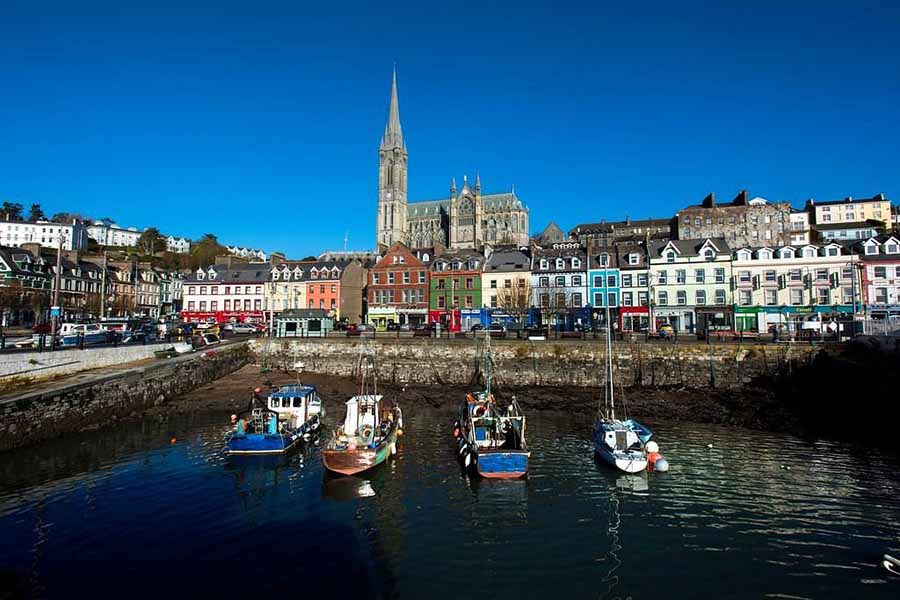
County Cork, Ireland’s largest county, offers a delightful mix of scenic landscapes, historic sites, and cultural treasures for travellers seeking adventure and relaxation. With its rugged coastline, rolling hills, and welcoming towns, Cork provides a rich array of experiences. From ancient castles to coastal trails and bustling markets, this county invites visitors to explore its diverse attractions at their own pace.
Blarney Castle, near Cork city, is a medieval stronghold famous for the Blarney Stone, said to grant eloquence to those who kiss it. Visitors can climb the castle’s spiral staircases to reach the stone, explore battlements with views of lush gardens, and wander the grounds, including the Poison Garden with its curious plants. The site’s mix of history and folklore makes it a must-visit for all ages.
Kinsale, a colourful coastal town, is a haven for food lovers and history enthusiasts. Its narrow streets, lined with Georgian buildings, lead to historic sites like Charles Fort, a 17th-century star-shaped fortress. Visitors can tour the fort’s ramparts, enjoy sea views, and relax in Kinsale’s renowned restaurants, sampling fresh seafood and local dishes in a welcoming atmosphere.
The English Market in Cork city is a bustling hub of culinary delights, dating back to 1788. Visitors can stroll through its covered aisles, browsing stalls filled with artisan cheeses, fresh produce, and baked goods. The market’s lively yet relaxed vibe, with friendly vendors offering samples, makes it a perfect spot to soak up local culture and grab a bite.
Cobh, a historic port town, is known for its maritime heritage and striking cathedral. St Colman’s Cathedral, with its 49-bell carillon, overlooks the harbour, where visitors can explore the Cobh Heritage Centre, detailing the town’s emigration and Titanic history. A waterfront walk offers views of colourful houses and passing ships, creating a picturesque setting for a leisurely day.
West Cork’s coastline, stretching from Kinsale to the Beara Peninsula, is a paradise for outdoor enthusiasts. The Wild Atlantic Way driving route winds through dramatic cliffs and sandy beaches, with stops like Mizen Head, Ireland’s southernmost point. Visitors can cross the Mizen Bridge, explore the lighthouse, and enjoy coastal walks with sweeping ocean views, perfect for nature lovers.
Fota Island, near Cork city, offers a blend of wildlife and history. Fota Wildlife Park, set on 100 acres, is home to animals like giraffes and kangaroos, which visitors can observe on walking trails. The adjacent Fota House, a Regency-style mansion, features guided tours of elegant rooms and an arboretum with rare trees, providing a mix of nature and heritage.
Bantry House, a 17th-century estate overlooking Bantry Bay, welcomes visitors to its grand interiors and formal gardens. The house, still home to the White family, showcases art and antiques, while its terraced gardens offer views of the bay. A tearoom serves homemade treats, making it a relaxing stop for those exploring West Cork.
The Old Head of Kinsale, a rugged promontory, is a haven for golfers and walkers. Its cliff-top golf course is world-renowned, but the public coastal paths offer equally rewarding views of the Atlantic and lighthouse. Visitors can spot seabirds and seals, with trails providing a peaceful escape and opportunities for photography.
Garinish Island, off Glengarriff, is a horticultural gem accessible by a short ferry ride. Its Italianate gardens, designed in the early 20th century, feature exotic plants and serene pathways. Visitors can explore the Martello tower, enjoy harbour views, and relax in the island’s tranquil setting, making it a perfect day trip for garden enthusiasts.
The Drombeg Stone Circle, near Glandore, is a Bronze Age monument set in a scenic valley. Visitors can walk among the 17 standing stones, explore a nearby fulacht fiadh cooking site, and take in views of the coastline. The site’s ancient atmosphere and open landscape make it a fascinating stop for those interested in Ireland’s prehistoric past.
County Cork’s blend of historic landmarks, coastal beauty, and cultural experiences creates a rewarding destination. Whether kissing the Blarney Stone, savouring market treats, or strolling rugged cliffs, travellers will find plenty to enjoy in this inviting corner of Ireland.
County Cork:
Ireland’s county Cork blends historic sites with scenic beauty, with Cork City’s English Market and St Fin Barre’s Cathedral offering cultural and architectural depth. Blarney Castle, home to the famous Blarney Stone, provides historic allure, while the coastal town of Kinsale offers sailing and seafood. Other attractions include the Beara Peninsula’s rugged trails. Cork is Ireland’s largest county by size (7,460 sq km) and third largest by population (584,156). Population peaked at 854,118 in 1841 (when Cork was Ireland’s most populous county) and reached its lowest point, 330,443 in 1961. In terms of hospitality, Cork is Ireland’s second most visited tourist county with around 1,228,000 international visitors per year.
Introduction – Adventure – Anthem – Archaeology – Attractions – Awards – Birdwatching – Camping – Castles – Churches – Contact list – Cycling – Dining – Equestrian – Festivals – Fishing – Folklore – Gardens – Golf – Graveyards – Happening – Haunted – Highest – Hiking – History – Holy Wells – Hotels – Hotels8 – Instagrammable – Itineraries – Largest town – Luxury – MICE – Movies – Musicians – New – Name – Novelists – Off the beaten track – Poets – Pubs – Quotes – Random Facts – Restaurant Awards – Sacred Places – Saints – Spas – Sports – Sunsets– Sustainable – Things to do – Towns – Video – Villages – Walking – Wanderlist – Weddings – Wild swimming – Writers – 1837– 1846 – 1852 – 1909 – 1955 – 1980 –
Things to do
Antrim – Armagh – Carlow – Cavan – Clare – Cork – Derry – Donegal – Down – Dublin – Fermanagh – Galway – Kerry – Kildare – Kilkenny – Laois – Leitrim – Limerick – Longford – Louth – Mayo – Meath – Monaghan – Offaly – Roscommon – Sligo – Tipperary – Tyrone – Waterford – Westmeath – Wexford – Wicklow