- Cuchonnacht Ó Dálaigh: Leacain (Lacken), County Meath (d. 1139): Chief ollamh (master poet) in poetry, noted as one of the earliest recorded Ó Dálaigh poets. He died at Clonard (Cluain-Iraird), indicating a strong connection to the area, possibly teaching in the monastic school there. The Ó Dálaigh family was a distinguished bardic family originating in western Meath.
- Donnchadh Mór Ó Dálaigh: Leacain (Lacken), County Meath (c. 1175–d. 1244): Regarded as a poet “who never was and never shall be surpassed,” according to the Annals of the Four Masters. He was possibly abbot of Boyle, and his surviving works are religious in nature. His prominence as a poet is tied to the Ó Dálaigh family’s role as hereditary poets in Meath.
- Francis Ledwidge (1887–1917): Born in Slane, he is a famous Irish war poet known for his pastoral verse.
- Jim McElroy: Winner of the 2020 Francis Ledwidge Poetry Award.
- Maelisa Ó Dálaigh: Leacain (Lacken), County Meath (d. 1185): Described as the chief poet of Ireland and Scotland (Erinn and Alba) and principal dux of Corca-Raidhe. He died at Clonard on pilgrimage, reinforcing the Ó Dálaigh family’s ties to this significant religious and scholarly center in Meath.
- Muireadhach Albanach Ó Dálaigh: Leacain (Lacken), County Meath (fl. c. 1200-1230, d. after 1230): Known as “Albanach” (the Scot) due to his exile in Scotland after killing a man in Sligo. He composed poems for both Gaelic and Anglo-Norman patrons, including Richard FitzWilliam FitzAdelm de Burgo and Cathal Crobhdhearg O’Connor. He proudly identified as “Ó Dálaigh Midhe” (O’Daly of Meath), emphasizing his Meath origins. The Ó Dálaigh family is the most prominent poetic lineage from Meath, with a significant presence in the bardic tradition (1200-1650). Their base in Leacain, Meath, and their association with Clonard highlight their regional importance. The family’s work focused on praise poetry, religious verse, and patronage from both Gaelic and Anglo-Norman lords.
- Orla Fay: A contemporary poet, editor, and 2021 Poet Laureate for Dunshaughlin.
Poets
Antrim – Armagh – Carlow – Cavan – Clare – Cork – Derry – Donegal – Down – Dublin – Fermanagh – Galway – Kerry – Kildare – Kilkenny – Laois – Leitrim – Limerick – Longford – Louth – Mayo – Meath – Monaghan – Offaly – Roscommon – Sligo – Tipperary – Tyrone – Waterford – Westmeath – Wexford – Wicklow
County Meath:
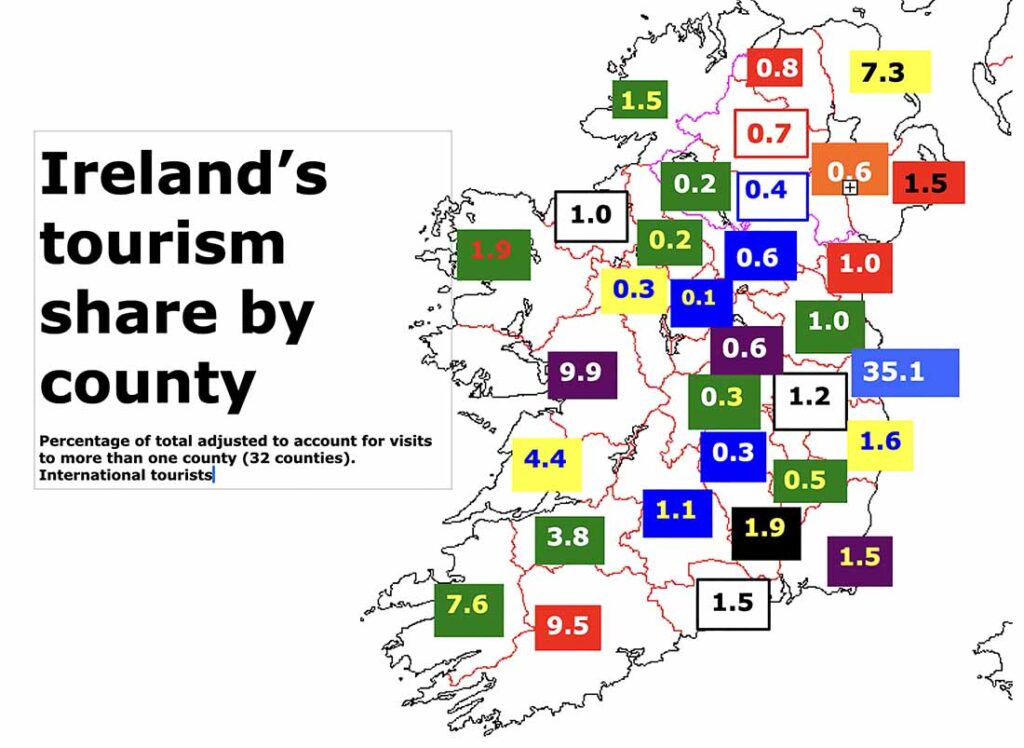
Ireland’s county Meath is steeped in Ireland’s ancient past, with the Hill of Tara offering a glimpse into royal history and panoramic views. The UNESCO-listed Brú na Bóinne complex, including Newgrange and Knowth, showcases intricate Neolithic tombs, while Trim Castle provides medieval grandeur. Other attractions include the Boyne River’s scenic walks and historic Slane Castle. Meath is Ireland’s 14th largest county by size (2,336 square km) and eighth largest by population (220,826). Population previously peaked at 183,828 in 1841 and reached its lowest point, 62,969 in 1926. In terms of hospitality, Meath is Ireland’s 19th most visited tourist county with around 122,000 international visitors per year.
Introduction – Adventure – Anthem – Archaeology – Attractions – Awards – Birdwatching – Camping – Castles – Churches – Contact list – Cycling – Dining – Equestrian – Festivals – Fishing – Folklore – Gardens – Golf – Graveyards – Happening – Haunted – Highest – Hiking – History – Holy Wells – Hotels – Hotels top 8 – Hunting & shooting – Instagrammable – Itineraries – Largest town – Luxury – MICE – Movies – Music – Name – New – Novelists – Off the beaten track – Poets – Pubs – Quotes – Random Facts – Restaurant Awards – Sacred Places – Saints – Songs – Spas – Sports – Sunsets – Sustainable – Things to do – Towns – Video – Villages – Walking – Wanderlist – Weddings – Wild swimming – Writers – 1837 – 1846 – 1852 – 1909 – 1955 – 1980 –